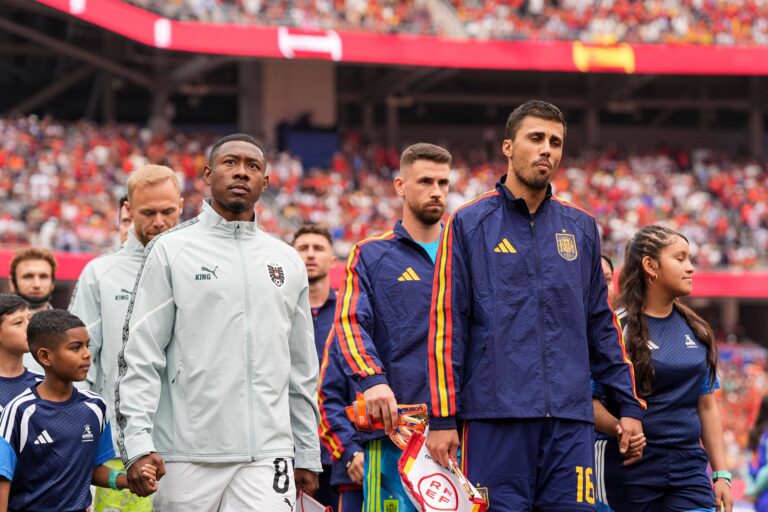
From an Austrian perspective, the evening began with a stroke of luck. Argentina started with intensity and were awarded an early penalty after a VAR review when Lautaro Martínez was stopped in the box by Stefan Posch and Xaver Schlager. Messi stepped up, but placed the ball wide of the right post. For a moment, it seemed as though Austria might draw energy from that miss.
Indeed, the Austrian team then found its way into the match. They defended compactly, worked hard off the ball, and tried to disrupt Argentina’s rhythm with aggressive pressing. Konrad Laimer, Nicolas Seiwald, and Marcel Sabitzer in particular covered a lot of ground, closed spaces, and prevented the favorites from controlling the game continuously. Going forward, however, Austria remained too harmless. They lacked pace, precision, and clear actions in the final third.
Argentina did not need to shine in order to stay dangerous. Whenever Messi had the ball, the match changed. In the 38th minute, the historic moment finally arrived. After an assist from Facundo Medina, Messi finished into the near corner and scored his 17th World Cup goal. With that, he moved past Miroslav Klose and became the outright all-time top scorer in World Cup history.
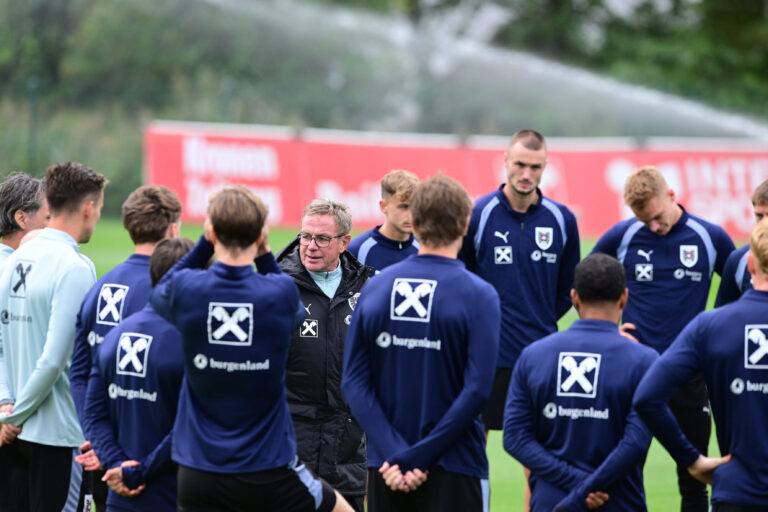
After the break, Austria continued to work hard without seriously shaking the world champions. Sabitzer tested the goalkeeper with a free-kick, and Rangnick introduced Arnautovic, Prass, and Friedl for fresh energy, but clear chances to equalize remained rare. Argentina defended calmly, managed their lead, and waited for the decisive moment.
That moment came deep into stoppage time. After an attack involving Julián Álvarez, Messi finished to make it 2-0 and put the final touch on another historic evening. For Argentina, it was a second win in two matches and a confirmed place in the knockout stage. Austria, despite a respectable performance, are now under pressure. Against Algeria, the ÖFB team need points again to keep their dream of progressing alive.