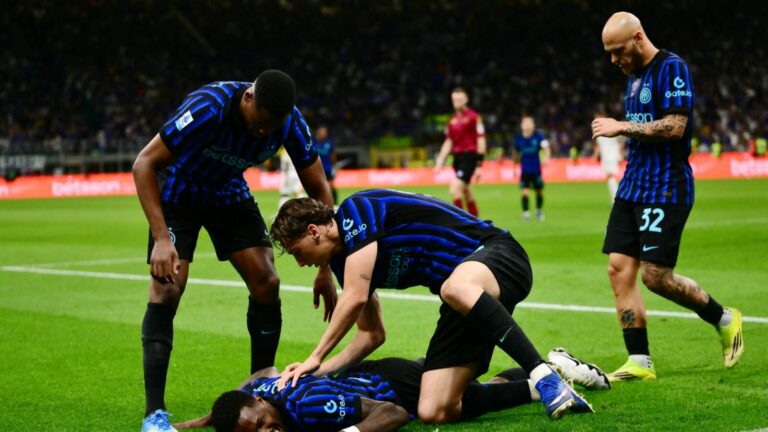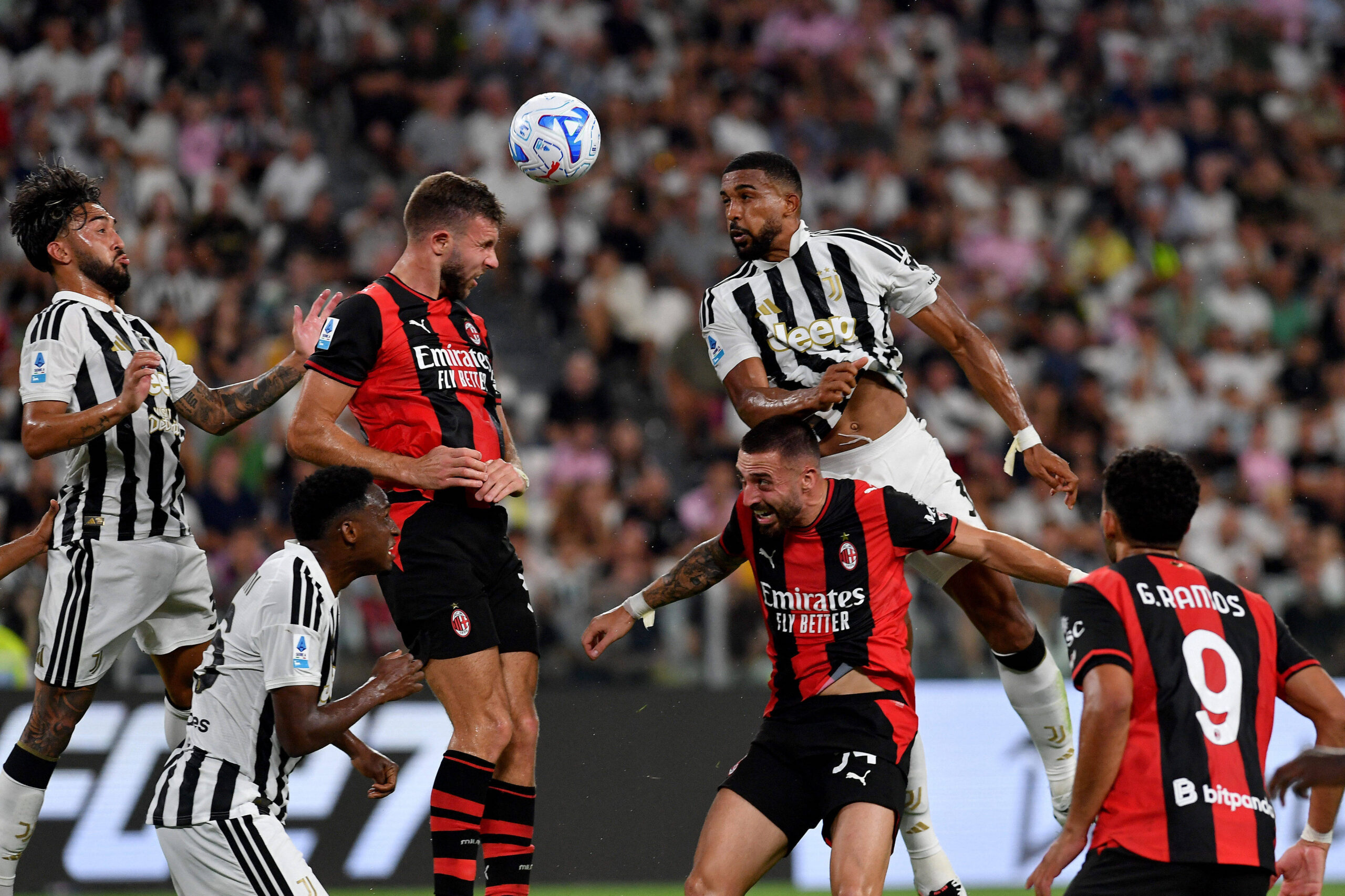
Federico Gatti finally secured a deserved equaliser in the second minute of stoppage time. Juventus finished with 14 shots to Milan’s three, while the Expected Goals figures of 1.57 to 0.09 underline just how much more threatening the hosts were. Milan defended with discipline for long spells and could rely on an excellent Mike Maignan, but offered very little penetration from their own possession.
Juventus disrupt Milan’s build-up early
Luciano Spalletti started Juventus in a 4-2-3-1, while Rúben Amorim lined Milan up in his familiar 3-4-2-1. The contrast between the two approaches became particularly clear out of possession. Juventus pressed Milan’s first line aggressively and sought to prevent Luka Modrić from dictating the game. The Croatian repeatedly dropped deep, at times almost alongside the centre-backs, in an attempt to create numerical superiority in the opening phase.
Milan nevertheless remained committed to building from the back, but too rarely found clean solutions against the hosts’ aggressive pressure. Possession was lost several times in the first or second third. When the Rossoneri did manage to beat the initial press, Juventus quickly regrouped into a more compact shape and, above all, prevented Gonçalo Ramos from becoming a dangerous central outlet.
Bremer was particularly impressive in this respect. The Juventus defensive leader stepped forward aggressively whenever Ramos dropped towards the ball and, together with Jhon Lucumí, ensured that the Portuguese striker was almost completely denied promising shooting positions.
At the other end, Milan often fell into a deep back five once their initial pressure had been bypassed. Estupiñán dropped particularly deep and was tasked with controlling Francisco Conceição. That individual battle, however, developed into one of Milan’s biggest problems.
Conceição keeps finding solutions
Juventus regularly switched play towards the right to isolate Conceição in one-on-one situations. The Portuguese winger was difficult to contain because he was equally capable of attacking the outside or cutting inside onto his stronger left foot. He forced Maignan into two important saves during the first half alone.
Quick switches of play were especially effective before Milan’s back five could fully shuffle across. Shortly before half-time, Douglas Luiz found Conceição with one such diagonal pass to the opposite side. The winger cut inside again, only for Maignan to respond with another strong save.
Conceição remained Juventus’ biggest attacking threat after the interval. In the 54th minute, he tried his luck from around 30 metres and rattled the post with a powerful left-footed strike. By then, Maignan had long since become one of the main reasons Milan were still level. He projected calm, dealt confidently with the pressure and gave reassurance to a team that was being pushed increasingly deep.
In front of him, Koni De Winter and Strahinja Pavlović also performed strongly. Both defended the penalty area with authority and prevented Kolo Muani from having any real influence. The French Juventus striker rarely found opportunities to receive with his back to goal and move the ball on cleanly, while he also struggled to separate himself from his markers when crosses arrived.
Amorim’s substitutions change the game
Amorim recognised that Milan were finding almost no attacking relief. Shortly after the hour mark, he introduced Samuel Chukwueze, Cissè and Ruben Loftus-Cheek for Diego Moreira, Adrien Rabiot and Alexis Saelemaekers. The changes did not fundamentally alter the balance of the match, but they added far more pace and directness to Milan’s transitions.
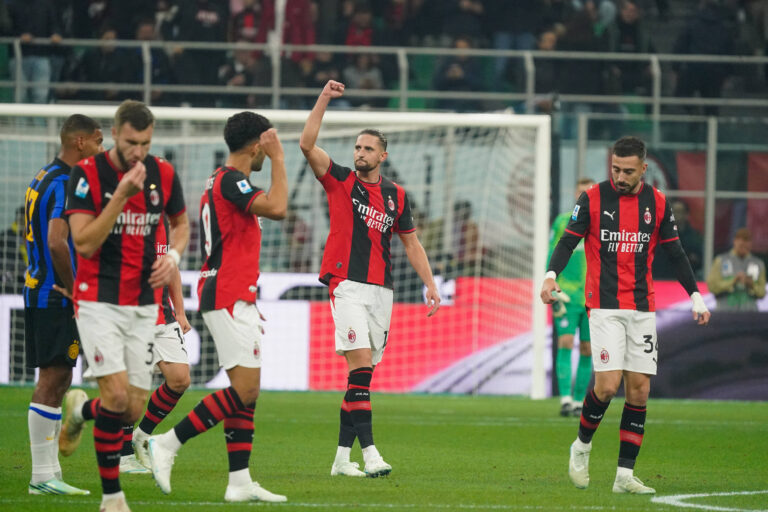
Only a few minutes later, the visitors took the lead. The move began with De Winter, who aggressively stepped into Kolo Muani and won possession. Chukwueze then switched the play to Cissè, who controlled the ball well, drove inside and calmly found the far corner.
It was Milan’s first shot on target and a perfect example of how efficiently the Rossoneri punished Juventus with their one truly successful counter-attacking move. Cissè needed only a few minutes after coming on to score his second Serie A goal of the new season.
Spalletti sends more and more attacking players into the centre
Juventus initially responded to the setback by introducing Koopmeiners and Jérémie Boga. Spalletti later also brought on new signing Nick Woltemade and moved towards a much more attacking shape with two tall focal points up front.
The nature of Juventus’ attacking play changed accordingly. The hosts relied less on patient combinations between the lines and increasingly sent high balls into the penalty area. For a long time, however, that remained a problem. Milan retreated extremely deep, packed the centre with physically strong players and dealt comfortably with most of the deliveries.
Kolo Muani gained little from the additional presence either. Woltemade provided more occupation of the penalty area after coming on and fashioned a good opportunity himself, but Juventus still lacked precision and, at times, sufficient variation in the decisive final actions.
Late on, Spalletti went a step further. Federico Gatti replaced right-back Zeki Çelik but did not take up his usual defensive role. Instead, the centre-back operated almost as an additional striker.
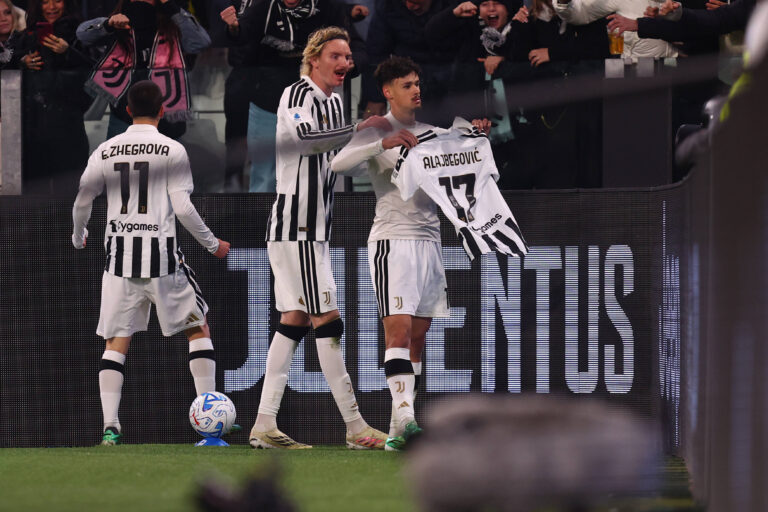
The unconventional move paid off. Koopmeiners was afforded enough time on the left to deliver accurately towards the far post, where Gatti won his duel and headed home in the 92nd minute. Fittingly, it was a centre-back who punished Milan for an increasingly passive approach during the closing stages.
Spalletti and Amorim both see room for improvement
Spalletti felt his team was fundamentally heading in the right direction. “We made the game, pressed constantly and tried to raise the tempo,” said the Juventus coach. The next step, he explained, was to make better decisions in the final third. Particularly in major matches, his team could not afford to wait for decisive moments to arrive but had to actively create them.
That assessment matched the game closely. Juventus succeeded in pinning Milan back for long stretches in exactly the areas Spalletti wanted. What prevented them from winning was the final pass, the right movement inside the box and the necessary precision in front of goal.
Amorim was even more critical of his own side. “We were not good with the ball. When we started losing too many balls, we suffered,” said the Portuguese coach. His team had made too many mistakes in basic areas such as first touch, passing and movement.
Amorim also stressed that Milan need to learn how to defend through possession. If his team wanted to keep the ball, it needed more movement and greater courage. At the same time, he was keen to temper the excitement around Cissè despite the youngster’s dream start, insisting that the 19-year-old is still at the beginning of his development and has plenty of room to improve.
Both teams now have seven points after three matches. Milan travel to Lazio next Saturday before hosting Benfica in their Europa League opener the following Wednesday. Juventus visit Sassuolo on Sunday and then begin their own Europa League league-phase campaign at home to NEC Nijmegen on Thursday.