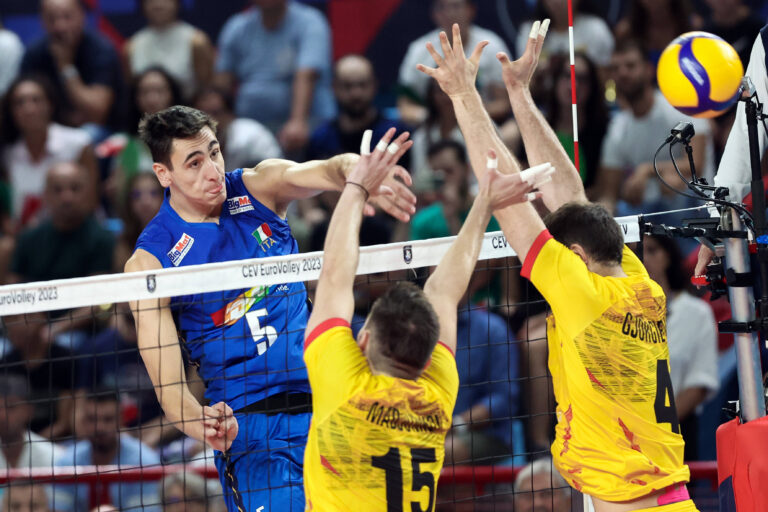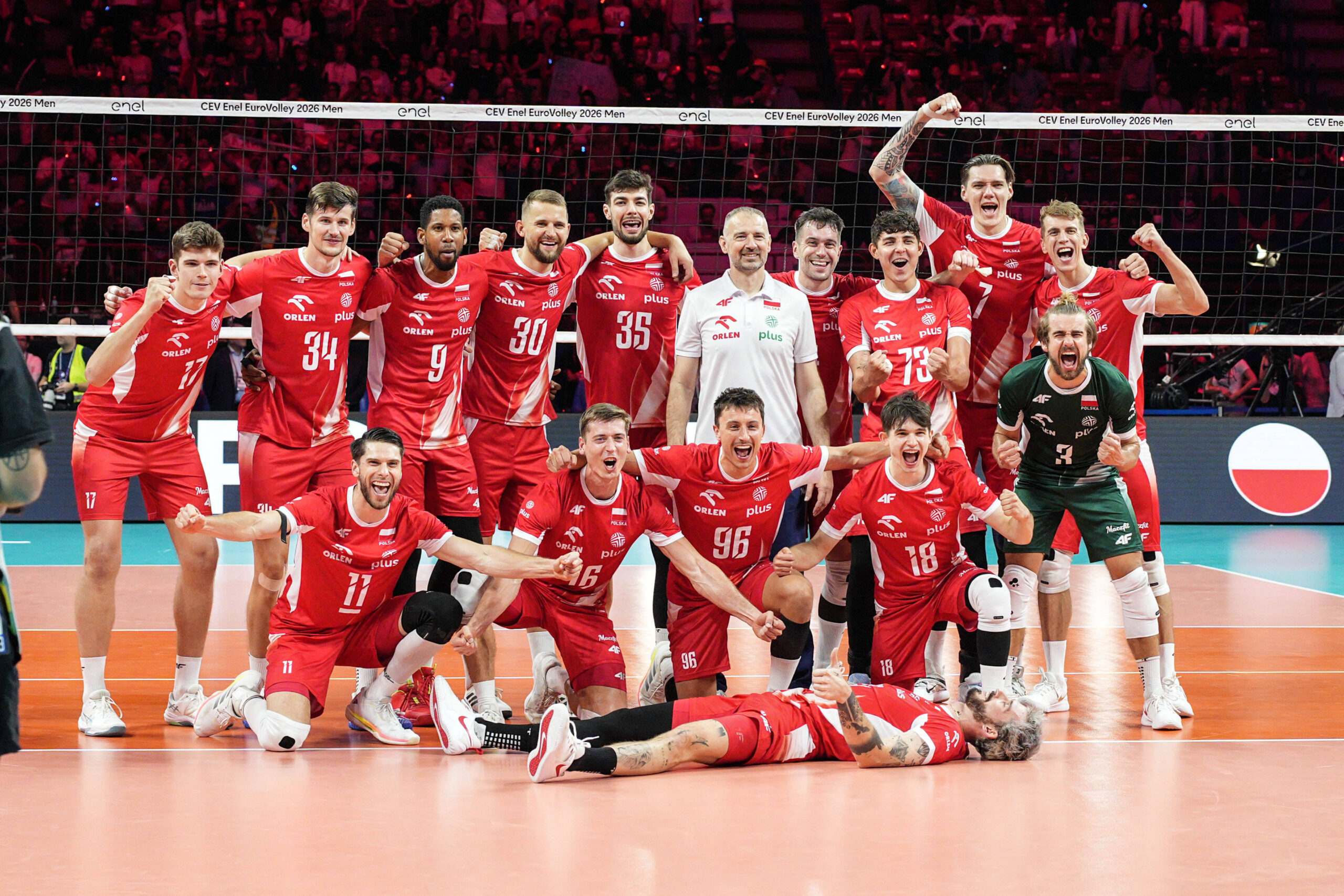
The 24-team tournament was staged across Italy, Bulgaria, Finland and Romania and, alongside Poland’s renewed dominance, produced several surprises. Finland in particular provided one of the stories of the championship by winning a European medal for the first time in their history.
Poland hit top gear after the group stage
It quickly became apparent that the road to the title would once again go through Poland. Nikola Grbić’s side opened with a commanding 3-0 win over Portugal and did not drop a single set in any of their other victories during the group stage. Their only setback came in the final group match, when hosts Bulgaria prevailed 3-2 in a high-quality five-set thriller.
That defeat proved to be Poland’s only slip-up. They raised their level again in the knockout rounds, first sweeping Latvia 3-0 before Germany were also given little chance in a straight-sets quarter-final defeat. Wilfredo Leon scored 17 points as Poland converted an impressive 61 per cent of their attacks directly into points. Another 3-0 win followed against Slovenia in the semi-finals. Remarkably, Poland had not dropped a single set in any of their victories before reaching the final.
Finland provide the tournament’s biggest surprise
Finland were responsible for the biggest upset of the championship. They were pushed to five sets by Greece in the round of 16 before booking their place in the quarter-finals, where hosts and world champions Italy awaited as one of the leading title contenders.
The Finns refused to be unsettled after losing the opening set and eventually claimed a 3-2 victory. In the deciding fifth set, the underdogs held their nerve to win 15-13. France finally ended their run with a 3-1 victory in the semi-finals, but Finland still produced a historic finish in the bronze-medal match. A 3-0 win over Slovenia secured the first European Championship medal in the country’s history, with Nooa and Luka Marttila leading the way with 19 and 17 points respectively.
Romania also made their mark. In the group stage, the hosts came from two sets down to beat Olympic champions France 3-2, although the French had already secured first place in the group by that point. The teams met again in the quarter-finals, where France gained revenge with a convincing 3-0 victory.
High-class opening set sets tone for final
In front of 11,118 spectators at a sold-out Unipol Forum, the final initially developed into an evenly matched contest. Wilfredo Leon opened with three consecutive aces, but France responded strongly. The first set turned into a thriller, with both sides earning several set points before Poland eventually edged it 31-29.
That opening-set victory gave the defending champions further momentum. Poland raced into a 12-4 lead in the second set and gave France little chance of mounting a comeback as they took it 25-19. The French responded in the third and controlled large spells of the set, winning it 25-20. It was only the fourth set Poland had lost in the entire tournament.
Poland restored the balance of power in the fourth set, winning it comfortably 25-16 to complete a 3-1 victory.
Leon named tournament MVP
The distribution of points in the final underlined that Poland were not reliant on a single attacker. Bartłomiej Bołądź scored 16 points, Leon and Tomasz Fornal added 13 each, Bartłomiej Lemański contributed 12 and Kamil Semeniuk finished with ten. France had the match’s leading scorer in Mathis Henno with 20 points, but could not match the depth of Poland’s attacking options.
Leon was named MVP of the European Championship after the final. Poland have therefore become the first team since Italy in 2003 and 2005 to successfully defend the European title. For head coach Nikola Grbić, it was already his tenth medal with the Polish national team at a major international tournament.