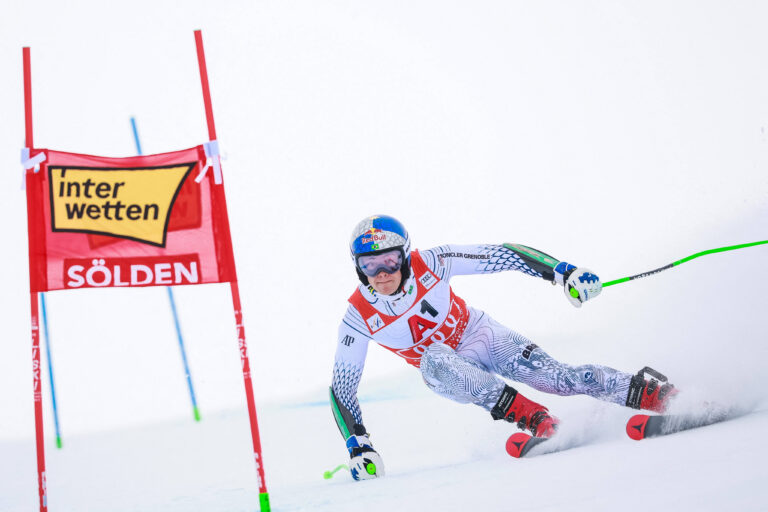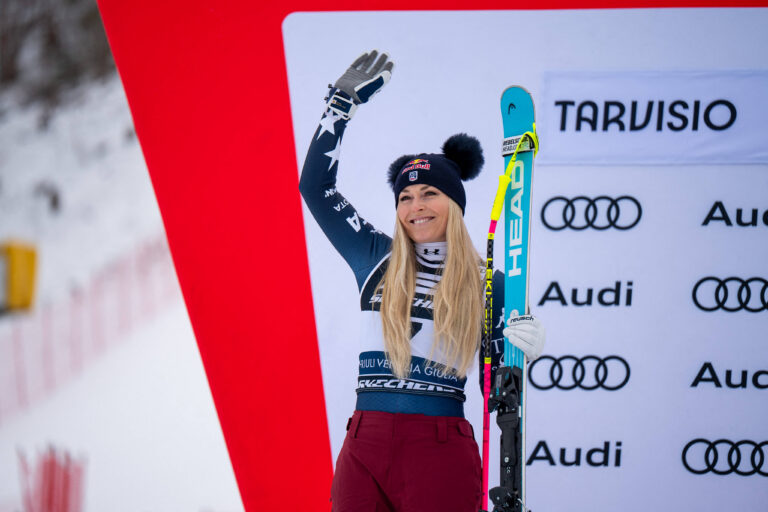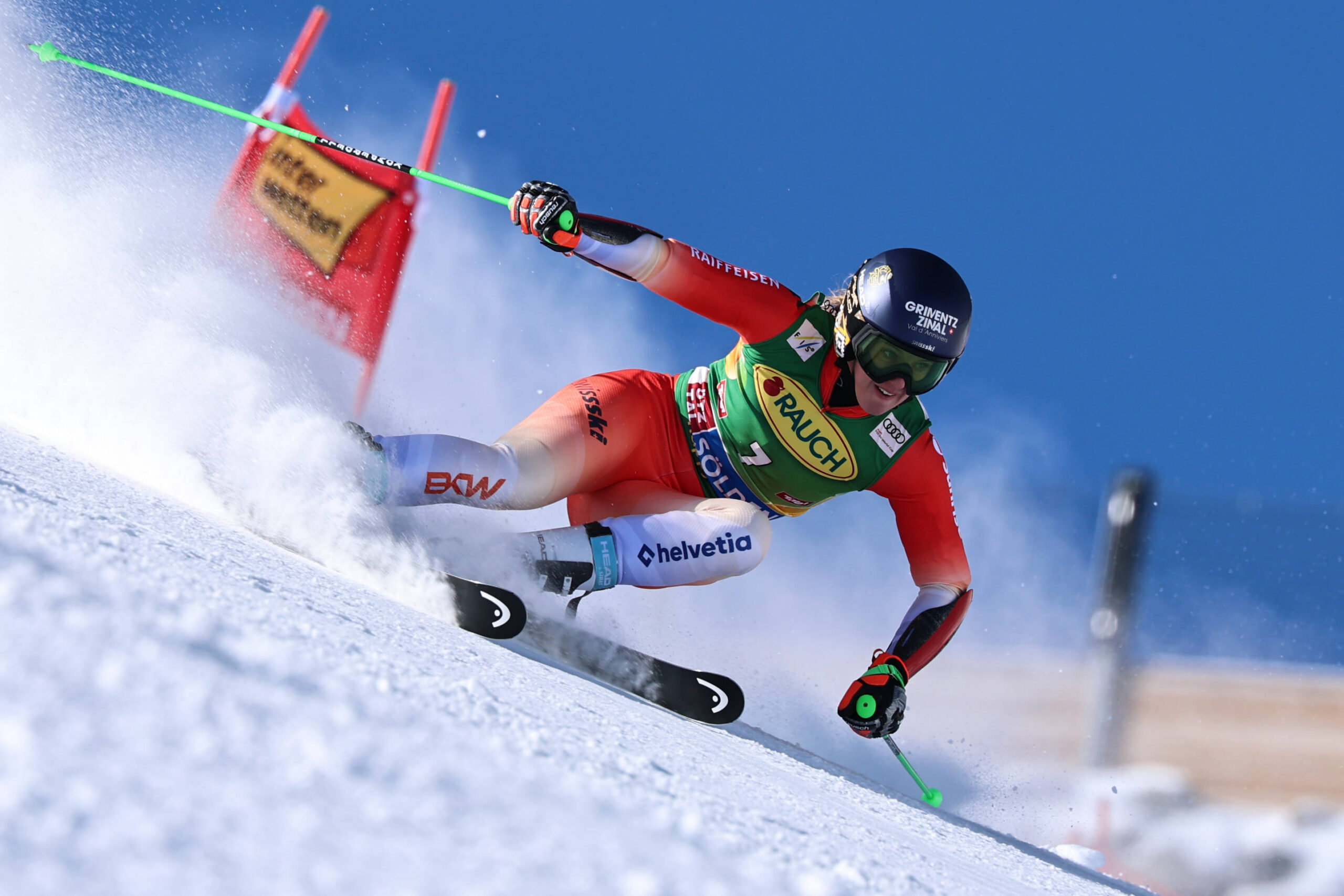
The season began with the giant slaloms in Sölden in late October. Paula Moltzan claimed her maiden World Cup victory by just one hundredth of a second ahead of Lara Colturi, with Germany’s Emma Aicher finishing third. In the men’s race, Lucas Pinheiro Braathen took victory ahead of Swiss duo Loïc Meillard and Marco Odermatt. Attention now turns to Levi, where the women race on 14 November before the men take to the slopes the following day.
Shiffrin’s absence opens the door for her rivals
Mikaela Shiffrin won nine of last season’s ten World Cup slaloms and has already claimed a record nine victories in Levi. This time, however, the American has chosen to skip the opening race in her strongest discipline to spend more time training for giant slalom and super-G.
Camille Rast could be the biggest beneficiary. The Swiss skier was the only woman other than Shiffrin to win a World Cup slalom last season, adding four further podium finishes on her way to second place in the discipline standings. Compatriot Wendy Holdener, a three-time runner-up in Levi, is also among the leading contenders.
Sölden winner Moltzan and Lara Colturi, who finished second in Levi last year, will also be targeting victory. Another compelling storyline is the return of Petra Vlhová. The six-time Levi winner has not competed in a World Cup slalom since January 2024. She finished 20th in the slalom at February’s Winter Olympics before returning to World Cup action in the Sölden giant slalom in October.
Aicher targets another podium as Austria looks to Truppe
Germany’s leading hope is Emma Aicher. The 23-year-old claimed her first World Cup slalom podium in Levi last season and underlined her form by finishing third at the Sölden opener. Lena Dürr, who placed fourth in Levi last year, gives Germany another genuine podium contender.
Austria will look primarily to Katharina Truppe. The Carinthian finished fourth in last season’s slalom standings and placed inside the top six in eight of the ten World Cup races. Katharina Huber and Franziska Gritsch are also part of Austria’s seven-strong women’s squad. Katharina Liensberger remains sidelined following a serious training crash in January, while Katharina Gallhuber is recovering from knee arthroscopy.
Braathen faces McGrath and a fiercely competitive field
Lucas Pinheiro Braathen arrives as the defending Levi champion. The Brazilian has already made a statement by winning the giant slalom in Sölden, but one of his biggest challengers will be his close friend Atle Lie McGrath, who claimed the slalom Crystal Globe last winter.
Clément Noël, Henrik Kristoffersen and reigning Olympic and world slalom champion Loïc Meillard are also among the favourites. Predicting a winner is particularly difficult in a discipline that produced seven different winners across eleven World Cup races in 2025/26.
Home favourite Eduard Hallberg will also be hoping to challenge for the podium. The 23-year-old Finn finished third in Levi last year before securing two more podium finishes over the course of the season.
Gstrein leads Austria’s challenge as Feller eyes Gurgl return
Austria have named an eight-man squad headed by Olympic silver medallist Fabio Gstrein. Michael Matt and Johannes Strolz are also included, while 23-year-old Oscar Heine is preparing to make his World Cup debut.
Manuel Feller, meanwhile, remains unavailable. Following back problems and surgery, he is still working towards the fitness required for full-length race runs. The Austrian is targeting a return at the home slalom in Gurgl on 22 November.
Germany’s Linus Straßer has played down expectations. He does not yet believe he is in podium-winning form and considers a top-eight finish a more realistic target. Switzerland’s squad includes Daniel Yule and Tanguy Nef alongside Meillard.
Levi Black: floodlights, precision and a unique reindeer tradition
The Levi World Cup venue lies around 170 kilometres north of the Arctic Circle. The course known as ‘Levi Black’ has a vertical drop of just 180 metres. With daylight in short supply, the second run takes place under floodlights. Its steeper middle section demands precise timing through rapid changes of direction, while even the slightest loss of speed can prove costly on the flatter run towards the finish.
An unusually warm autumn complicated preparations, forcing organisers to use snow stored from the previous winter. The International Ski and Snowboard Federation (FIS) nevertheless gave the races the green light. Levi also has one of the World Cup’s most distinctive traditions: the winners receive sponsorship of a reindeer, which remains in Lapland and is given a name chosen by the victorious skier.