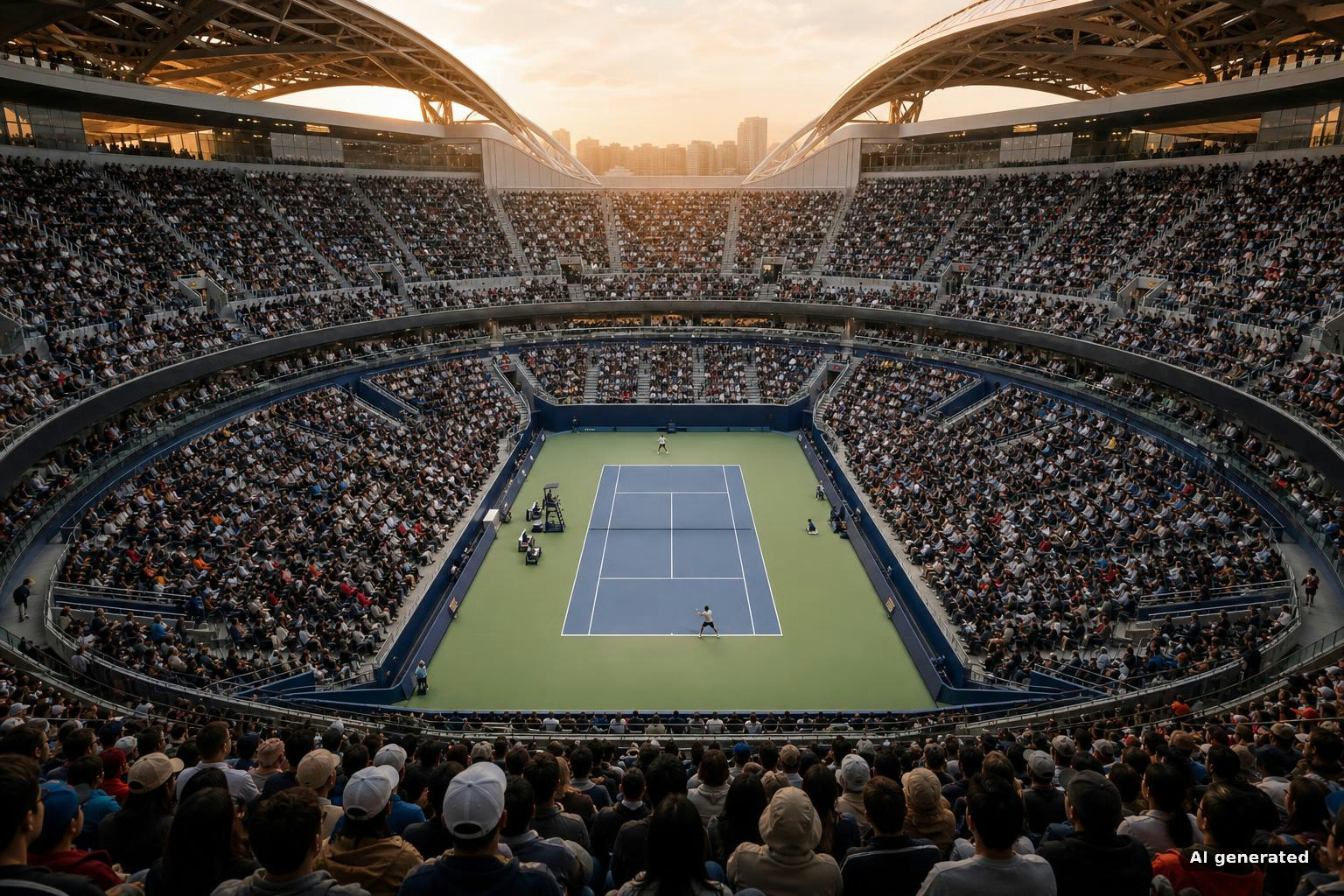
Rei Sakamoto had the cleaner answers in his semifinal against Hong Seong-chan at the Shanghai Masters and won 6-3, 7-5. The Japanese player converted his chances more consistently, controlled the key rallies and came through on the hard court in straight sets.
Sakamoto set the tone in the opening set
Rei Sakamoto found his rhythm quickly, putting Hong Seong-chan under pressure with aggressive returns. The Japanese player's baseline game was more precise, and he repeatedly looked to come forward. That greater solidity was reflected in the first-set scoreline of 6-3.
Hong Seong-chan struggled in the first set whenever Sakamoto accelerated the rallies early. The South Korean did win some points at the net, but could not consistently keep his opponent's pressure off his own serve. Sakamoto remained patient and waited for the right opportunities.
Hong Seong-chan raised his level, but Sakamoto held firm
The second set was more evenly contested. Hong Seong-chan played with greater intent and tried to shorten the rallies with his two-handed backhand. Sakamoto, however, was not thrown off his game plan. He defended alertly, maintained the depth of his shots and held his nerve in the tight games.
In the end, Rei Sakamoto took the second set 7-5. Hong Seong-chan stayed in the match deep into the final stages, but Sakamoto played the decisive points more cleanly. The Japanese player did not need a tiebreak.
Serve and return made the difference
The match statistics underlined Sakamoto's superiority. He won 91 percent of his service games and took 73 percent of all points on serve. In the return game, too, the Japanese player regularly found answers to his opponent's first serve, winning 42 percent of his return points.
He also struck 19 winners while committing just one double fault. Hong Seong-chan served with commitment as well, but managed only seven winners and won 70 percent of his service games. Throughout the match, Sakamoto maintained the better balance between applying pressure and avoiding errors.
On break points, Rei Sakamoto converted 60 percent of his opportunities. Hong Seong-chan created chances of his own but could not capitalise on the decisive moments to a sufficient degree. Sakamoto won 58 percent of total points overall, underlining his controlled performance throughout.
A victory with added significance
The win was in keeping with the Japanese player's development — he was ranked 133rd in the world at the time of the match and had entered as the 21st seed in the qualifying seedings. Rei Sakamoto had previously won the Australian Open singles title as a junior and claimed three singles titles on the ATP Challenger Tour.
For Hong Seong-chan, the run ended without a set win despite a committed display. The South Korean had returned to the professional tennis circuit through qualifying using a Protected Ranking after completing 18 months of military service. In Shanghai, however, it was Sakamoto's greater consistency that ultimately prevailed.