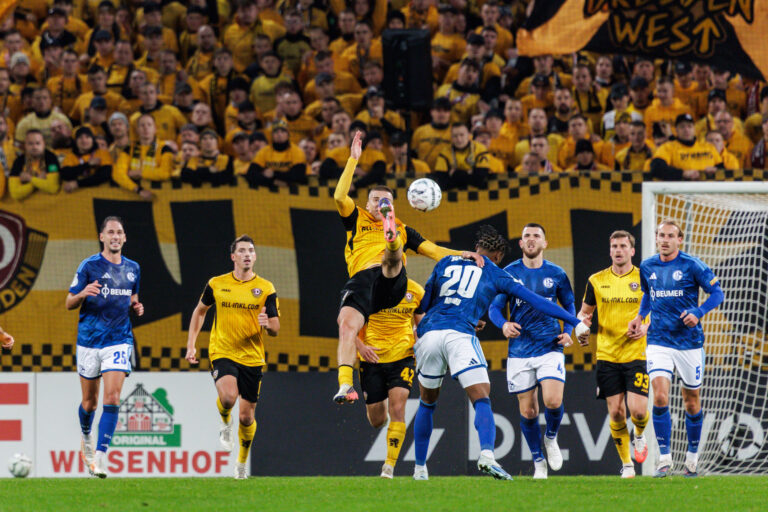
Whenever Waldhof Mannheim face 1. FC Kaiserslautern, there is traditionally far more at stake than simply three points or progression to the next round of the cup. The rivalry between the two clubs, separated by only around 60 kilometres, intensified particularly from 1983 onwards. After winning promotion to the Bundesliga, Waldhof were forced to play their home matches at Ludwigshafen’s Südweststadion – in an area Kaiserslautern regarded as part of their traditional catchment. Tensions between the clubs increasingly spread to their respective fan scenes over the following years.
Police consequently classified the first competitive meeting between the two rivals in several years as a high-risk fixture. The atmosphere inside a sold-out Carl-Benz-Stadion, packed with 23,513 spectators, was heated even before kick-off.
Fierce battle with few clear chances
The match itself required little time to get going, although initially the main talking point was events in the stands. Heavy use of pyrotechnics in the Kaiserslautern away section forced referee Robert Schröder to stop play as early as the third minute, with thick smoke drifting across the pitch. Objects had also been thrown from the Mannheim end towards FCK goalkeeper Julian Krahl.
Once play resumed, the expected fiercely contested derby developed. Waldhof created the first good opportunity, with Kushtrim Asallari testing Krahl after twelve minutes, but the Kaiserslautern goalkeeper made the save. The visitors gradually gained more control after that. Paul Joly created an opening for Marlon Ritter before young Austrian Thierry Fidjeu-Tazemeta saw a deflected effort strike the post shortly before half-time.
Mannheim improved after the break. The third-tier side matched their opponents physically and increasingly disrupted Kaiserslautern’s rhythm. Substitute Gonçalo Gregório had their best chance to take the lead in the 74th minute, but his slightly deflected effort also hit the woodwork. Despite a combined 40 attempts – 22 for FCK and 18 for Mannheim – the game remained goalless heading into the closing stages.
Match comes close to being abandoned
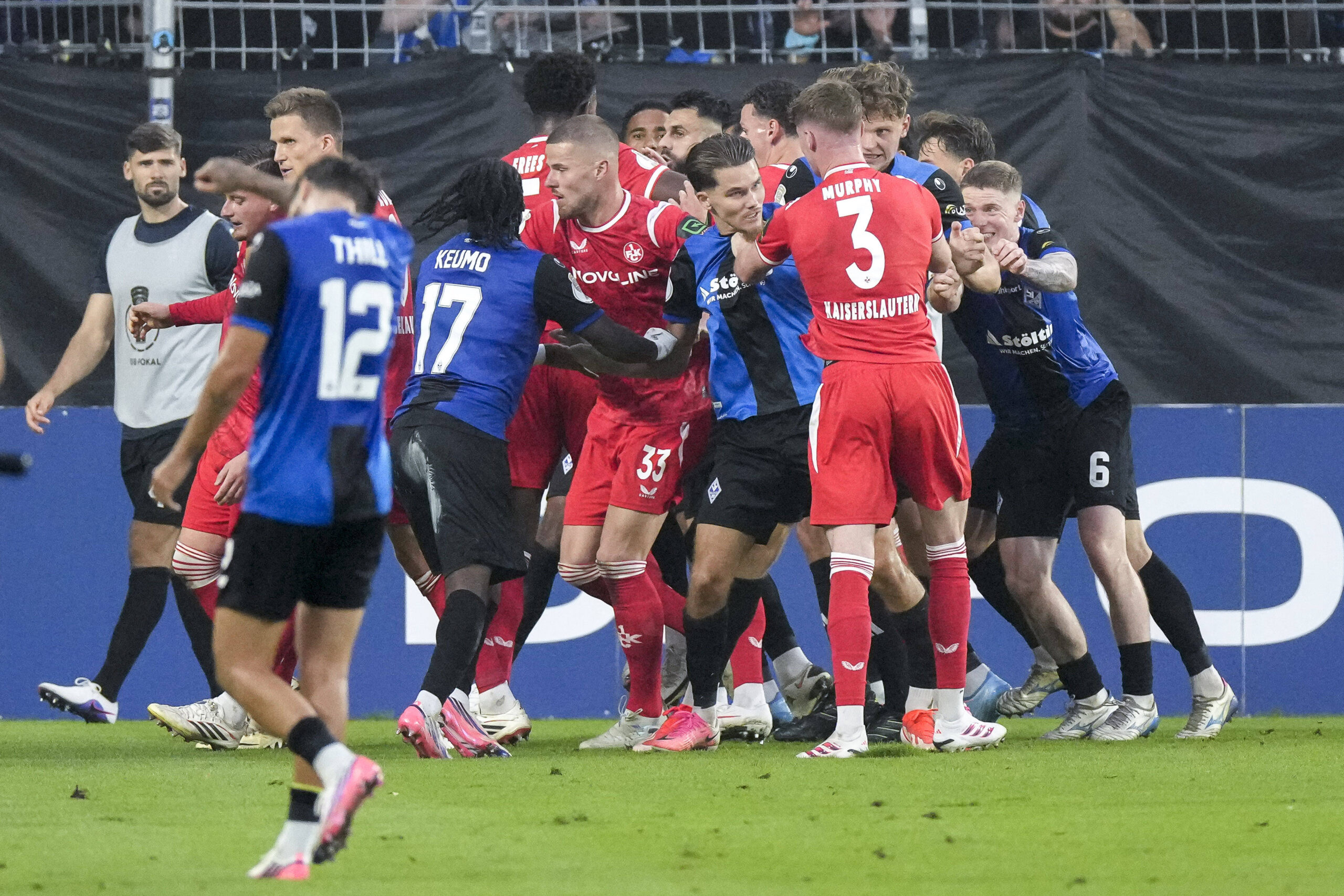
The situation then escalated completely immediately before extra time. Following a confrontation on the pitch, a large group of players gathered around the incident. Shortly afterwards, fireworks were launched from the Kaiserslautern section towards other parts of the stadium. Mannheim supporters then entered the pitch.
Schröder sent both teams back to the dressing rooms. Large numbers of police officers moved onto the field, with mounted police also deployed. Extra time could only begin after a stoppage lasting more than half an hour and a clear stadium announcement warning that any further incident would result in the match being abandoned.
The football remained finely balanced even after the restart. Both teams were visibly tiring and a penalty shoot-out appeared inevitable. Then, in the 120th minute, substitute Ibrahim Kanaté was given space one final time. The 19-year-old collected a pass from Alex Murphy, tried his luck from distance and curled a superb effort into the net for 1-0. Moments later, the final whistle blew – Kaiserslautern had won the derby and secured their place in the second round.
Serious disorder overshadows the derby
The sporting outcome was almost secondary given the scenes surrounding the match. According to police, 35 officers were injured, including 33 members of the federal police. A total of 85 people required medical treatment, with eight taken to hospital. Around 1,400 security personnel were deployed. Investigations are ongoing into offences including breach of the peace, assault and violations of explosives legislation. The DFB has also announced a comprehensive review of the incidents.
The favourites also prevailed in Friday’s two other cup ties. Eintracht Frankfurt demolished fifth-tier SC St. Tönis 11-0, having already led 10-0 at half-time. Karlsruher SC had to work much harder, coming from 1-0 down to earn a 2-1 victory away to third-tier Preußen Münster.