17 minutes of the 2-1 win over Serbia. The Liverpool forward immediately reached for his ankle and was unable to continue.
The Dutch federation subsequently confirmed an ankle injury and sent Gakpo back to Liverpool, where further examinations were carried out. An official prognosis on the length of his absence has yet to be announced. With the high-profile clash against Manchester City approaching, a longer lay-off would be particularly unwelcome for Liverpool.
Brobbey facing significant spell out with thigh injury
Brian Brobbey appears to have suffered an even more serious injury. The Sunderland striker was also hurt while on international duty with the Netherlands and had to leave the pitch after just over half an hour against Germany.
Brobbey seemingly sustained a more serious injury to the back of his thigh. Sunderland have yet to announce a definitive diagnosis or precise recovery timeframe, but initial assessments from the Netherlands were far from optimistic and suggest he could be sidelined for several weeks – a major blow for the Black Cats.
Brobbey suffered the injury without any direct contact while making a running movement. It is precisely this type of muscular problem that is repeatedly cited as a warning sign in the debate over the enormous physical demands placed on professional players.
Van Hecke returns to Tottenham injured
Jan Paul van Hecke completed a lengthy Dutch injury list. The centre-back suffered a foot injury against Serbia and attempted to return to training a few days later.
However, he was forced to stop after only a few minutes. Van Hecke subsequently returned to Tottenham. More recent reports at least suggest that the problem is unlikely to keep him out for an extended period and that he could return relatively soon. Nevertheless, he is still expected to miss one or two matches for a Spurs side that remains firmly stuck in a difficult spell.
Dorgu injured against Wales
Manchester United also received bad news from the international break. Patrick Dorgu was forced off during the first half of Denmark’s 2-0 victory over Wales.
The 21-year-old appeared to injure the back of his thigh during one incident. Denmark coach Brian Riemer later confirmed that Dorgu would leave the national team camp and return to Manchester United.
A precise diagnosis has yet to be announced. The timing is particularly unfortunate for Dorgu, who had featured in every Premier League match of the season so far.
Ødegaard plays on despite ankle problem
Arsenal, meanwhile, appear to have escaped a more serious setback with Martin Ødegaard. The Norwegian took a heavy blow to his left ankle in the Nations League match against Portugal and was seen leaving the stadium with a slight limp.
Ødegaard himself described the injury simply as a knock to the ankle. Although he sat out one training session afterwards, he was then able to play the full 90 minutes against Wales and even contributed an assist.
There has been no indication of structural damage. Arsenal will nevertheless monitor closely how their captain responds to the intense workload of recent weeks. The English champions also face a demanding run of fixtures in the coming weeks, with careful workload management set to become a key issue.
Relief for Raphinha
In Raphinha’s case, the initial concern proved greater than the eventual diagnosis. The Barcelona star was substituted at half-time during Brazil’s 4-2 victory over Australia and subsequently left the national team due to swelling in his right thigh.
Given his injury history in that area, alarm bells initially began to ring in Barcelona. However, examinations following his return provided reassuring news: no structural injury was detected.
Raphinha is therefore expected to be available for Barcelona’s next league match against Getafe. With an extremely demanding schedule ahead in October, however, the Brazilian is still likely to have his workload managed carefully.
Holm facing months on the sidelines
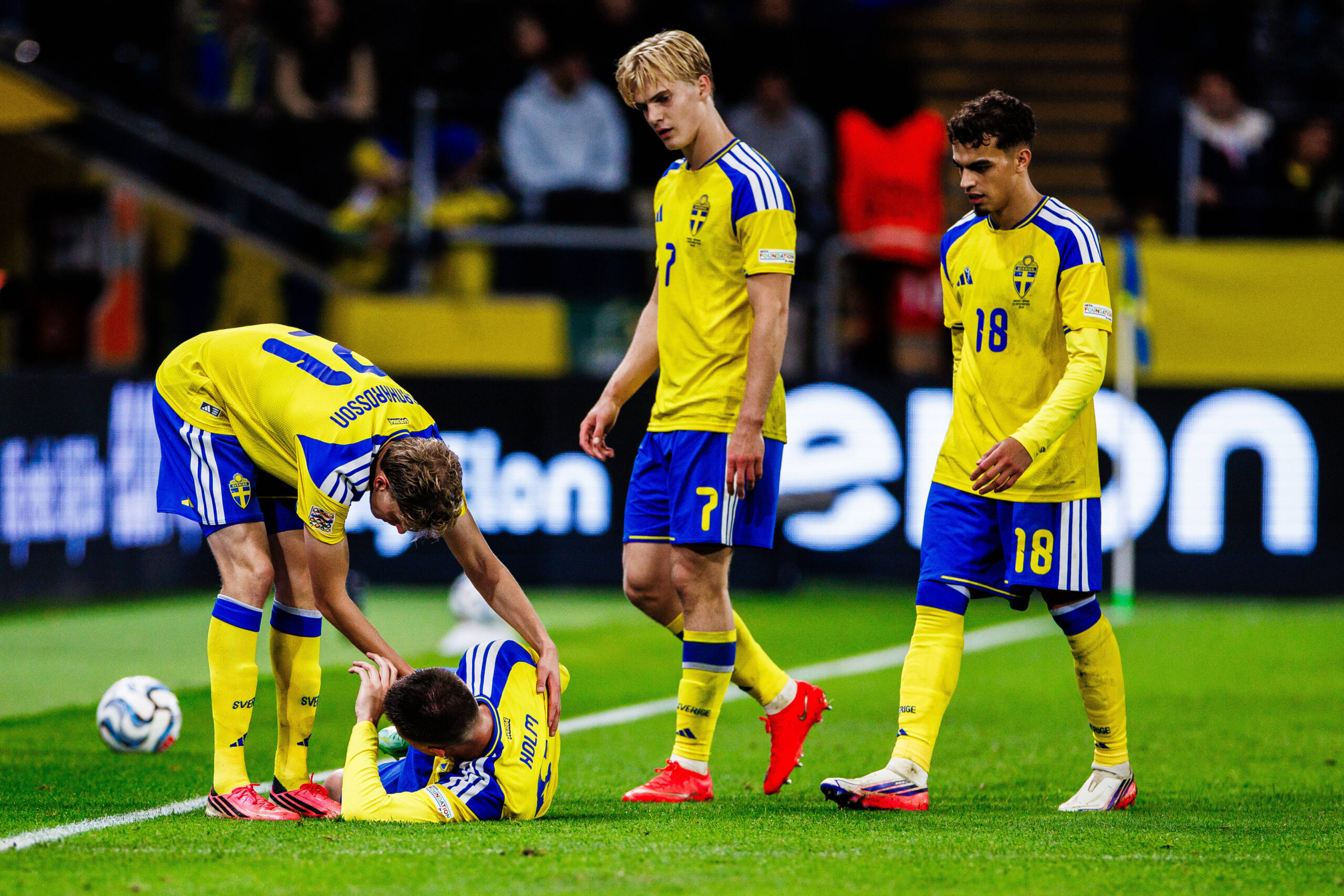
The most serious setback among this group was suffered by Emil Holm. Bologna’s Swedish right-back went down during the second half of the Nations League match against Romania, immediately grabbed the back of his thigh and had to be carried off on a stretcher.
Subsequent examinations confirmed the initial fears. Holm suffered an injury to a tendon in his right hamstring and required surgery. Bologna expect him to be sidelined for four to six months.
It is an especially cruel blow for the 26-year-old, who had already missed the World Cup in the summer because of injury.
Numerous other absences and question marks
The list, however, is far from complete. Liverpool also had to recall Alexander Isak early from Sweden duty after the striker suffered what was described as a minor injury. Sunderland lost centre-back Dan Ballard to a thigh problem in addition to Brobbey.
Aston Villa goalkeeper Zion Suzuki was reported to be suffering from rib problems, while Bruno Fernandes arrived at Portugal’s training camp already carrying an injury from Manchester. Christos Tzolis, Ezri Konsa, Lutsharel Geertruida and Nico O’Reilly also caused injury concerns during the extended international period. Micky van de Ven, meanwhile, quickly received the all-clear after suffering a painful finger injury.
Not every one of these cases will result in a lengthy absence. Even so, the sheer number of injuries, physical problems and players forced to leave their national teams early is striking.
Schlager hits out at excessive workload
Austria’s Xaver Schlager showed that the issue has long since become a major concern for the players themselves. After the final Nations League match in Kosovo, the Nottingham Forest midfielder – who had played all four of Austria’s matches during the unusually long international window – openly criticised the decision to schedule four internationals within the space of two weeks.
“The main thing is that we have games, games, games. But how we’re doing in the process doesn’t matter at all in the end,” Schlager said after the 1-1 draw in Prishtina.
For players representing clubs involved in European competition in particular, the workload has effectively become permanent. League fixtures, the Champions League, Europa League or Conference League, domestic cup competitions and international matches mean that many professionals are now playing midweek almost continuously. Not every injury can be directly attributed to excessive workload – the schedule naturally has little bearing on contact injuries. However, the growing number of muscular problems and injuries sustained without opposition contact has made the debate surrounding recovery, fixture congestion and workload management more relevant than ever.