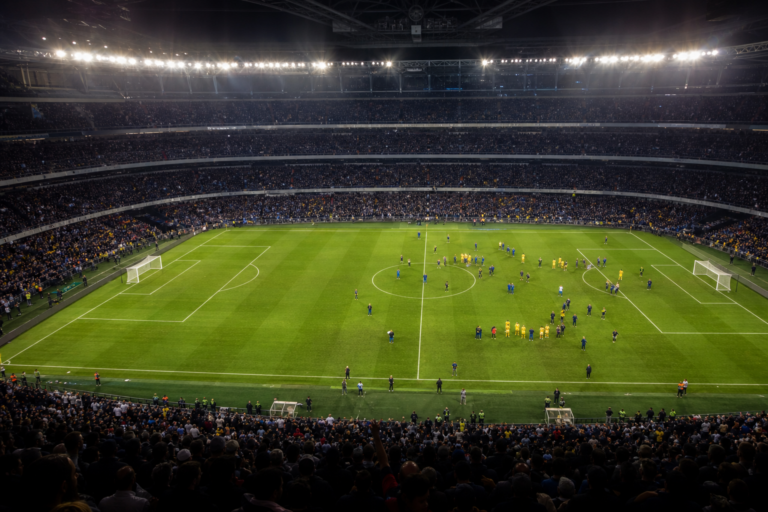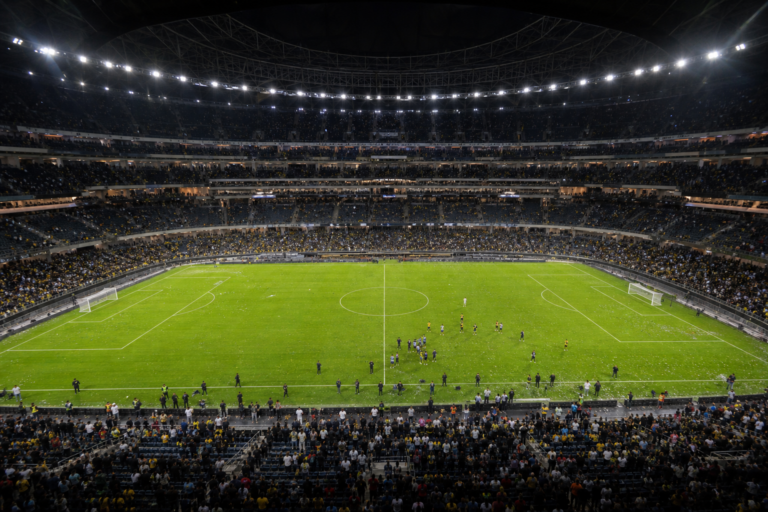
After a 1-1 draw with the Netherlands and a 1-0 defeat to Greece, the pressure had already started to build. That made not only the result against Serbia important, but also the manner of the performance: 32-1 in shots, 74 per cent possession and an xG tally of 3.81 to 0.01 left little doubt about just how one-sided the match was.
Germany find a way through Serbia’s deep block
Klopp changed his entire starting XI from the defeat to Greece and fielded a young side against Serbia’s deep 5-4-1. Aleksandar Pavlović and Tom Bischof formed a technically strong midfield pairing, while Florian Wirtz was given plenty of freedom around Nick Woltemade.
The key difference from the Greece game was Germany’s movement in front of and between the opposition lines. They occupied the spaces between midfield and defence more consistently, Pavlović repeatedly dropped deeper to help build attacks and Bischof pushed forward with greater dynamism. Wirtz was given licence to roam and constantly looked for pockets where Serbia’s midfield and back line struggled to pass him on.
After the match, Klopp also put the improvement down to the additional time on the training pitch. Against Greece, he said, his team had barely had any opportunity to work on their patterns. This time it was different: “Today we played in the spaces where we need to play.”
The numbers underline Germany’s dominance. They recorded 43 touches in the opposition box to Serbia’s three. Pavlović was the hub of Germany’s possession game, finishing with 148 touches and completing 123 of his 132 passes.
Counter-pressing gives Germany licence to take risks
For Klopp, however, what happened immediately after Germany lost the ball was even more important than their possession play. Against Serbia’s deep block, Germany were able to take risks because their protection behind the ball was excellent.
“We can take every risk in the world if our counter-pressing goes through the roof,” Klopp said of his instructions. His players followed that plan almost to perfection. Whenever a pass broke down in the final third, several German players immediately swarmed the ball-carrier, while the back line defended aggressively on the front foot.
As a result, Serbia were rarely able to escape their own half. Wirtz also had a clear role in the press: he repeatedly closed down goalkeeper Djordje Petrovic to prevent him from having time and space to launch long balls. Klopp was particularly pleased with the commitment his playmaker showed in carrying out that demanding task.
“The counter-pressing went through the roof. It was exceptionally good,” the Germany coach said afterwards.
That aggression allowed Germany to win the ball back quickly and launch wave after wave of attacks. Serbia managed just one shot over the entire match.
Bischof breaks the deadlock, Wirtz seals the win
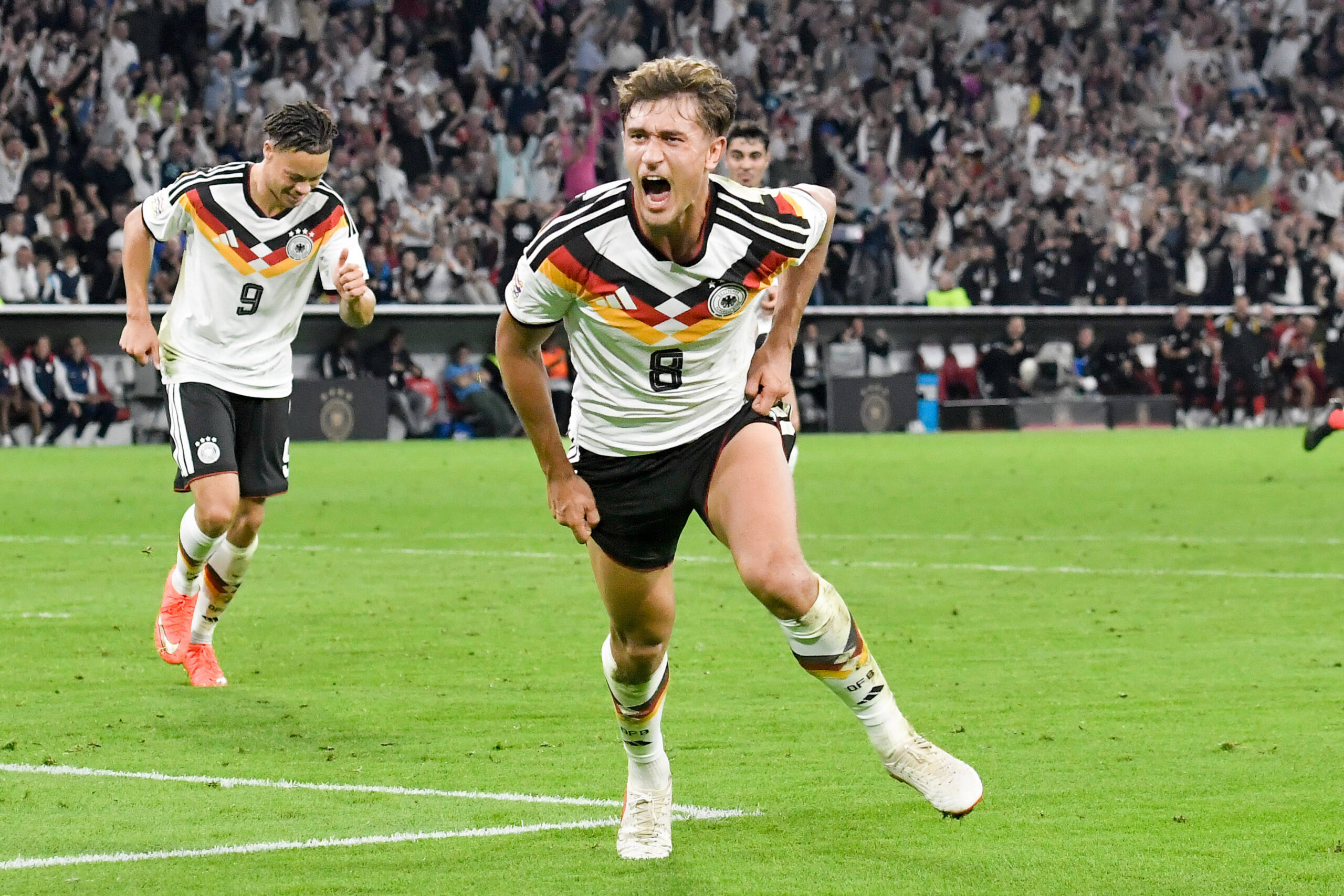
Despite their dominance, Germany had to wait until the 39th minute to turn their superiority into a goal. Wirtz dribbled his way into the penalty area and struck the post, before Bischof converted the rebound from close range to make it 1-0.
The goal was fitting reward for an impressive display from the young Bayern midfielder. Bischof contributed in both directions, won the ball seven times and was not only an important link player, but also regularly looked to get into shooting positions himself.
Germany could easily have been further ahead before the break, with Serge Gnabry among those denied by Petrovic. After half-time, Nick Woltemade wasted an even bigger opportunity when he sent a close-range effort over the bar.
Two minutes later, Wirtz made the game safe. After a driving run from Maximilian Mittelstädt, the Liverpool midfielder controlled the ball superbly and finished in the 61st minute to make it 2-0.
Klopp praised not only Wirtz’s technical quality, but above all his enjoyment of the game and his work without the ball. “We saw a player who was bursting with joy and worked incredibly hard.”
Klopp hails a “perfect evening”
The only major criticism was that Germany managed just two goals from 32 attempts. Klopp, however, was in no mood to let that spoil the night. “We could have scored more goals, but that really doesn’t matter.”
More important to him was the fact that his team stayed focused even while the scoreline remained tight and did not move away from their game plan. After a difficult start to his tenure, the victory was a much-needed lift. Klopp called it a “perfect evening” and also highlighted how much he had enjoyed the atmosphere inside the Allianz Arena.
After taking just one point from their opening two Nations League matches, Germany were already under pressure going into the Serbia game. The first win under Klopp therefore feels like a genuine breakthrough, even if Serbia’s passive display meant the hosts were rarely pushed to their limits.
Germany travel to Thessaloniki for another meeting with Greece on Sunday. Klopp warned against treating the Serbia performance as the new normal just yet. The direction, however, is clear: counter-pressing, brave positioning and high intensity are meant to become permanent features of Germany’s game, regardless of which players are on the pitch.