Since its first edition in 2017, the Tour of Guangxi has been part of the WorldTour and traditionally brings the season at cycling’s highest level to an end. The riders will cover around 1,040 kilometres before Sunday’s finish. This year’s race starts in Chongzuo, while the general classification is expected to be decided on the final day with the summit finish in Nongla.
Pidcock arrives in China in strong form
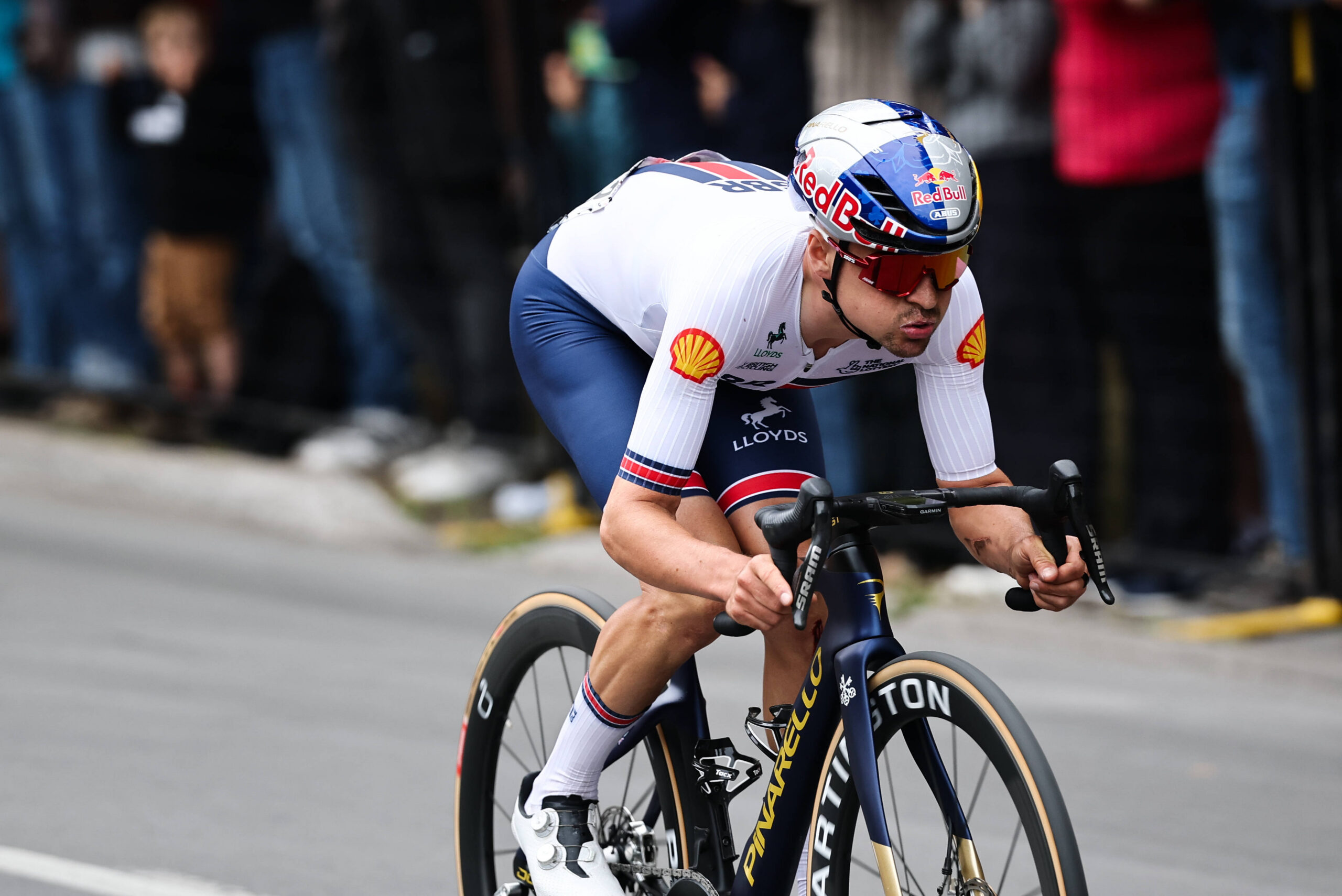
Tom Pidcock will make his Tour of Guangxi debut after a string of impressive results in recent weeks. The Briton finished seventh in the World Championship road race before taking second place at both the Giro dell’Emilia and Tre Valli Varesine. He then finished sixth at Il Lombardia.
The route should suit him well. There are no long high-mountain passes, but plenty of short and medium-length climbs, followed by a summit finish tailored to explosive riders on the final day. That is exactly the kind of terrain where Pidcock can make the most of his acceleration on short, steep gradients.
There is also a personal milestone at stake. Despite winning major races across several disciplines, Pidcock is still searching for his first overall victory in a WorldTour stage race.
Sprinters get their chance before the climbing begins
The opening stage covers 149.4 kilometres with both the start and finish in Chongzuo and represents the clearest opportunity for the pure sprinters. The route is not entirely flat, but a bunch finish remains the most likely outcome.
Things become more demanding on stage two. The 179.7-kilometre route to Jingxi features a longer climb in the final third of the race. There is still enough distance after the summit for groups to come back together, but the heavier sprinters could find themselves under pressure for the first time.
At 212.3 kilometres, stage three is the longest of the race and includes more than 2,000 metres of climbing. Several ascents in the final third could bring the general classification riders into the action for the first time.
Stage four from Bama to Tian’e looks even more intriguing. Nearly 2,700 metres of climbing are packed into 165.7 kilometres. A series of climbs through the middle section create opportunities for attacks before the route becomes easier towards the finish. Riders unwilling to wait until Nongla may choose this stage to put their rivals under early pressure.
Stage five to Yizhou is also far from straightforward, with more than 2,000 metres of elevation gain. The flatter finale, however, could still give breakaway riders and the more durable sprinters a chance.
Nongla summit finish set to decide the race
The overall classification is likely to come down to the final day. Stage six runs for 165.8 kilometres from Yizhou to the Nongla Scenic Area, where the decisive final climb measures around 3.1 kilometres at an average gradient of 6.3 per cent.
That average does not tell the full story, with some ramps reaching around ten per cent. Rather than favouring pure high-mountain climbers, the ascent is particularly well suited to explosive climbers and puncheurs.
Last year already showed how decisive Nongla can be. Paul Double attacked on the climb and laid the foundations for his eventual overall victory. This time the summit finish comes on the final stage itself, meaning whoever takes the race lead there will not have to defend it the following day.
Double, Ayuso and Narváez lead Pidcock’s challengers
Defending champion Double once again belongs among the leading contenders. Juan Ayuso also has the qualities required to win the race. The Spaniard has considerably more experience in major stage races than many of his rivals, although his form at the end of a long season remains an important factor.
Jhonatan Narváez is another rider who should be well suited to the course. The Ecuadorian finished third last year and is particularly dangerous on short, intense climbs.
Kévin Vauquelin, Ilan Van Wilder, Maxim Van Gils, Daniel Felipe Martínez, Léo Bisiaux and Jarno Widar are among the other riders to watch. Widar in particular has impressed recently, beating Pidcock in a three-man sprint at Tre Valli Varesine.
Magnier again the man to beat in the sprints
Paul Magnier will once again be one of the main favourites on the flatter stages. The Frenchman dominated the 2025 Tour of Guangxi with five stage wins and arrives this year in strong form once again.
Repeating that level of dominance will not be easy. Olav Kooij provides top-class competition, while Kaden Groves, Jordi Meeus, Max Kanter, Milan Fretin, Juan Sebastián Molano and Fabio Jakobsen add further depth to a strong sprint field.
The Tour of Guangxi therefore brings the WorldTour season to a close with a high-quality field and a varied route. The sprinters should dominate the opening days before the general classification riders increasingly take centre stage. Everything points towards the overall title being decided in the closing kilometres of the WorldTour season – exactly the kind of finale where Pidcock’s explosiveness could make the difference.