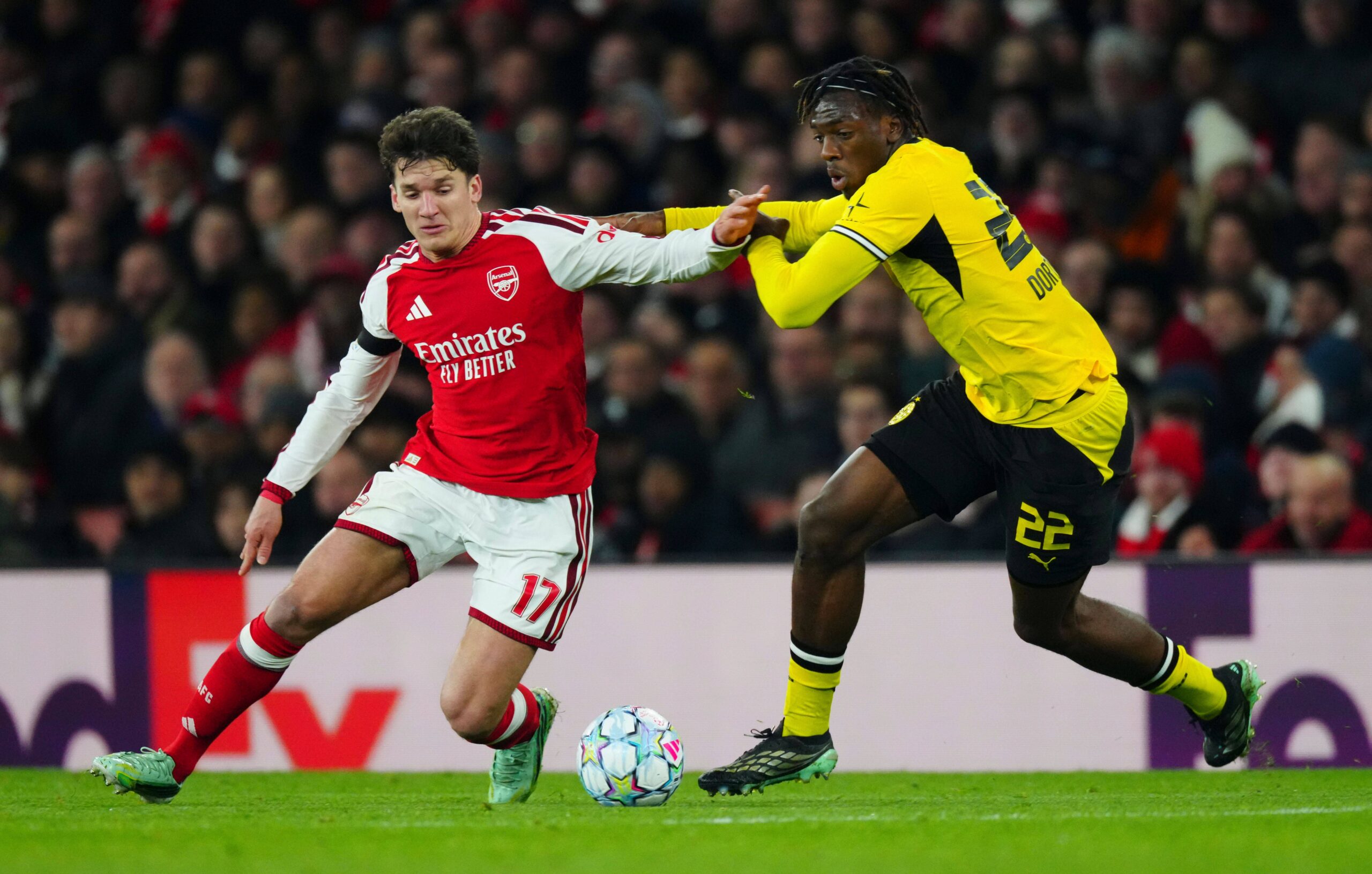
Arsenal remain unbeaten in the Champions League but missed the opportunity to claim their fourth victory in five league-phase matches. Dortmund recovered from a difficult start to take a valuable point away from home.
Arsenal hit by absences as Dortmund opt for a back three
Arsenal manager Mikel Arteta was without first-choice goalkeeper David Raya, Martín Zubimendi and Bukayo Saka. Kepa Arrizabalaga therefore started in goal, while Noni Madueke took his place on the right wing. Declan Rice and Myles Lewis-Skelly formed the central midfield partnership in a 4-2-3-1 formation. Martin Ødegaard operated behind Viktor Gyökeres, with Madueke and Christos Tzolis on either flank.
Dortmund manager Niko Kovač deployed a 3-4-2-1 system, with Joane Gadou, Waldemar Anton and Nico Schlotterbeck forming the back three. Julian Ryerson and Daniel Svensson occupied the wing-back positions, while Joey Veerman and Felix Nmecha played in central midfield. Jobe Bellingham and Maximilian Beier supported Fábio Silva in attack. Emre Can, Giannis Konstantelias, Justin Lerma and Samuele Inácio were unavailable through injury.
Dortmund’s back three was designed to protect the centre and provide a platform for quick attacks down the flanks or runs in behind the Arsenal defence. The hosts, meanwhile, looked to push Dortmund’s wing-backs deep into their own half and create chances from wide areas.
Gyökeres gives Arsenal an early lead
Arsenal made the brighter start. Madueke immediately caused problems on the right, while Dortmund struggled to disrupt the home side’s attacks before they reached the final third.
The opening goal arrived in the tenth minute. Madueke found Gyökeres in the right half-space, and the Swedish striker took a touch before shooting from around 25 metres. His powerful effort dipped into the net, leaving Gregor Kobel unable to keep it out.
Just five minutes later, the Swiss goalkeeper was called into action again. Tzolis tried his luck from outside the penalty area and forced Kobel into a save. Madueke reached the rebound but was prevented from getting a clean second shot away.
Dortmund’s main difficulty was the space between their midfield and defensive lines. Arsenal repeatedly found players in those pockets, while Madueke continued to beat his marker on the right and deliver dangerous balls into the box.
Arsenal fail to extend their advantage
After around 20 minutes, Dortmund began to find ways out of Arsenal’s pressure. The visitors looked more frequently for direct passes in behind and gained some respite through set pieces.
Arsenal nevertheless continued to create the better opportunities. Rice sent a long-range effort narrowly over the crossbar before Schlotterbeck blocked another attempt from the midfielder with a sliding challenge.
Dortmund also fashioned a good opening before half-time. Gadou advanced down the right to the byline and forced Kepa into a save from a tight angle. Despite their attacking pressure, Arsenal went into the interval with only a one-goal advantage.
Beier rewards Dortmund’s second-half improvement
Dortmund returned from the break with greater intensity. The visitors pressed more aggressively, won second balls more frequently and managed to carry their attacks into dangerous areas.
They should have equalised in the 48th minute. Svensson delivered a low cross from the left, but Beier failed to make contact from just a few metres out.
Shortly afterwards, Dortmund appealed for a penalty following a possible handball by Gyökeres. The ball had struck the Arsenal striker’s arm at a corner, but referee Maurizio Mariani allowed play to continue. The VAR did not intervene.
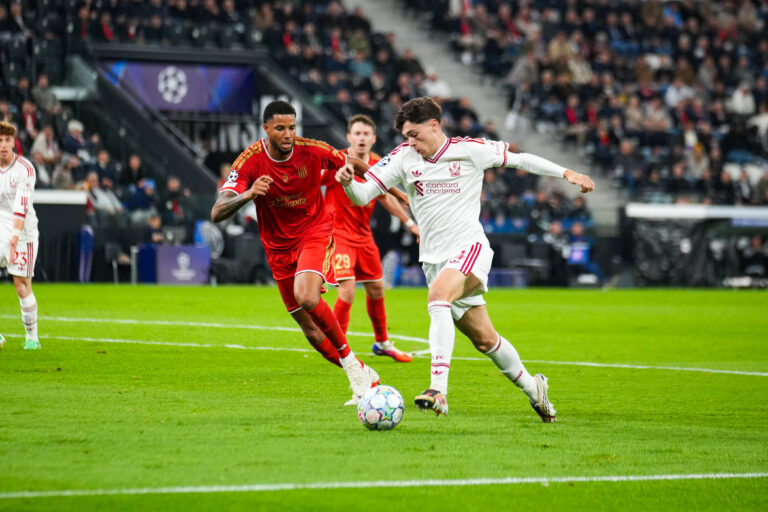
The equaliser finally came in the 55th minute. Gadou drove forward from defence through midfield and picked out Beier on the right, just outside the penalty area. The forward cut inside, beat Gabriel and guided a low finish into the corner.
Dortmund’s defenders were now taking a more active role in possession, creating new problems for Arsenal. Gadou’s run before the equaliser illustrated how an additional player moving into midfield could disrupt the home side’s defensive assignments.
Bellingham denied a potential winner by offside
The match became more open after the equaliser. Arteta introduced Eberechi Eze, Bruno Guimarães and Jurriën Timber, while Kovač turned to Serhou Guirassy and Konstantinos Karetsas, among others.
Dortmund thought they had taken the lead in the 68th minute. Bellingham converted the rebound after Ryerson’s initial effort had been blocked, but the midfielder was narrowly offside.
Arsenal subsequently increased the pressure. Anton blocked a dangerous shot from Madueke, while Gyökeres missed a close-range header. Guirassy almost diverted a free-kick into his own net before Rice struck the post in the 84th minute.
Dortmund continued to look for opportunities on the counterattack. Karetsas dribbled towards the edge of Arsenal’s penalty area but could not finish the move with a threatening shot.
Arsenal pay the price for missed chances
The numbers strongly favoured Arsenal. The Londoners enjoyed around 61% possession and registered 27 shots compared with Dortmund’s twelve. They also led 47-20 in touches inside the opposition penalty area. The expected goals figures stood at 2.10 for Arsenal and 0.88 for Dortmund. However, both sides managed just four shots on target, meaning fewer than one in six of Arsenal’s attempts tested the goalkeeper.
Arsenal made effective use of the pitch’s width in their attacking play. Their advanced wingers forced Dortmund’s wing-backs deep into defensive positions, opening up passing lanes between the visitors’ lines. Yet the Londoners repeatedly failed to turn promising attacking situations into goals.
Dortmund initially struggled to protect the flanks while maintaining a compact central block. Their more aggressive pressing after half-time changed the pattern of the game. Kovač’s side disrupted Arsenal’s build-up earlier, pushed forward more quickly after regaining possession and found it easier to escape their own half. Forward runs from the back three also helped Dortmund create numerical advantages in midfield and bring their attacking players into the game.
Dortmund leave London with a valuable point
Arsenal had to settle for a draw despite creating numerous good opportunities. Their lack of precision in front of goal ultimately cost them another Champions League victory. The hosts also came under greater defensive pressure after the equaliser, although they regained their attacking momentum in the closing stages.
For Dortmund, recovering from an early deficit to earn a point away from home represented a positive result. Kovač’s team gained greater control of midfield after the break, pressed Arsenal higher up the pitch and showed more conviction going forward. Their improved second-half performance was enough to secure a draw in London.