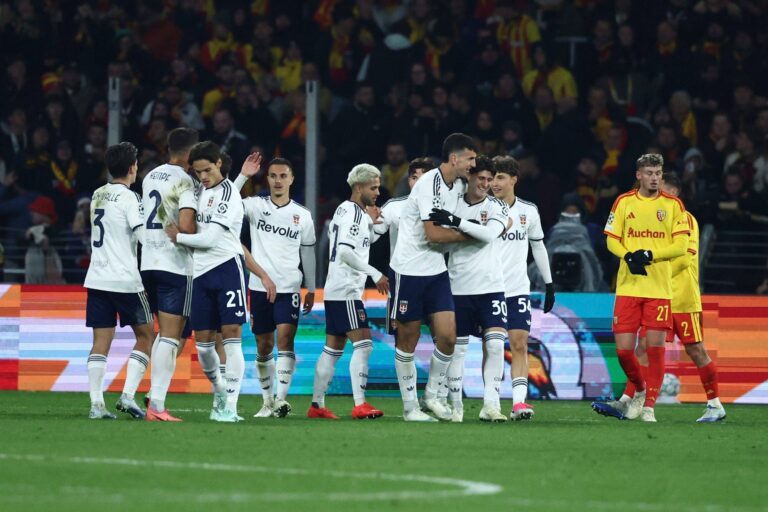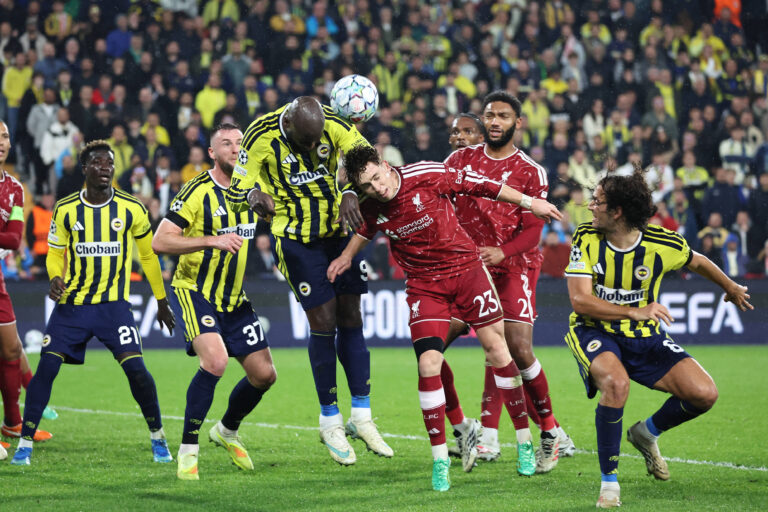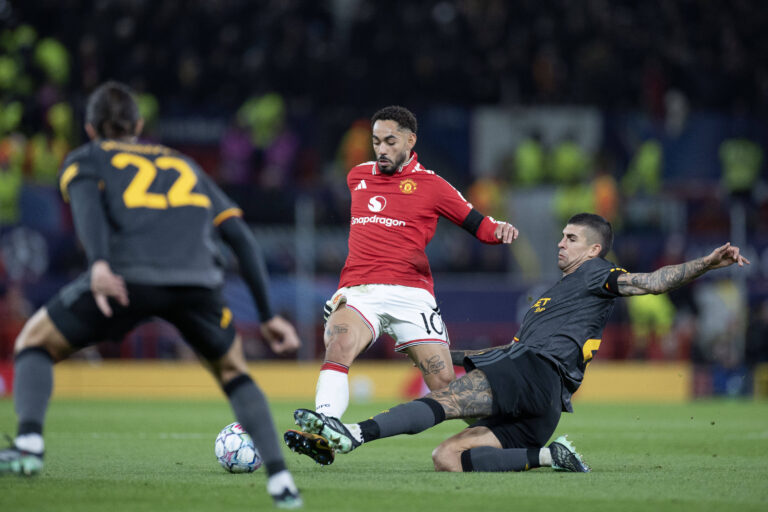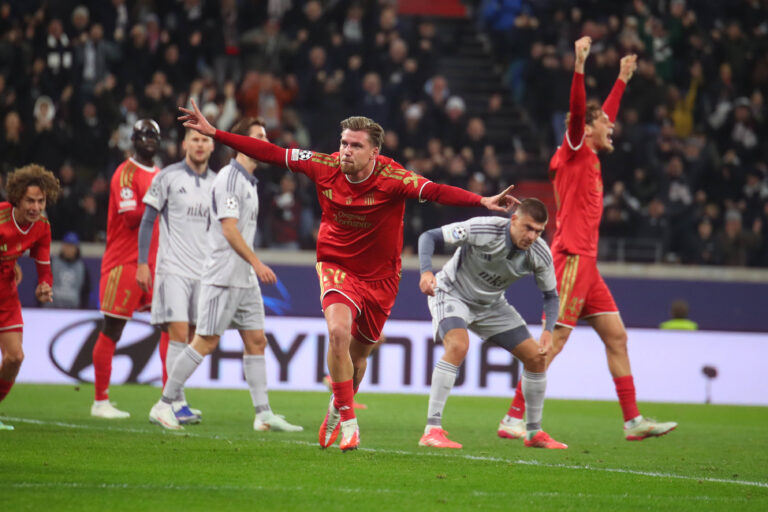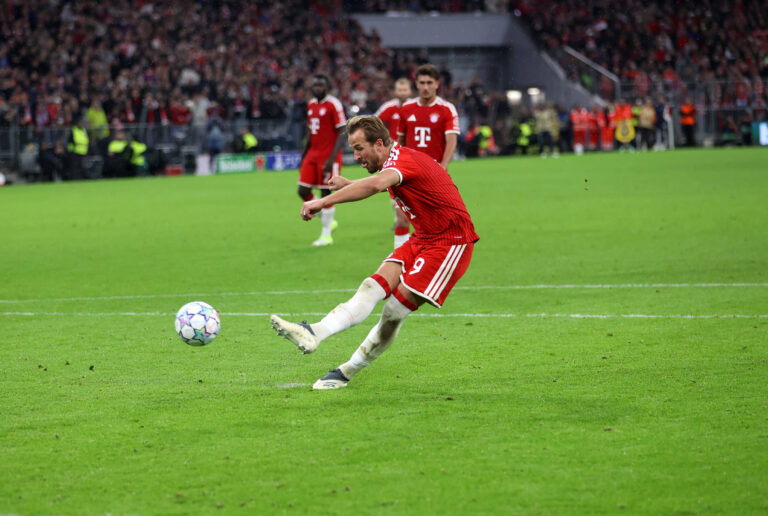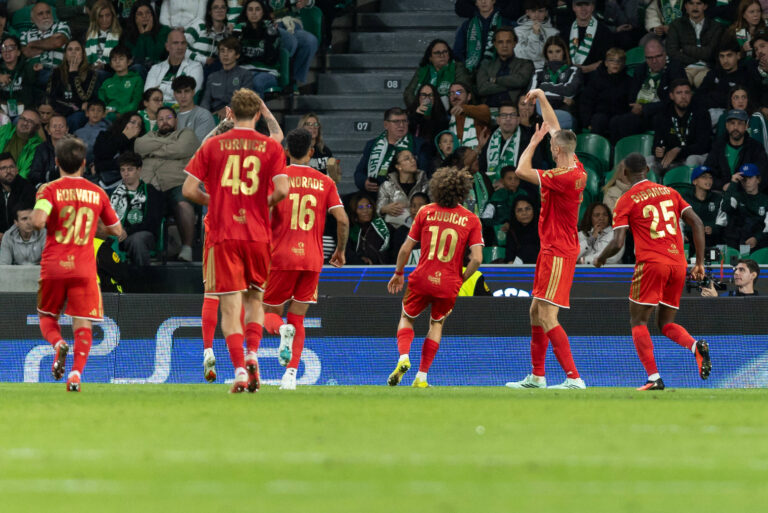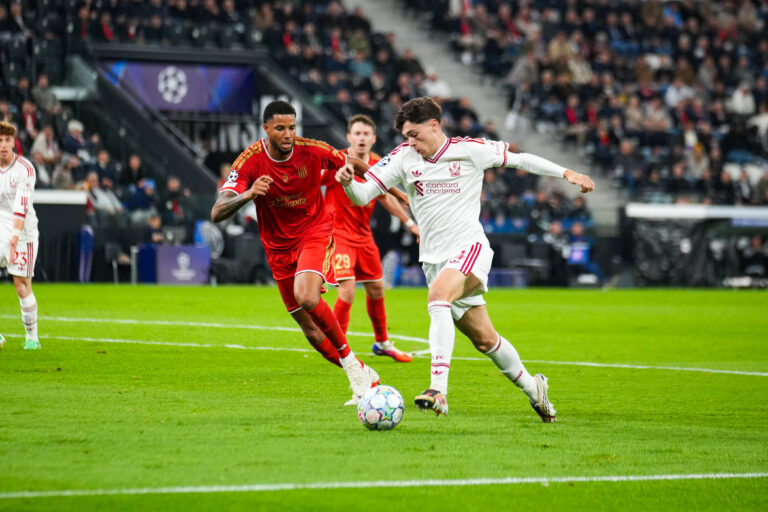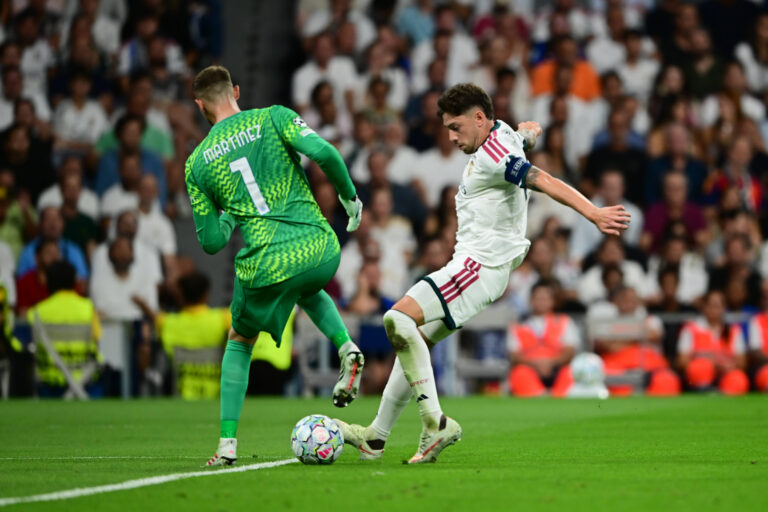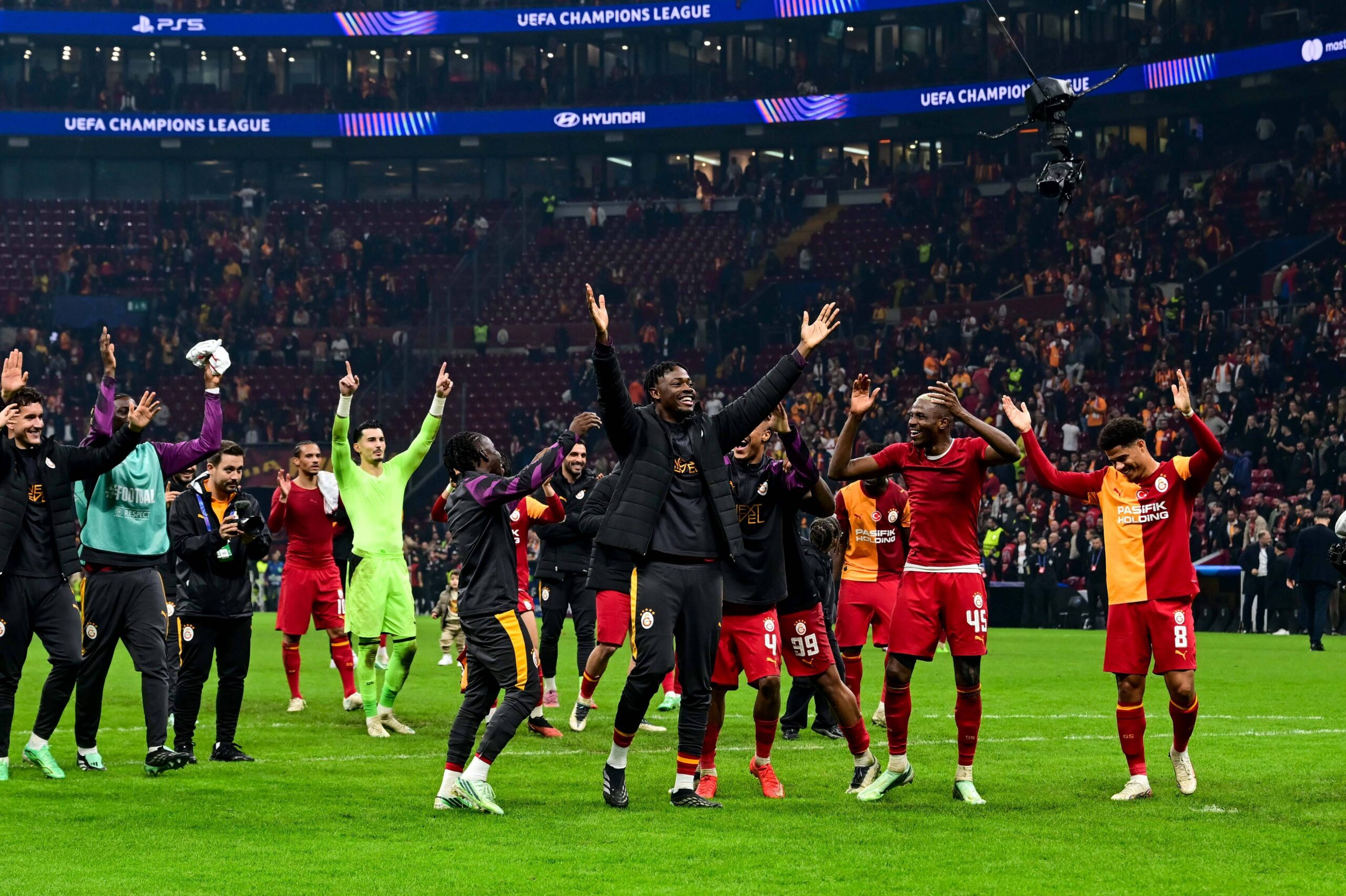
Aleksey Batrakov struck in the 12th and 15th minutes to give Galatasaray their second victory of the Champions League league phase. Stuttgart suffered their first defeat after two wins and a draw, although the contest was considerably closer than the final score suggested. Jamie Leweling could have put the visitors ahead as early as the eighth minute, when his effort struck one post, ricocheted against the other and somehow stayed out.
Two goals, two different defensive mistakes
The opening goal originated from an attack down Galatasaray’s right flank. Roland Sallai drove a low ball into the penalty area, where Chabot, under pressure, cleared it straight into Batrakov’s path. The 21-year-old Russian fired into the roof of the net from the right side of the box.
Three minutes later, Stuttgart’s defensive organisation let them down again. Davinson Sánchez spotted the space behind their advanced back line and exploited it with a long pass. Batrakov timed his run perfectly before slipping his finish through Fabian Bredlow’s legs.
The goals exposed two distinct weaknesses. For the opener, Stuttgart failed to deal with the second ball after the initial clearance. For the second, their pressure on the passer was poorly coordinated with the defensive cover behind. Against a side that uses Victor Osimhen to occupy central defenders while Batrakov makes runs from deeper positions, such gaps can prove costly. Galatasaray did not need sustained dominance: two clinical moments were enough.
Stuttgart’s problems were compounded by an early injury to Atakan Karazor. The captain was forced off after 18 minutes, allowing 19-year-old Austrian Yanik Spalt to make his Champions League debut. Already missing the injured Angelo Stiller, the visitors had now lost another experienced presence in front of their defence.
Stuttgart created the chances but lacked the finishing touch
As the match progressed, Sebastian Hoeneß’s side began finding more routes into Galatasaray’s penalty area. Chris Führich was particularly dangerous on the left, repeatedly taking on his marker and creating promising situations. Deniz Undav dropped between the lines to help link attacks.
Stuttgart continued to reach dangerous shooting positions after the interval. Galatasaray, meanwhile, defended deeper with their two-goal advantage and increasingly relied on quick transitions when they regained possession.
The statistics hardly suggest a comfortable 2-0 victory. Both teams registered 13 shots, with Stuttgart putting five on target compared with Galatasaray’s four. The visitors generated 1.77 expected goals (xG), creating enough chances to score at least once, yet failed to convert any of their four big chances.
Çakır’s contribution was particularly significant. The Galatasaray goalkeeper made five saves and, based on the quality of the shots he faced, prevented approximately 1.5 goals more than an average goalkeeper would have been expected to concede.
Führich curled an effort narrowly wide of the far corner after the break, while Undav was denied by Çakır. Führich later produced a superb finish, only for the apparent consolation goal to be ruled out because Undav had been offside earlier in the move. Substitute Dženan Pejčinović also failed to beat the goalkeeper in the closing stages.
An early advantage allowed Galatasaray to change their approach
Okan Buruk’s side had little reason to take unnecessary risks after their early double strike. Their compact defensive shape restricted access to central areas, while Sánchez and Abdülkerim Bardakcı dealt with numerous deliveries into the box.
Galatasaray also won 55% of the individual duels, helping them secure possession from several second-ball situations. Yet their defensive performance was far from flawless. Stuttgart recorded just as many touches inside the opposition penalty area as the hosts, with both teams registering 24.
Before the match, Hoeneß had called for a “special performance” in Istanbul. His players certainly showed courage, but lacked the necessary precision in both penalty areas. Batrakov needed just three minutes to score twice, while Stuttgart failed to capitalise on their opportunities throughout the 90 minutes. That contrast, rather than possession or territorial advantage, best explains the result.
Galatasaray’s next assignment is Saturday’s domestic fixture against Amed SK, followed by a Champions League home game against Aston Villa on November 24. Stuttgart host Werder Bremen on November 7 before travelling to face Inter Milan in Europe on November 25. After four league-phase matches, Stuttgart have seven points, while Galatasaray have six.