Liverpool’s exceptional combination play and LASK’s difficulties defending the spaces between the lines proved decisive in a match that, despite producing nine goals, remained remarkably one-sided for long periods.
Why LASK’s game plan failed
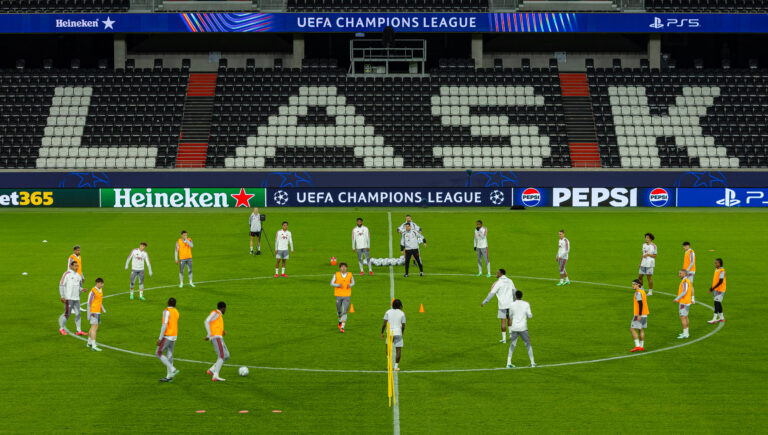
LASK manager Dietmar Kühbauer opted for his customary 5-3-2 formation against the English giants. Three centre-backs and two defensively minded wing-backs were intended to restrict the space around the penalty area. Christoph Lang and Samuel Adeniran formed the attacking partnership.
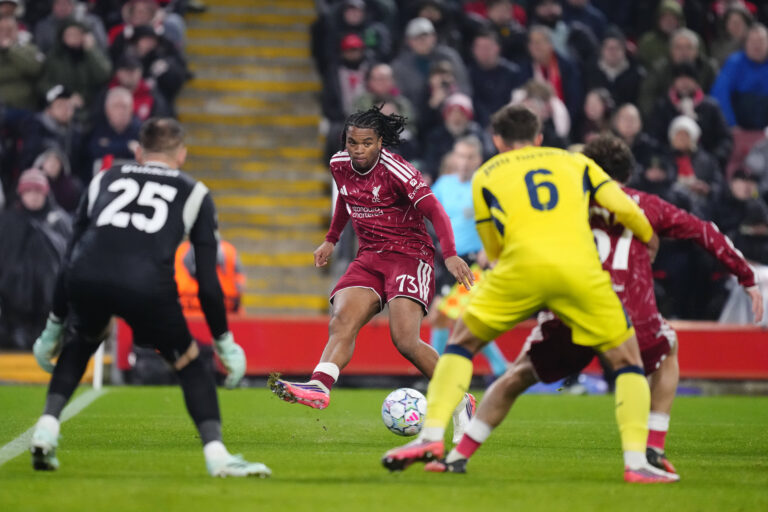
Under Andoni Iraola, Liverpool lined up in a 4-2-3-1, with Florian Wirtz, Bradley Barcola and Rio Ngumoha constantly interchanging positions across the attacking midfield line. Behind them, Ryan Gravenberch and youngster Trey Nyoni provided a reliable platform for building attacks.
That movement caused LASK considerable problems from the outset. Although the home side initially maintained a compact defensive shape, they struggled to disrupt Liverpool’s passing combinations. Wirtz was particularly effective at finding space between midfield and defence, while rapid positional rotations and runs in behind made it difficult for the Austrian defenders to maintain their marking assignments.
When LASK regained possession, they often lacked suitable passing options. The hosts were repeatedly forced into early long balls, allowing Liverpool to recover possession quickly and launch another attack.
The statistics illustrated the gulf between the sides. Liverpool registered 19 shots in the first half alone, a Champions League record for an away team.
Two goals in 96 seconds change everything
The evening had not begun entirely without promise for LASK. Kasper Jørgensen found himself in a promising position after eight minutes but sent his effort over the bar. Shortly afterwards, Wirtz was denied at the other end by Lukas Jungwirth.
The breakthrough eventually came from a set piece. Ronald Araújo rose to meet a Kostas Tsimikas corner and headed Liverpool into the lead in the 22nd minute.
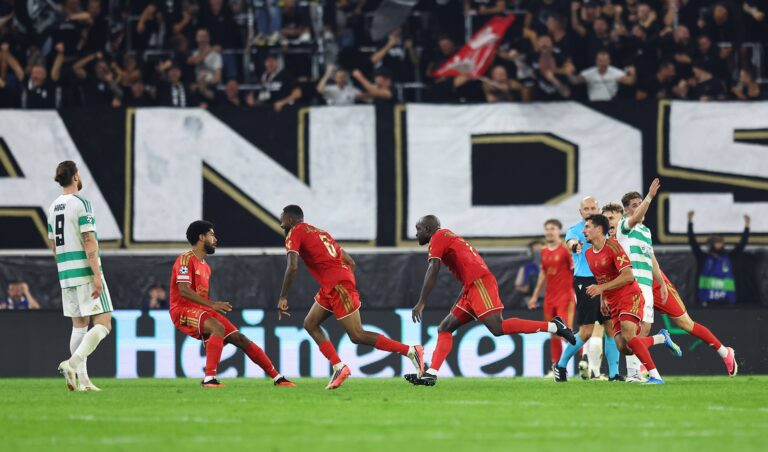
Just 96 seconds later, another blow followed. After a combination down the right, Barcola found himself in a shooting position and calmly finished into the far corner.
The quickfire double not only damaged LASK’s confidence but also forced the hosts to move away from their original defensive approach.
That created even more opportunities for Liverpool. Gravenberch struck the woodwork, while Lewis Koumas had a goal ruled out for offside. In the 37th minute, Barcola converted an incisive pass from Wirtz to make it 3-0.
Liverpool’s wide play makes the difference
Alongside their intelligent positioning in central areas, Liverpool’s attacking full-backs were instrumental in establishing their dominance.
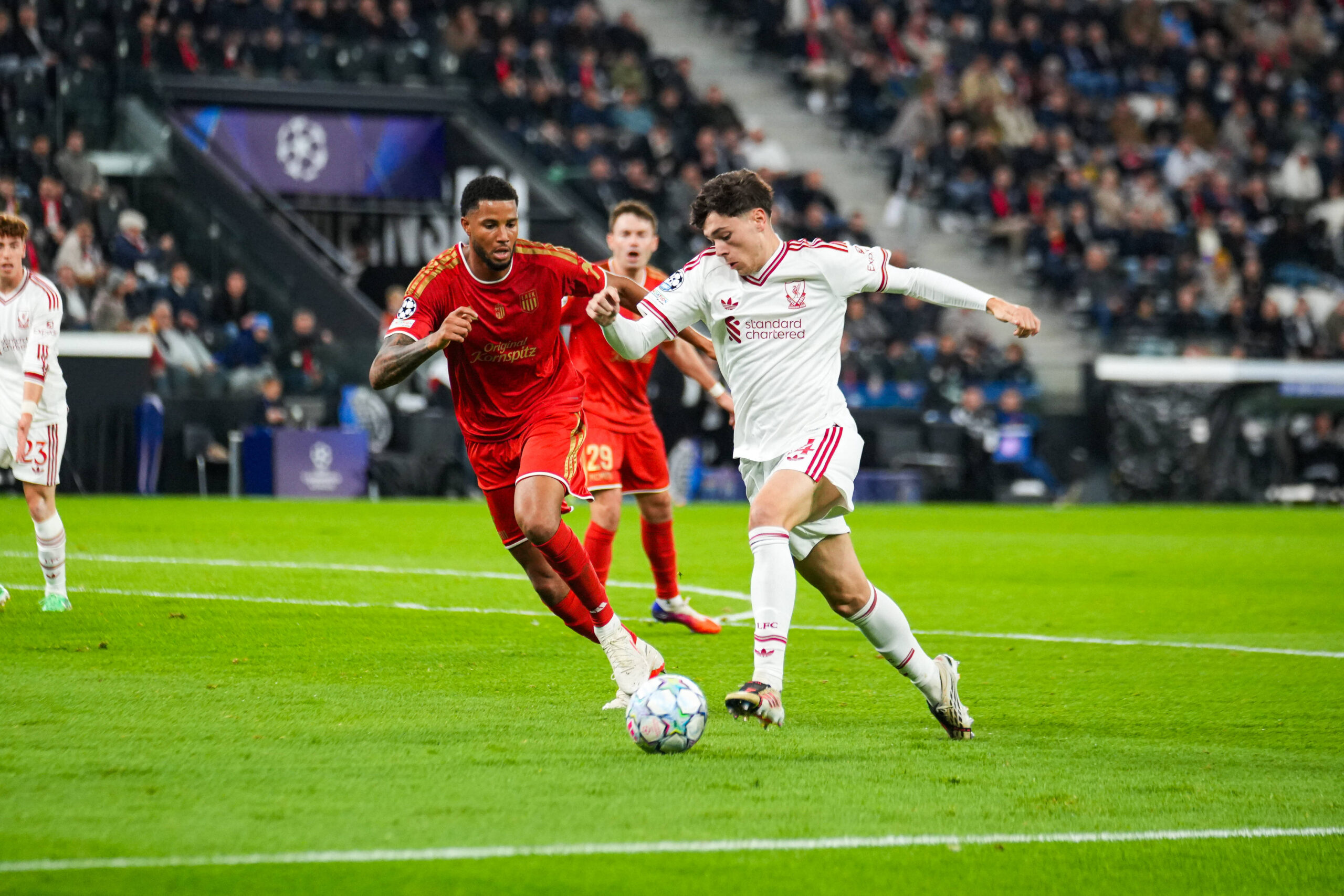
Tsimikas and Jeremie Frimpong regularly pushed forward, causing persistent problems for LASK with their runs towards the byline. The English side were especially dangerous when they followed those movements with low cut-backs into the penalty area.
This approach repeatedly pulled LASK’s back five out of shape. Whenever one defender was drawn wide, space opened up centrally or at the far post for Liverpool’s arriving attackers.
The same patterns continued after the interval. In the 51st minute, the 1.72-metre-tall Frimpong headed home a Tsimikas cross to make it 4-0.
The Dutchman later supplied a low pass for Barcola’s third goal in the 66th minute. Koumas also benefited from a Frimpong delivery when he scored Liverpool’s sixth to make it 6-1 in the 72nd minute.
Liverpool finished with 26 attempts and an expected goals figure of 3.34. Scoring six times from those opportunities highlighted the visitors’ exceptional finishing efficiency on the night.
Three LASK goals also expose Liverpool’s weaknesses
Despite falling so far behind, LASK refused to surrender. Kühbauer introduced Florian Flecker for Jørgensen at half-time and later made further attacking substitutions.
In the 63rd minute, substitute Robert Ljubicic pulled a goal back after being set up by Yvan Dibango.
Liverpool responded almost immediately through Barcola’s third goal and Koumas’s strike, but the English side subsequently revealed significant defensive weaknesses of their own.
Flecker reduced the deficit to 6-2 with a header in the 74th minute before adding another just three minutes later with an excellent first-time finish, completing the scoring at 6-3. Both goals were once again created by Dibango, who provided the assists for all three LASK goals.
It was particularly noticeable that Liverpool became increasingly disorganised defensively following several substitutions. Iraola had replaced both starting centre-backs, Araújo and Jérémy Jacquet, in the 62nd minute, introducing Virgil van Dijk and Joe Gomez.
The reshuffled defence did not immediately settle. Frimpong’s attacking ambition also became more problematic as Dibango repeatedly found space behind him.
LASK created chances worth 2.02 expected goals. Their three goals were therefore far from being merely fortunate finishes. They reflected an improvement in the Austrian side’s attacking play as well as Liverpool’s declining defensive discipline.
Kühbauer acknowledges the gulf in quality
After the final whistle, Kühbauer remained critical of his team despite their three goals. “Liverpool are a level above us, and you could see that,” the LASK manager admitted.
His side needed to defend more compactly, react more quickly and make better use of their limited opportunities. Above all, the speed at which Liverpool recognised situations and found solutions represented a major difference between the teams.
“You have to think even faster,” was one of his central conclusions. Kühbauer also regarded the match as an important learning experience for his players.
Iraola, meanwhile, praised Liverpool’s attacking performance, particularly their ability to occupy spaces between the lines and make runs behind the LASK defence. He was especially pleased with Barcola and Wirtz, who both made decisive contributions after difficult recent weeks.
The Liverpool manager was considerably less satisfied with conceding three goals. He acknowledged that replacing both centre-backs simultaneously had caused problems from a sporting perspective, although he had wanted to protect important first-team players amid a demanding fixture schedule.
Encouraging attacking signs cannot disguise a clear defeat
The 6-3 scoreline ultimately revealed two very different sides of LASK. For much of the encounter, the Austrians were comprehensively outplayed by Liverpool’s pace, positional rotations and technical precision. Yet they also showed character after the break and eventually found ways to put one of Europe’s leading clubs under defensive pressure.
The nine goals made for a spectacular evening for the supporters, but they cannot obscure the considerable difference in quality. Liverpool were comfortably the better team for long stretches and could have established an even greater lead before half-time.
For LASK, two defeats from their opening two Champions League matches underline an important lesson: against opponents of this calibre, commitment alone is not enough. Tactical precision must be maintained throughout the full 90 minutes.
Another difficult assignment awaits next week, when LASK face Sporting Lisbon.