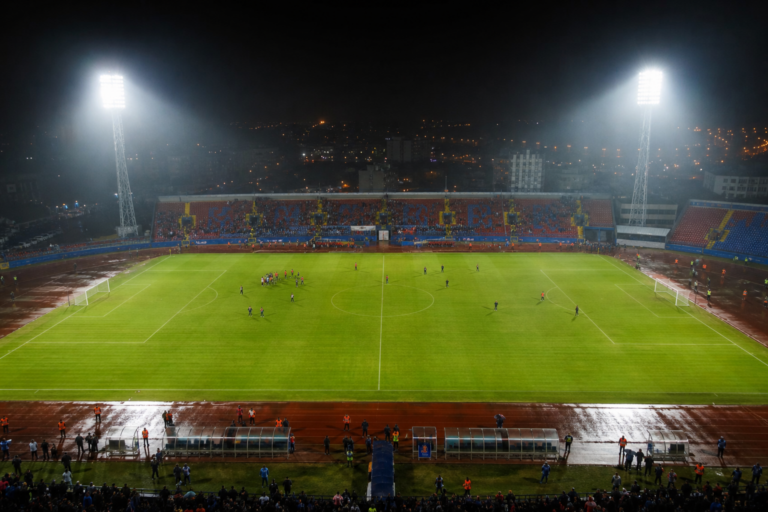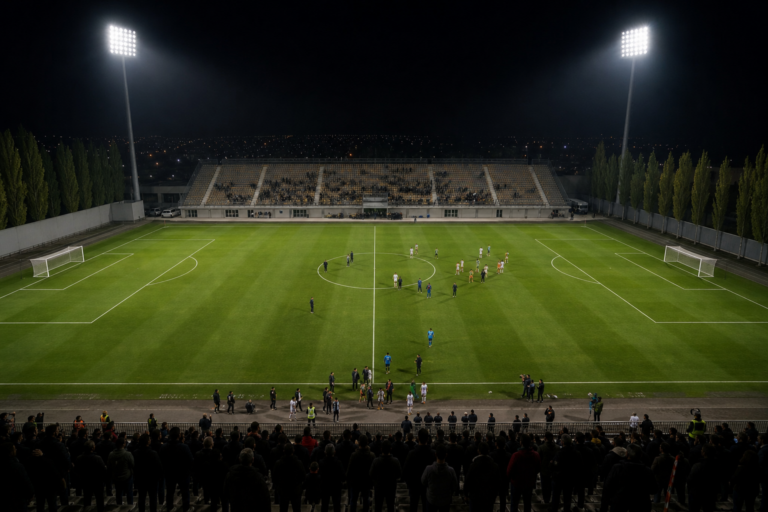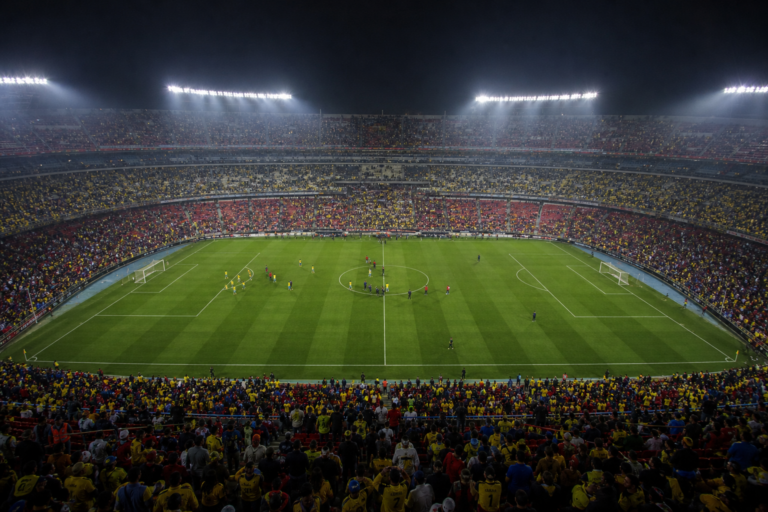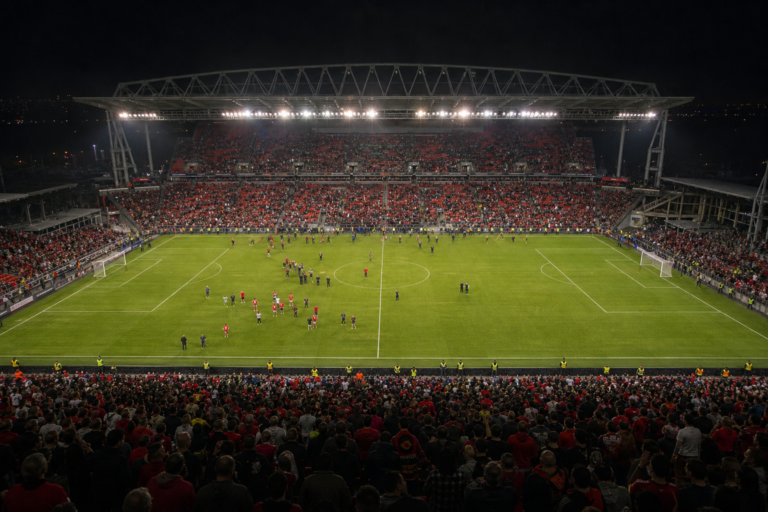
Saturday’s 1-0 victory over the Republic of Ireland had already secured top spot in Nations League Group B3 and promotion to League A. Rangnick therefore used the final away fixture against Israel, played in the Hungarian city of Debrecen, to give several fringe players an opportunity. Israel, meanwhile, were still fighting to finish third and avoid the relegation play-offs.
Rangnick makes eight changes and hands out two debuts
Rangnick made eight changes to the starting line-up that faced Ireland. LASK goalkeeper Lukas Jungwirth and 17-year-old Sturm Graz midfielder Luca Weinhandl both made their senior international debuts. Jungwirth was joined in the starting XI by LASK teammates Sascha Horvath and Saša Kalajdžić.
Konrad Laimer captained Austria from right-back, with David Affengruber and Felix Bacher forming the central defensive partnership and Phillipp Mwene starting on the left. Nicolas Seiwald and Weinhandl occupied the two central midfield positions, while Horvath, Raul Florucz, Junior Adamu and Kalajdžić provided the attacking options.
Rangnick was already dealing with a lengthy injury list and also lost Yusuf Demir shortly before the match. The SK Rapid winger, who had been pencilled in to start, left the national team camp after taking a blow to his right knee. Subsequent examinations ruled out a serious injury.
Peretz stuns Austria with spectacular overhead kick
Austria struggled to find their rhythm in the opening half. Seiwald and Affengruber had early attempts following corners, but the visitors lacked pace and precision in possession. Israel looked to threaten on the counter-attack, particularly through Oscar Gloukh and Manor Solomon.
Dor Peretz squandered a promising opportunity in the 30th minute, before Jungwirth was called into action to deny Gloukh. At the other end, Florucz was thwarted from close range by Israeli goalkeeper Daniel Peretz.
The hosts took the lead in spectacular fashion in the 36th minute. Austria lost possession and Israel broke quickly, with Eli Dasa delivering the ball towards Dor Peretz. Finding space between Bacher and Affengruber, the midfielder produced an outstanding overhead kick to make it 1-0.
Afterwards, Rangnick criticised his team’s lack of precision on the ball and their vulnerability to counter-attacks down Austria’s left flank. Despite enjoying more possession, he felt his players had made too little of it before the interval.
Three half-time changes transform Austria
Rangnick responded with three substitutions at the break. Michael Svoboda replaced Bacher in central defence, while Stefan Posch came on for Mwene and took over at right-back, allowing Laimer to move across to the left. Michael Gregoritsch also replaced the young Weinhandl.
The changes quickly made a difference. Austria attacked with greater purpose, won more second balls and increasingly pinned Israel back around their own penalty area. Rangnick later highlighted Laimer’s switch to left-back as a key factor in restoring defensive stability. The dangerous Israeli breaks down the flank virtually disappeared after half-time.
Florucz was denied by Daniel Peretz in the 60th minute, but Austria finally found a deserved equaliser two minutes later. Laimer supplied the ball from the left and Kalajdžić finished to make it 1-1. Having scored the winner against Ireland, the LASK striker had now found the net in consecutive internationals.
Rangnick then introduced Christoph Baumgartner in place of Florucz. Austria maintained the pressure and appeared to have completed the turnaround in the 66th minute when substitute Svoboda found the net. However, a lengthy VAR review resulted in the goal being disallowed for a marginal offside.
Austria waste chances to claim victory
Austria continued to create opportunities, with Gregoritsch threatening on several occasions and Daniel Peretz producing a series of saves to keep the hosts level.
Late in the game, Rangnick replaced Laimer with 19-year-old Yanik Spalt. The Stuttgart youngster became Austria’s third senior debutant of the evening.
Spalt made an encouraging impression and delivered an excellent cross that presented Gregoritsch with a major chance in the closing stages. Rangnick praised the delivery and several other promising contributions, suggesting that Spalt could eventually establish himself as a regular at VfB Stuttgart. The manager also spoke positively about Weinhandl’s physical development and willingness to drive forward with the ball during the first half.
Austria’s superiority was reflected in the statistics. The visitors registered 21 shots to Israel’s three, with six attempts on target compared with two for the hosts. Austria also recorded 51 touches in the opposition penalty area, against just nine for Israel.
The expected goals figures told a similar story: Austria generated 3.01 xG, while Israel managed only 0.47.
Despite their second-half dominance, Austria had to settle for a 1-1 draw. Rangnick’s side finish top of the group with 12 points from three wins and three draws. Their home and away records tell an interesting story: Austria won all three home matches but drew each of their away fixtures, having to recover from a deficit on every occasion.
Rangnick felt his side had created enough chances after the break to win the match, but was satisfied with the overall Nations League campaign. Austria will return to League A for the next edition of the competition.