The result gave Austria their first league victory since 13 September. Maximilian Uhlig’s side secured a much-needed breakthrough, while Salzburg lost further ground to leaders SK Rapid in the title race.
Contrasting fortunes heading into the match
The two teams entered the 13th round of Bundesliga fixtures in markedly different positions. Salzburg had gone unbeaten through their opening twelve league matches and sat second with 30 points. Austria, meanwhile, were struggling near the bottom of the table with just eight.
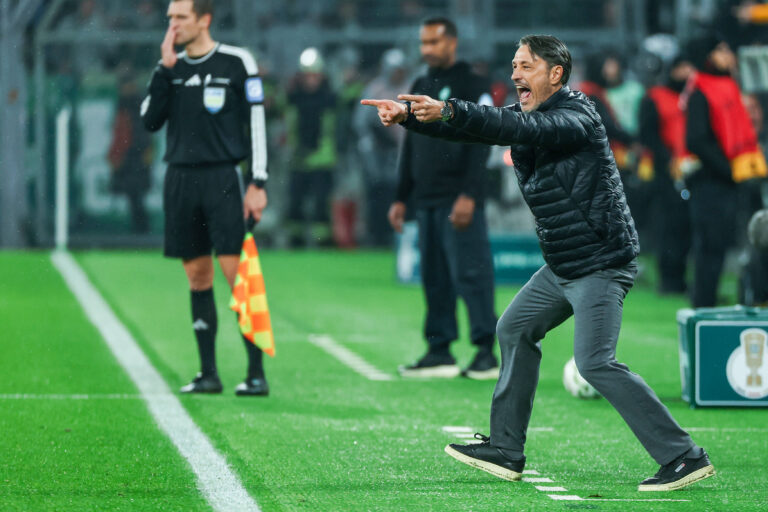
Salzburg were without their leading scorer Haris Tabaković, who had scored eight goals in the first twelve rounds. Damir Redžić, Sota Kitano and several defenders were also unavailable. Head coach Danny Röhl was serving a touchline suspension, leaving Sebastian Heidinger to take charge from the technical area.
Austria were missing Philipp Wiesinger, Kang-hee Lee and Noah Botić, among others. Uhlig opted for a back three consisting of Reinhold Ranftl, Aleksandar Dragović and Wilhelm Vorsager. Johannes Eggestein led the attack, supported by Sanel Šaljić and Vasilije Marković.
Salzburg lined up in a 4-2-3-1 formation, with Karim Konaté replacing Tabaković up front. Edmund Baidoo, Bartosz Mazurek and Jesper Lindstrøm provided the attacking support behind him.
Konaté squanders early chance to put Salzburg ahead
The visitors took the initiative early on, looking to work their way into dangerous areas through quick passing combinations in midfield. Austria concentrated on maintaining a compact defensive shape and breaking forward quickly after regaining possession.
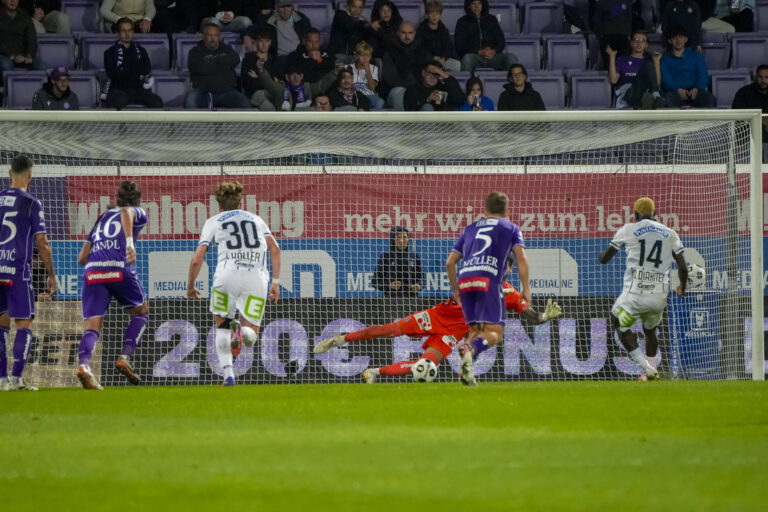
Salzburg had an excellent opportunity to open the scoring in the 13th minute. Edmund Baidoo dribbled into the penalty area from the right and was fouled by Matteo Schablas. Referee Isa Simsek pointed to the spot, but Konaté failed to convert the resulting penalty, wasting the chance to give the visitors an early lead.
Salzburg continued to enjoy more possession, but Austria gradually grew into the contest. The home side shifted across effectively as a defensive unit, preventing their opponents from regularly finding a route through the middle and into the penalty area.
Austria keep Salzburg at arm’s length
The match became increasingly physical as the first half progressed. Salzburg tried to find openings down the flanks, but Austria defended the edge of their penalty area with discipline. Dragović provided organisation through the middle, while Ranftl and Vorsager covered the spaces either side of him.
Manfred Fischer and Valentino Müller supported the defensive effort from midfield. When Austria attacked, the wide players pushed forward to provide an outlet and relieve some of the pressure.
Although Salzburg continued to enjoy the greater share of possession, Austria gradually became more adventurous. The hosts looked for Eggestein with direct passes, while Šaljić and Marković tried to pick up second balls and turn them into attacking opportunities.
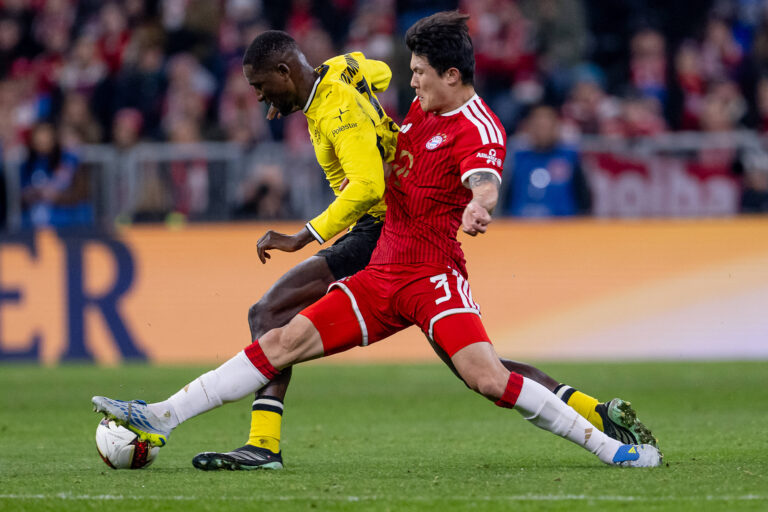
The game featured numerous challenges and stoppages. Austria committed 21 fouls compared with Salzburg’s ten, repeatedly disrupting the visitors’ rhythm and preventing them from building sustained attacking momentum.
Salzburg push forward after the break
After half-time, Salzburg tried to make better use of their advantage in midfield. Mazurek was frequently involved in possession, looking for passing options between Austria’s defenders. The visitors repeatedly advanced into the opposition half but continued to struggle with the final ball.
Austria retained their defensive approach, although they committed more players forward after winning possession. Eggestein was often the first outlet, with midfield runners looking to support him quickly.
Salzburg made a double substitution in the 57th minute. Yorbe Vertessen replaced Konaté, while Gaoussou Diakité came on for Soumaïla Diabaté. Vertessen, in particular, was introduced to add pace and a different dimension to the attack.
Uhlig also made changes. In the 67th minute, he brought on Bruno Jerabek and Dominik Nisandzic for Šaljić and Wustinger. Introducing two such young players at a delicate stage of a tight match against the league’s second-placed side was a bold decision. The substitutions gave Austria fresh attacking options as Salzburg increasingly committed players forward.
Vorsager delivers the decisive blow
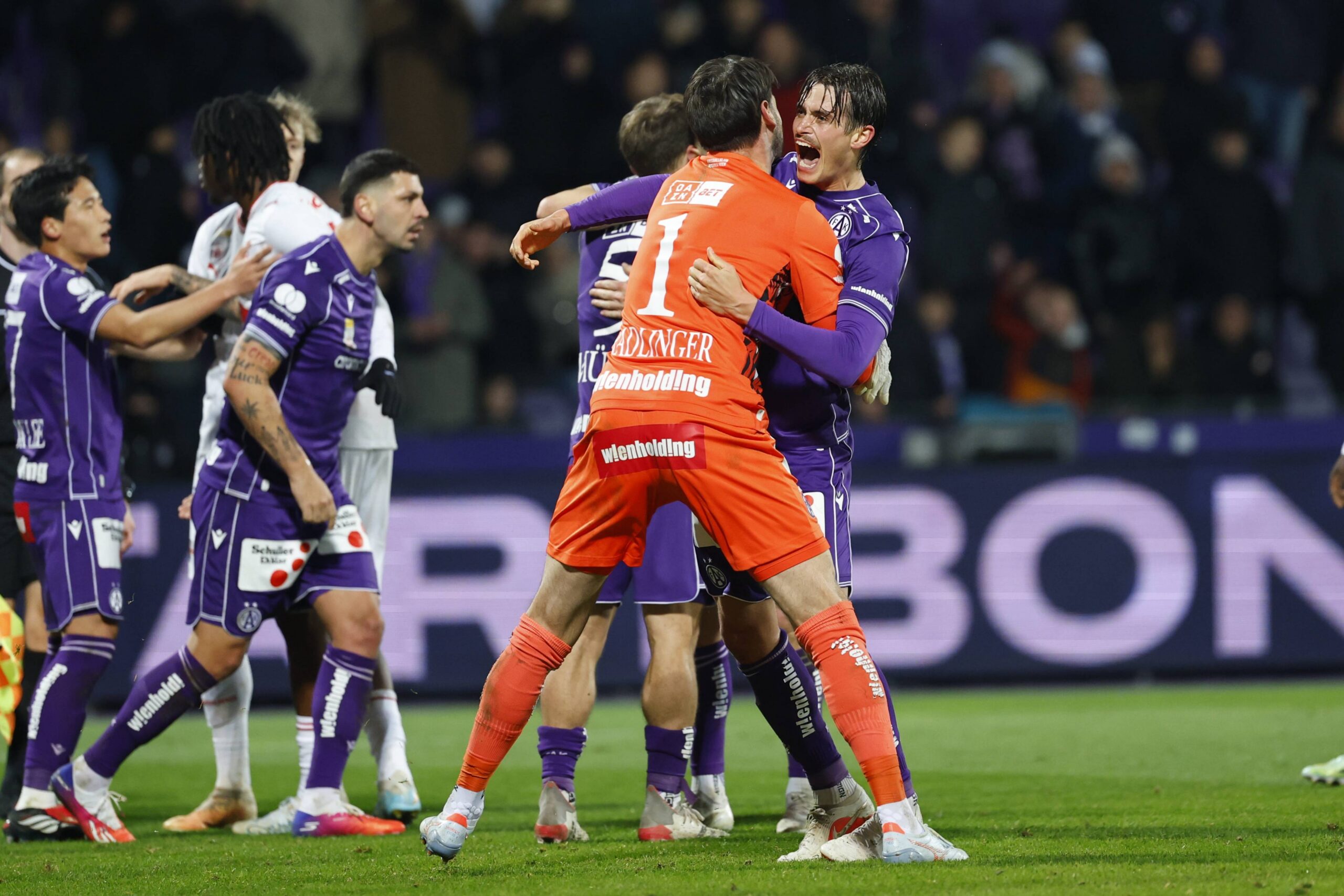
The breakthrough finally arrived in the 78th minute. Wilhelm Vorsager, who had spent much of the evening occupied with defensive duties, joined an Austria attack and scored the only goal of the match.
It was the defender’s first Bundesliga goal of the season. Salzburg had enjoyed more of the play until that point, but now found themselves trailing against an Austria side whose defensive organisation had remained largely intact.
The visitors pushed for an equaliser in the closing stages. Salzburg introduced another forward in Oghenetejiri Adejenughure and increasingly looked to get the ball directly into the penalty area.
Austria defended their narrow advantage with determination. Crosses were repeatedly intercepted, while other attacks were broken up before they reached the box. After a counterattack in the 90th minute, Dominik Nisandzic tried his luck from distance but sent his effort well wide.
Four minutes of stoppage time later, Austria had secured their first league victory in more than two months.
The numbers highlight Salzburg’s shortcomings
Salzburg finished with approximately 59% possession and completed considerably more passes than Austria, 475 to 322. Yet the visitors managed just one shot on target from eight attempts. Three of Austria’s nine efforts tested the goalkeeper.
The expected goals figures also favoured Salzburg, who recorded 1.12 xG compared with Austria’s 0.51. The missed penalty accounted for a substantial share of the visitors’ expected goals, reflecting how little danger they generated from open play relative to their territorial advantage.
Six of Austria’s nine attempts came from inside the penalty area, compared with just three of Salzburg’s eight. Despite seeing less of the ball, the hosts therefore managed to shoot from close range more frequently.
Austria claim a much-needed victory
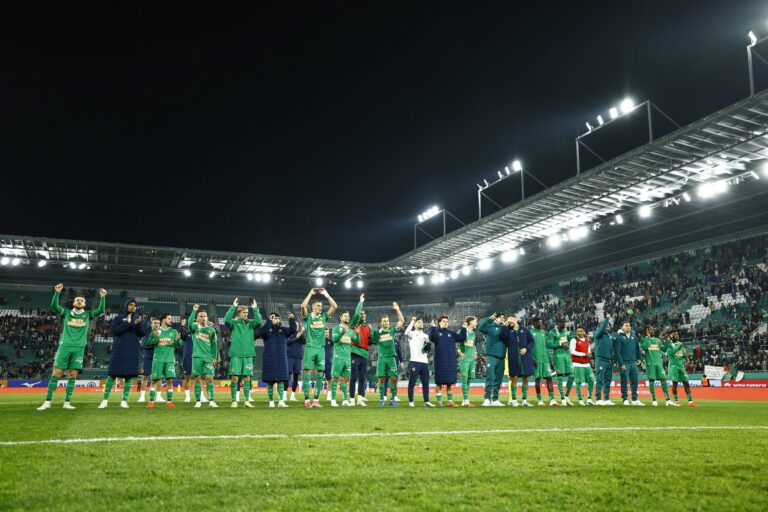
The 1-0 win lifted Austria to eleven points and tenth place in the Bundesliga standings. After more than two months without a league victory, Uhlig’s team finally returned to winning ways against a side that had arrived in Vienna unbeaten.
Salzburg, meanwhile, suffered their first league defeat of the campaign. They remain second with 30 points, now six behind leaders SK Rapid.