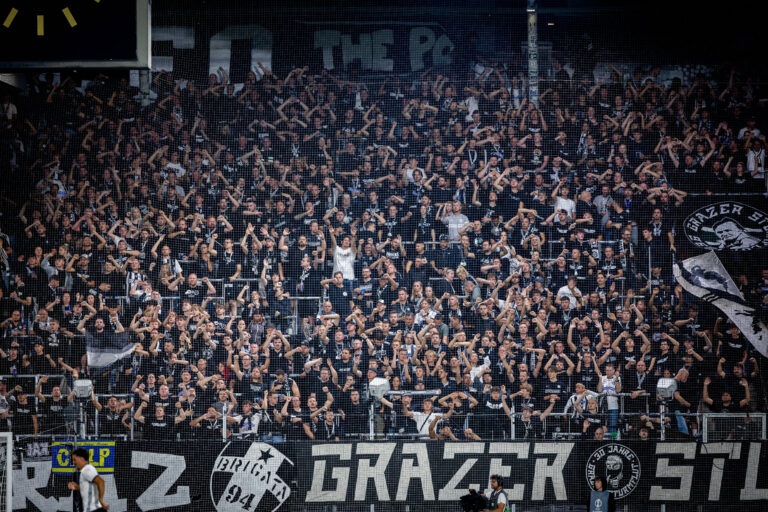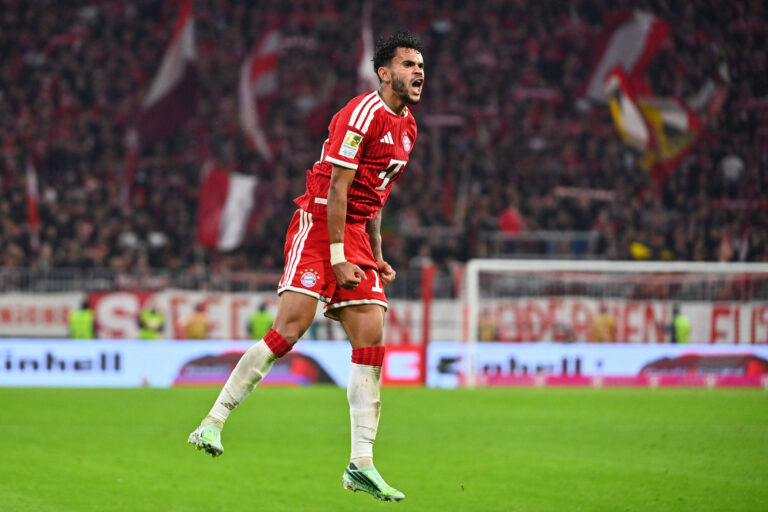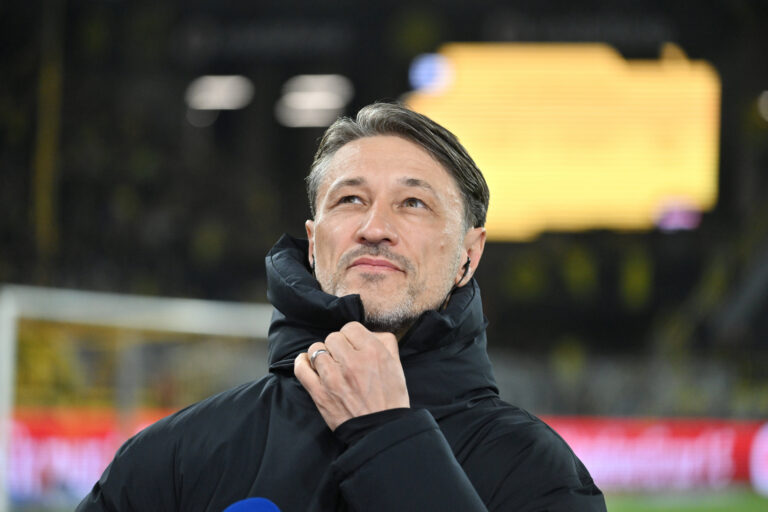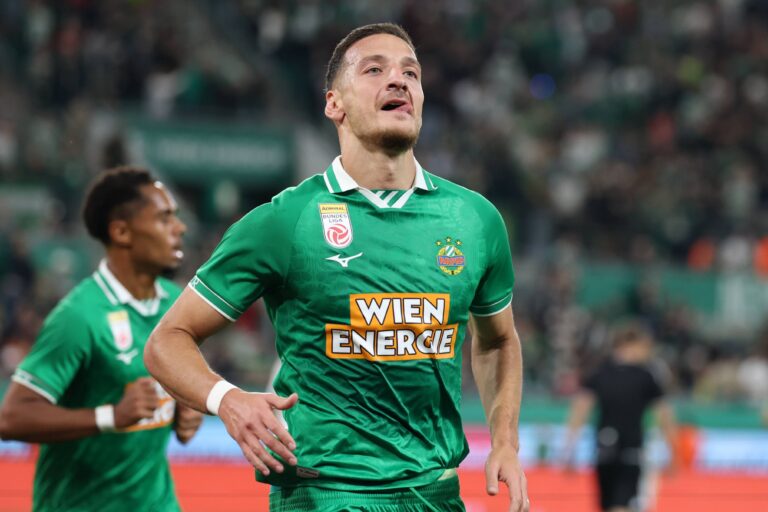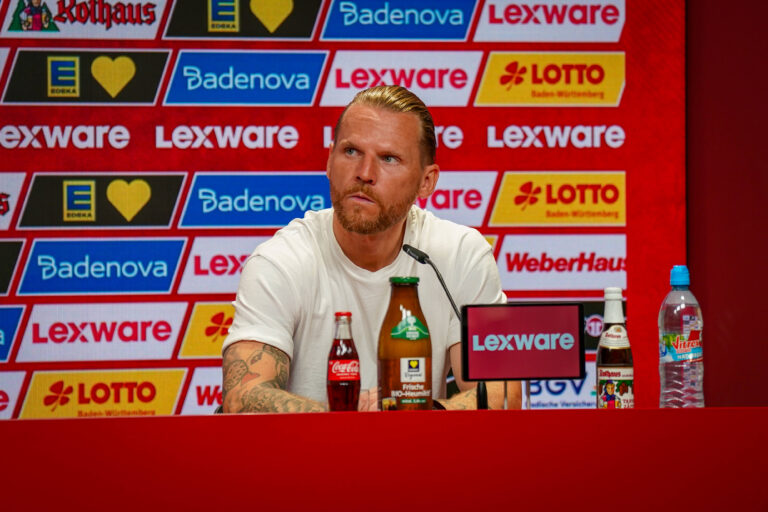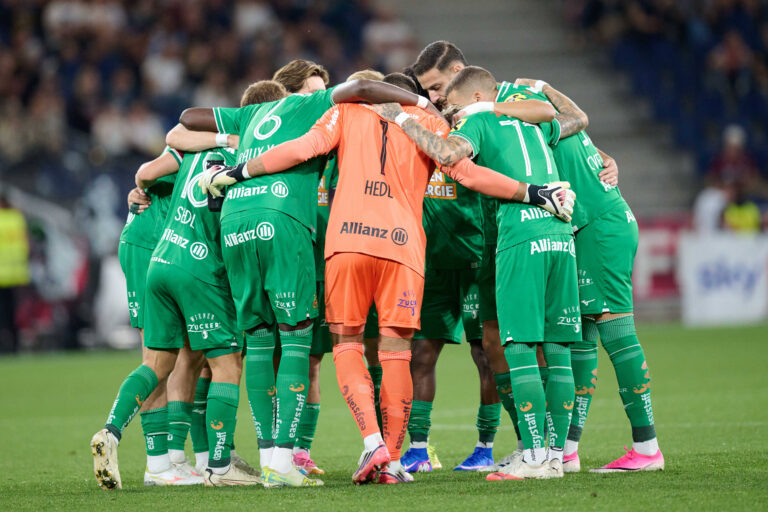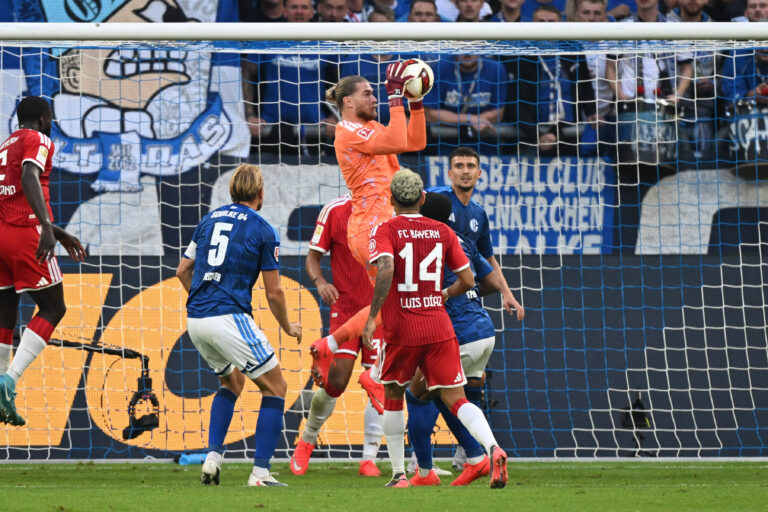
The result was deserved, even though the hosts enjoyed more possession. Sturm registered 13 shots compared with Austria’s eight and finished with a clear 2.50 to 1.23 advantage in Expected Goals. The penalty contributed significantly to Sturm’s figure, but the visitors also created the more dangerous situations from open play.
Austria use a back three as Sturm stay bold despite absences
Stephan Helm sent Austria out in a 3-4-2-1. Samuel Şahin-Radlinger started in goal behind a back three of Johannes Handl, Aleksandar Dragović and Ibrahim Buhari, with Reinhold Ranftl and Daniel Nnodim operating as wing-backs. Valentino Müller and Philipp Maybach formed the central midfield pairing, while Manfred Fischer and Sanel Šaljić supported Johannes Eggestein.
Sturm were without several players, including Otar Kiteishvili, Seedy Jatta and Filip Rózga. Fabio Ingolitsch nevertheless opted for an attacking 4-2-3-1. Luca Weinhandl and Jon Gorenc Stanković provided the midfield base, with Jacob Hödl, Valmir Matoshi and Simon Seidl operating behind Diakité.
Austria looked to build through their back three and push the wing-backs high up the pitch. Sturm defended the centre compactly and attacked the spaces ahead quickly after regaining possession. That left the hosts with longer spells on the ball, while the visitors were more direct whenever they moved forward.
More possession for Austria, but Sturm create the clearer moments
The first half was far from one-sided. Austria tried to dictate the game through longer passing sequences and pushed Sturm back for spells. The visitors defended compactly, however, and largely prevented Eggestein from receiving the ball in dangerous finishing positions.
Valentino Müller in particular gave Austria stability in midfield. Eggestein, by contrast, was often isolated at the top of the pitch.
Sturm looked most threatening whenever they increased the tempo. Seidl and Matoshi attacked the spaces behind Austria’s advanced wide players, while Weinhandl repeatedly played vertically from deeper positions. That direct approach produced the opening goal shortly before half-time: Weinhandl found Diakité, who converted the pass to put Sturm ahead.
The goal in stoppage time was a particularly painful blow for Austria, but given Sturm’s clearer chances it did not come completely against the run of play.
VAR turns diving call into a penalty
Diakité was at the centre of attention again immediately after the break. The striker dribbled along the right edge of the penalty area and went down under pressure from Ranftl inside the box. Referee Walter Altmann initially judged it to be a dive and showed Diakité a yellow card.
The VAR then intervened. Altmann was sent to the pitchside monitor and reversed his original decision after reviewing the incident. Instead of a free-kick to Austria, Sturm were awarded a penalty. The decision remained controversial, with a clear contact difficult to identify from the television images.
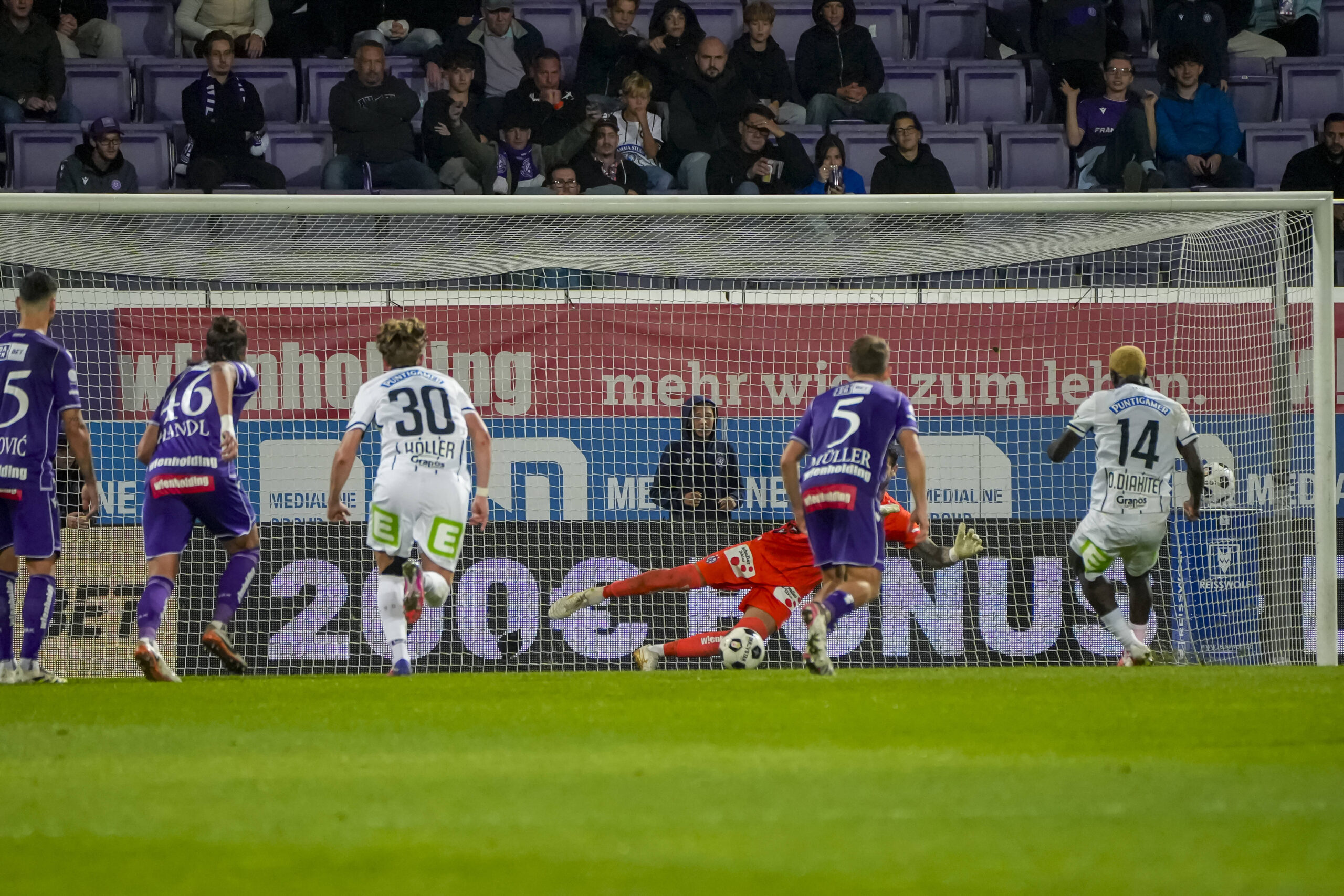
Helm reacted with considerable disbelief on the touchline. Diakité remained unaffected and converted the penalty in the 55th minute to make it 2-0.
The 22-year-old was therefore the decisive figure in the match. Weinhandl also stood out: the 17-year-old created the opening goal and gave Sturm structure in central midfield.
Austria remain active despite going 2-0 down
Austria refused to give up after conceding a second goal. Helm kept his side playing high up the pitch, the hosts continued to reach the opposition half regularly and eventually finished with 55 per cent possession.
The main problem remained the quality of the chances. Eight shots and 1.23 xG represented a reasonable attacking output, but genuinely clear opportunities were too rare. Sturm protected the central areas in front of goal well and repeatedly forced Austria towards the flanks.
Helm increased the attacking risk after just over an hour. Vasilije Markovic and Julian Hettwer were introduced, followed later by Tae-Seok Lee and Kelvin Boateng. Austria maintained their attacking approach but never managed to pull Sturm’s defensive block apart decisively.
With a two-goal advantage, Sturm no longer needed to attack relentlessly. The visitors defended more compactly but still looked to break quickly after turnovers. They also held a slight edge in touches inside the opposition penalty area, 28 to Austria’s 24.
Sturm deserve the win as Austria lack cutting edge
Diakité emerging as the match-winner was particularly valuable given Sturm’s absences in attack. Several established offensive players were unavailable, but the striker took responsibility and made the most of the decisive situations.
For Austria, Müller and Şahin-Radlinger were among the stronger performers. In attack, however, the final cutting edge was missing.
The 2-0 scoreline was deserved overall. Austria were by no means comprehensively outplayed, but Sturm produced more shots and the better chances. The 2.50 to 1.23 xG difference reflects that, even if the controversial penalty accounts for a significant part of the visitors’ total.
Sturm keep pace with the leading pack
The away win takes Sturm to 14 points and keeps them within reach of the leading positions. After the 3-0 defeat in Salzburg, the response in Vienna was important, especially given the number of players missing.
Austria’s situation remains more difficult. The Viennese side have seven points from eight matches and stay tenth for the time being.
Sturm are back in action on Thursday when they travel to AFC Bournemouth in the Europa League, before facing GAK in the Graz derby on Sunday. Austria Vienna travel to SV Ried next Saturday.