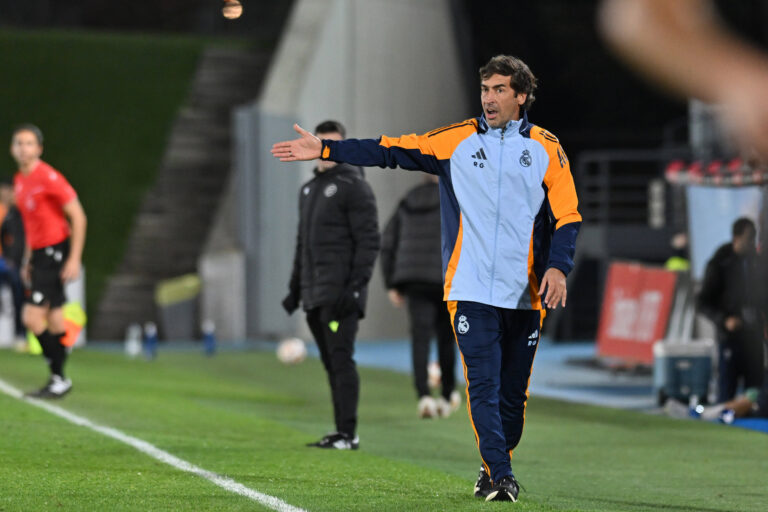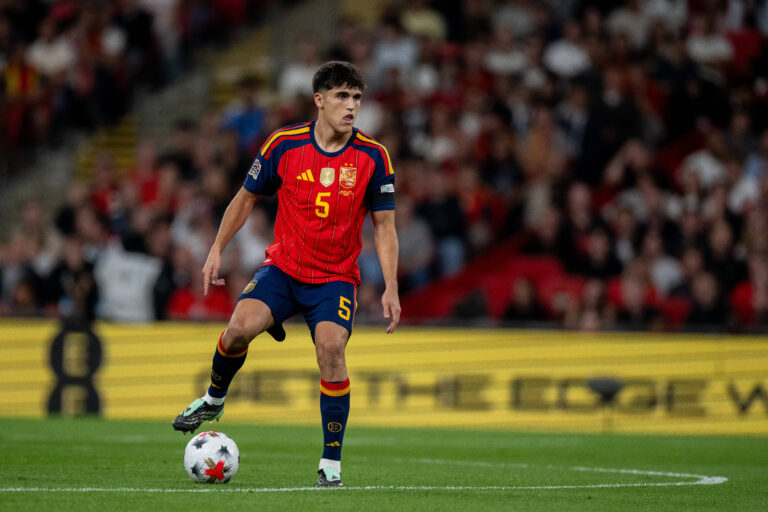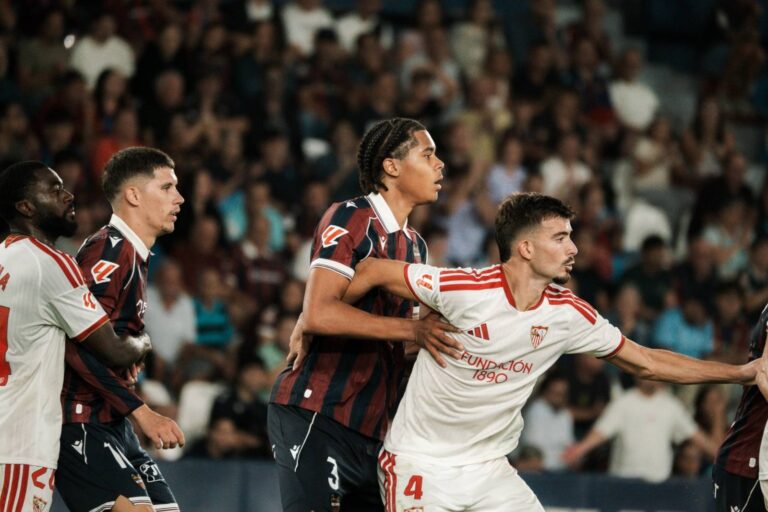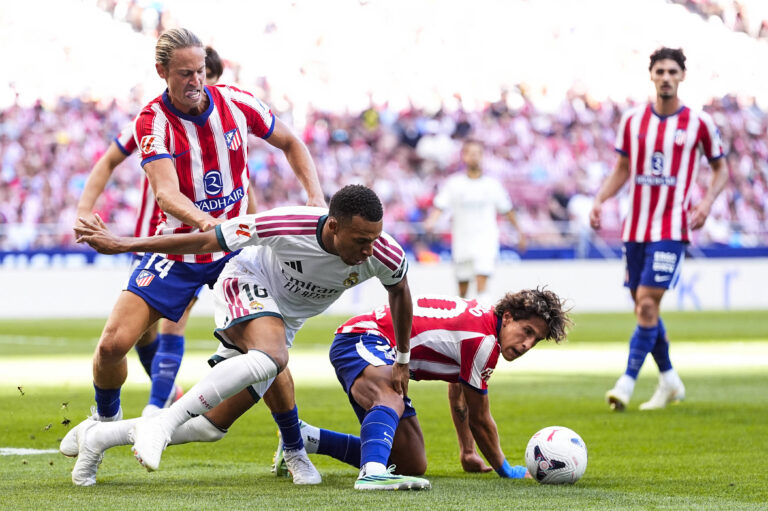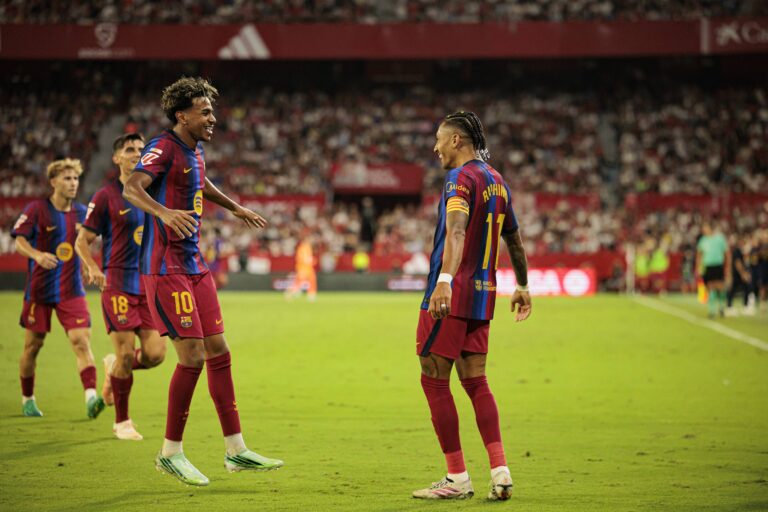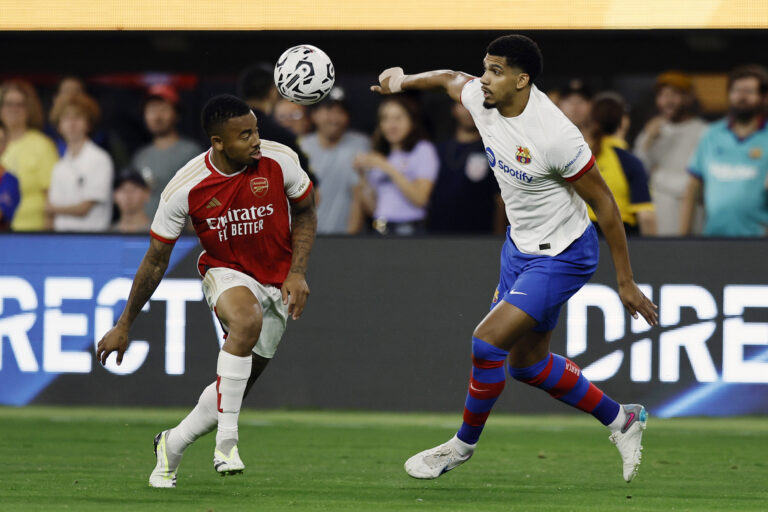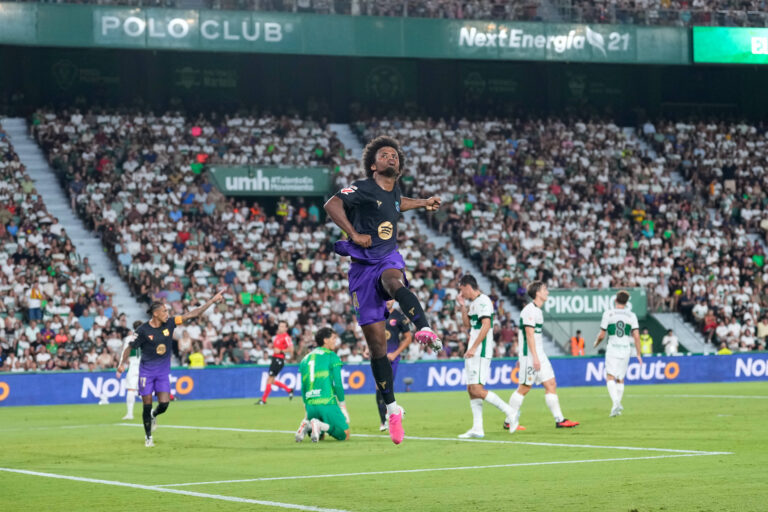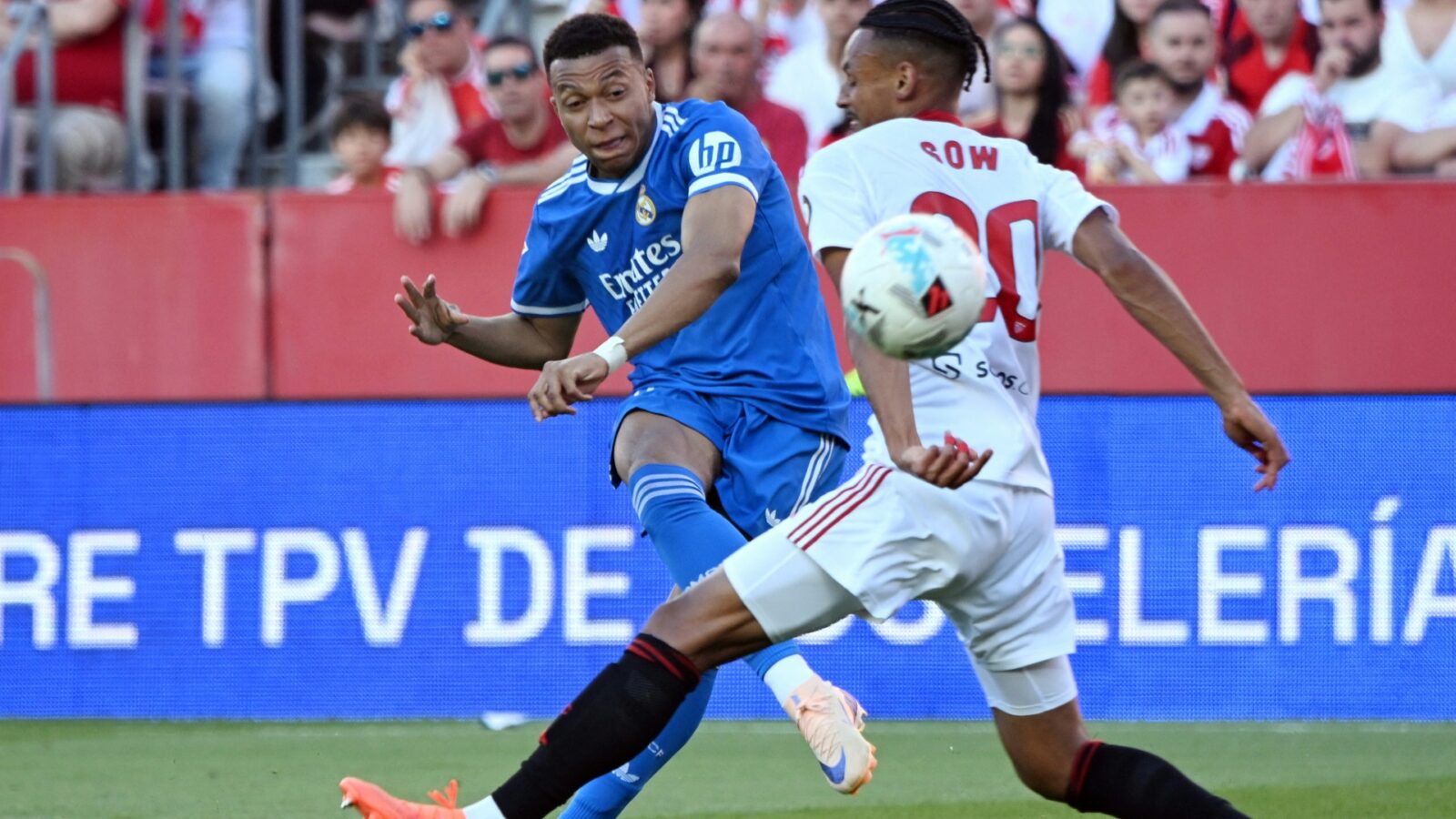
After three straight wins to start the season, Madrid’s run came to an end in Seville. Troy Parrott scored the only goal of the game from a corner in the 81st minute, while a spectacular effort from Carlos Espí was ruled out for offside shortly afterwards. Mourinho struggled to reconcile the result with the way the game had unfolded: “Sometimes you lose and you don’t know why or how to explain it.”
Real find good solutions in the build-up early on
Mourinho again set his side up in a 4-2-3-1, with Eduardo Camavinga and Federico Valverde forming the double pivot. In possession, however, the structure was considerably more fluid. Camavinga regularly dropped deeper to support Dean Huijsen and Ibrahima Konaté in the build-up, while Denzel Dumfries operated much higher and wider on the right.
Arda Güler repeatedly moved inside from the right. That allowed the Türkiye international to become more involved as an additional creator while simultaneously opening space for Dumfries on the flank. Jude Bellingham was given considerable freedom behind Mbappé and continually looked for positions between the Betis midfield and defensive lines.
Out of possession, Betis often defended in a 4-4-2, stepping forward aggressively at times and trying to close Madrid’s central passing lanes early. Even so, Real repeatedly found ways through in the first half, particularly via Güler’s movements in the right half-space, quick switches of play and set-pieces.
That led to a succession of chances. Vinícius Júnior struck the post early on and Huijsen later hit the crossbar. Shortly before half-time, Güler escaped the opposition counter-press with a direct pass, Bellingham released Vinícius into space and his delivery found Mbappé. The Frenchman was denied twice in quick succession and should have put his side ahead.
Madrid’s wastefulness keeps Betis alive
The statistics underline how regularly Real Madrid reached dangerous areas before the break. Six of their seven big chances came in the first half, while 15 of their 20 shots were recorded before half-time.
Güler was the game’s most productive creator with seven chances set up for team-mates. His deliveries and movements into the half-space repeatedly caused Betis problems. Mourinho confirmed afterwards that it had been difficult to substitute the already-booked playmaker because he had been performing so well. The risk of a second yellow card ultimately made the decision for him.
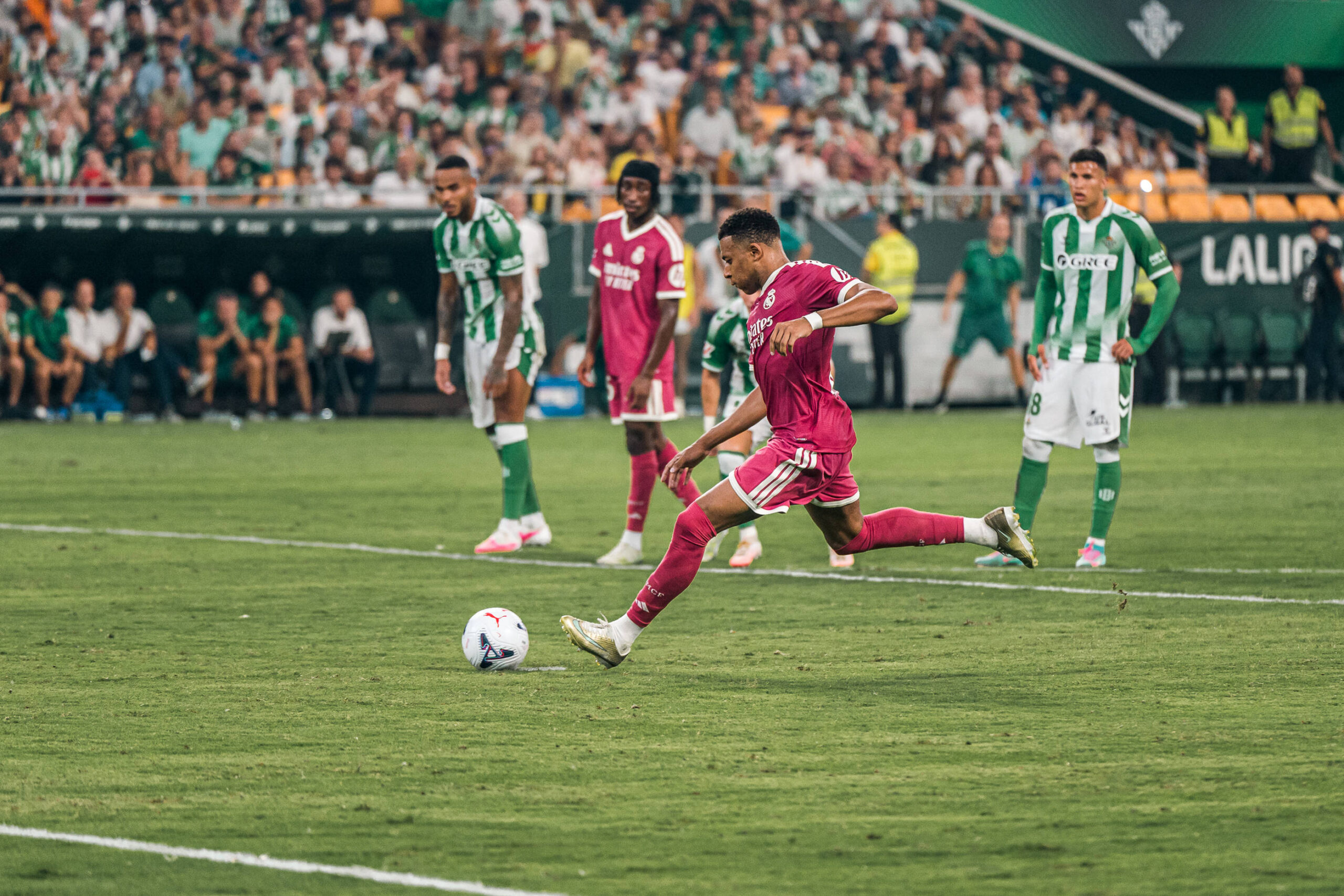
The much bigger issue was finishing. Mbappé had seven shots, four big chances and an individual xG figure of 1.78, yet failed to score. Álvaro Vallés also saved his penalty in the 94th minute.
Los Blancos generated more than three expected goals overall and registered 51 touches in the opposition penalty area. Mourinho summed up his view of the match in typically direct fashion: “The game belonged to Real Madrid.”
Betis shut down Bellingham
After the break, Betis became increasingly effective at preventing Real from progressing through the centre. Bellingham in particular was closed down much more aggressively. Whenever he received between the hosts’ midfield and defensive lines, Betis immediately tightened around him and denied him the time and space to turn or combine.
That made it much harder for Real to progress the ball cleanly from the double pivot into the attacking pockets, forcing more of their attacks towards the flanks.
The contrast with the first half was significant. The visitors managed only five shots after the break and the quality of their chances from open play dropped noticeably. Vinícius and Mbappé often came towards the ball, while runs in behind the last line were sometimes lacking. Betis were therefore able to remain more compact and funnel Madrid’s attacks out wide.
Mourinho reacted just after the hour mark with three substitutions. Bernardo Silva replaced Camavinga, Trent Alexander-Arnold came on for Dumfries and Yan Diomande replaced Güler. Trent was asked to move inside more often, while Diomande held the width on the right.
Mbappé misses from the spot
After Parrott made it 1-0, Mourinho took even greater risks. Carlos Espí replaced Valverde, leaving Real with an extremely attacking line-up for the closing stages. Mourinho later explained that Espí was intended to provide a clear reference point against Betis’ deep block and give Mbappé more freedom to operate between the lines.
The plan almost worked. Espí found the net with an overhead kick, only for the goal to be disallowed for offside in the build-up. Shortly afterwards, Mbappé also hit the woodwork from a cross. When Vinícius then won a penalty, Real were handed one final major opportunity – but Vallés saved again.
A set-piece decides the game
Defensively, Real Madrid allowed very little from open play for long periods. The greater problems arose when Betis switched play quickly from one side to the other, forcing the visitors to cover larger distances within their defensive shape.
That was how the decisive goal eventually developed. Real initially defended the attack but conceded a corner. Courtois produced a strong save from the first header, only for the rebound to fall kindly to a Betis player. Parrott reacted quickest and made it 1-0.
Ultimately, the defeat was less about Real’s defensive performance than their poor finishing. A goal from a corner can always happen; far more costly was the fact that Los Blancos had already created enough opportunities to score several times. Mourinho therefore had little criticism for his players afterwards.
Real have little time to dwell on their first defeat of the season. Inter Milan await on Tuesday in the opening round of the Champions League. The performance in Seville showed that the new attacking structures can work – but also how quickly Madrid can lose penetration when an opponent manages to push Bellingham out of the spaces between the lines.