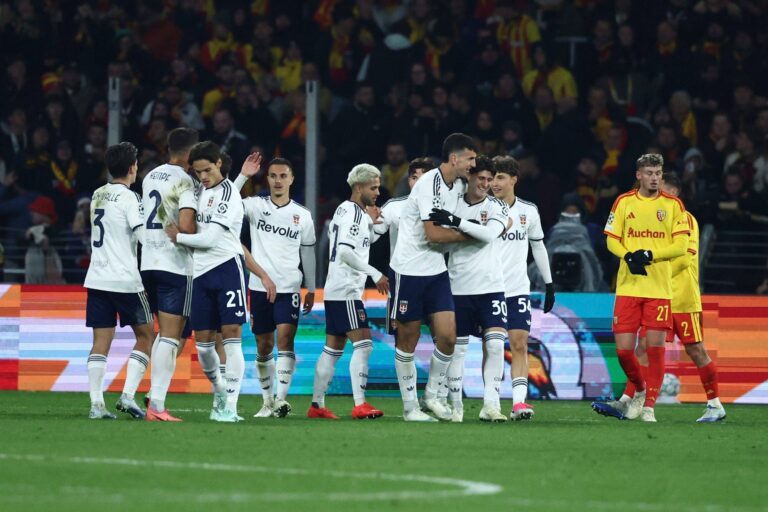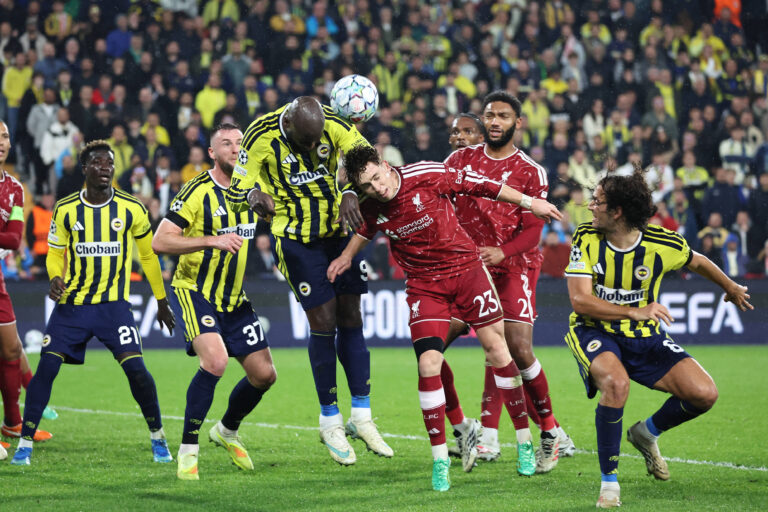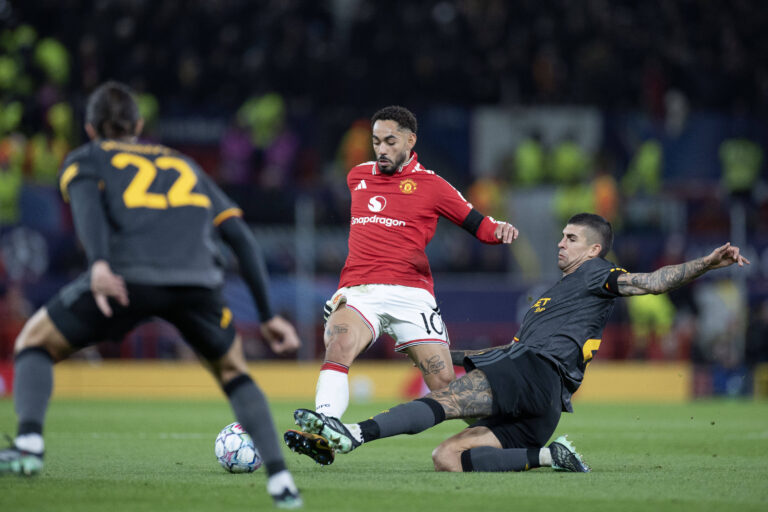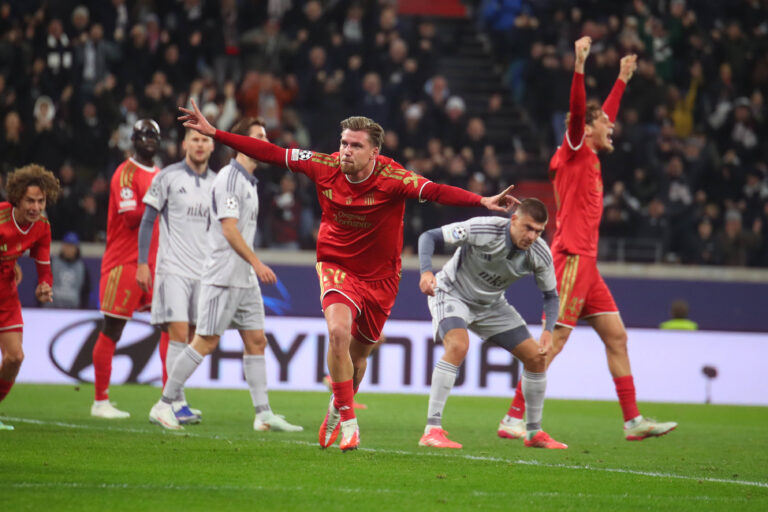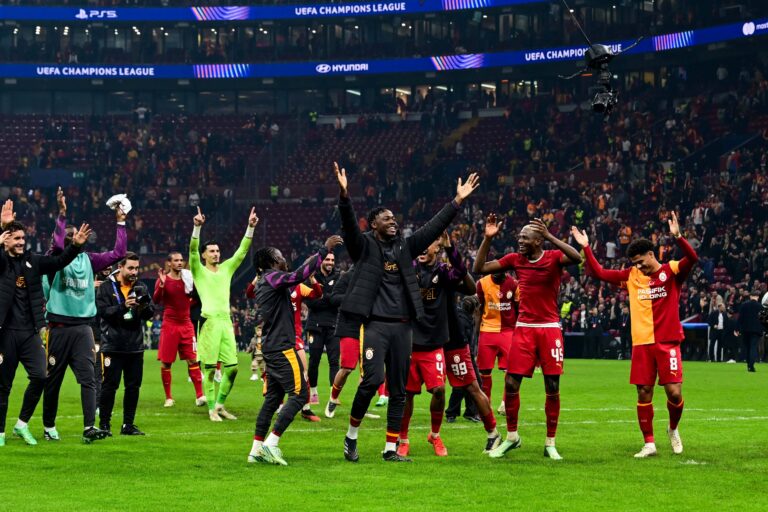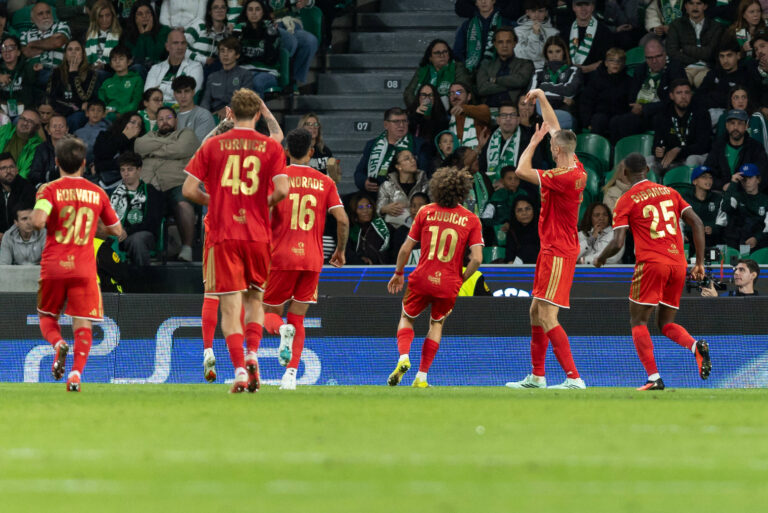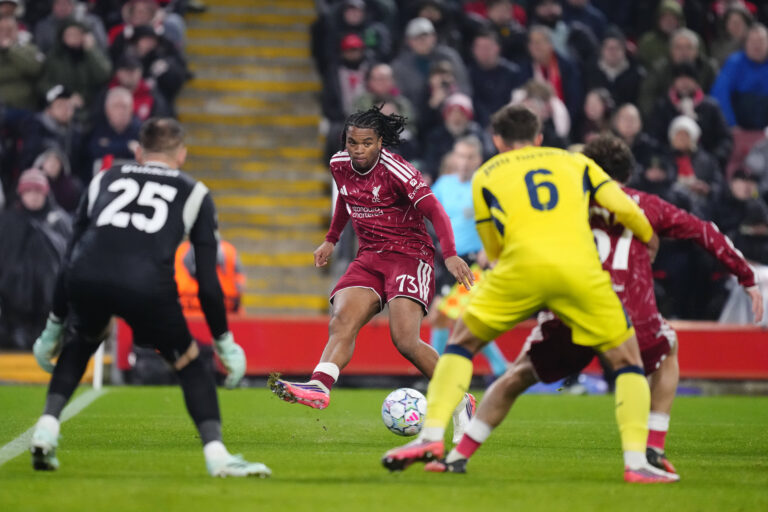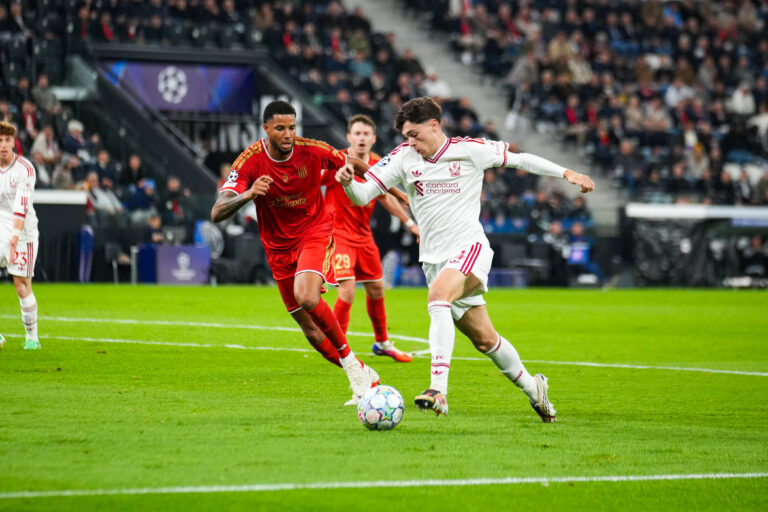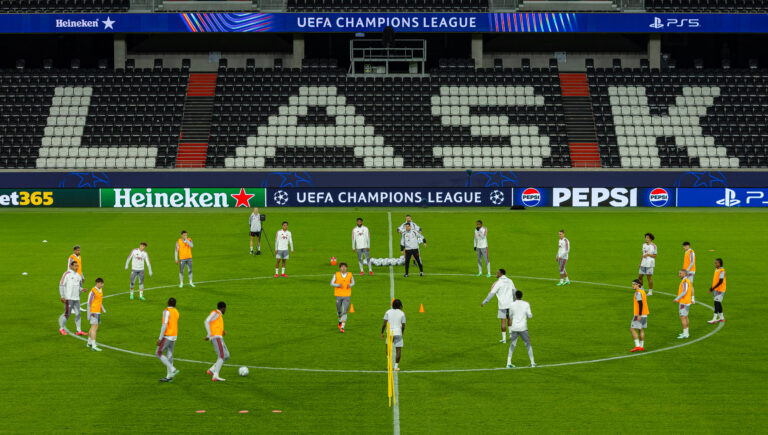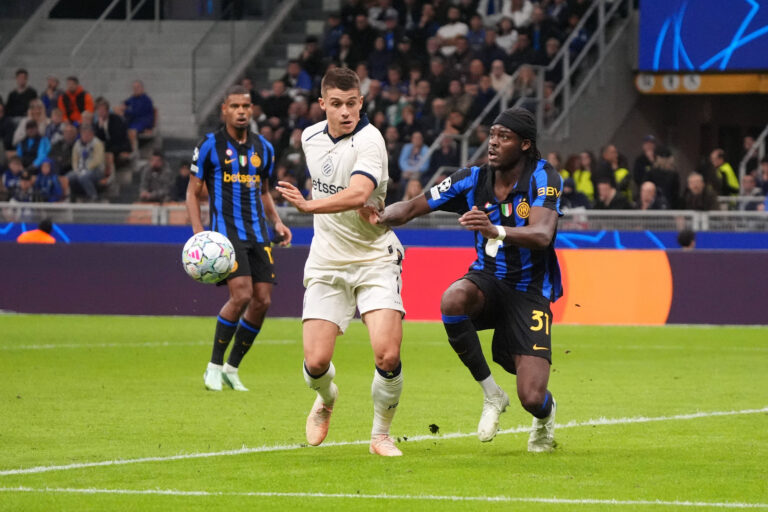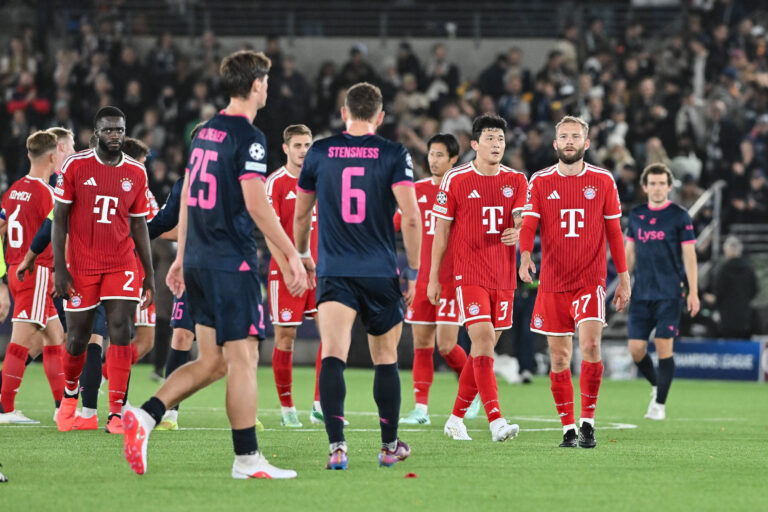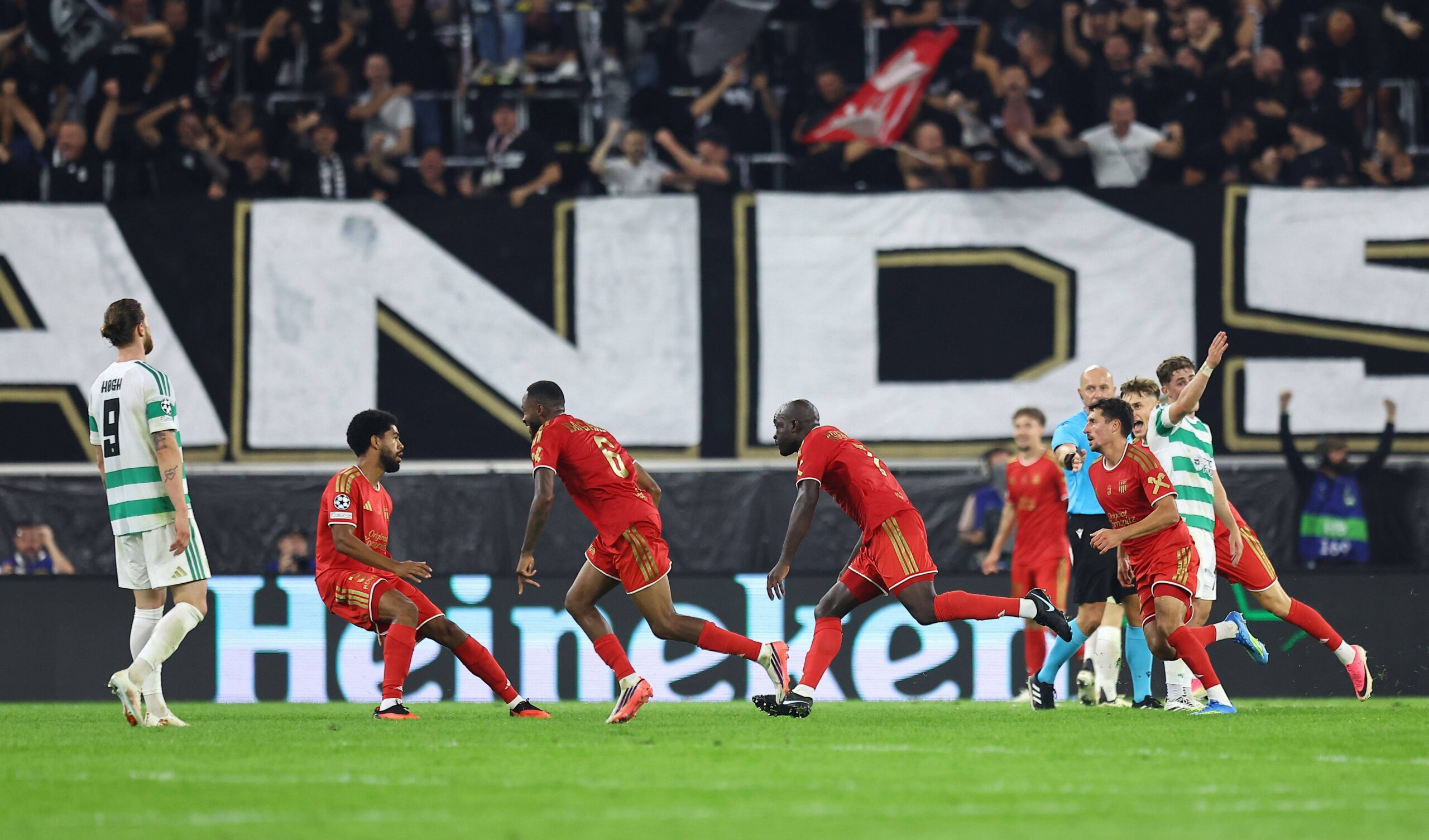
Dietmar Kühbauer had made it clear before the match that his team would take risks from the very first minute. LASK lined up in their familiar 3-5-2 formation: Andrés Andrade, Joao Tornich and Xavier Mbuyamba formed the back three in front of Lukas Jungwirth, while George Bello and Kasper Jørgensen pushed high as wing-backs. Captain Sascha Horvath was tasked with dictating the game from midfield, Melayro Bogarde provided intensity and ball-winning ability, while Robert Ljubičić repeatedly made dynamic runs into more advanced areas. Up front, Kühbauer trusted the explosive pairing of Moses Usor and Samuel Adeniran.
The plan was obvious: Celtic were not going to be allowed to calmly protect their 3-0 advantage from the first leg.
McGregor appears to deliver the knockout blow
From kick-off, almost all the football was played by LASK. The Linz side pressed aggressively, often won the ball back within seconds of losing it and immediately looked to attack the penalty area. Celtic were given hardly any breathing space and seemed unable to cope with the hosts’ intensity from the outset.
That made the 21st minute all the more painful. Celtic captain Callum McGregor scored to make it 1-0 on the night and 4-0 on aggregate. What should have been the decisive blow ultimately became merely the starting point for one of the most spectacular comebacks in Austrian European football history.
LASK did not alter their approach in the slightest. They continued to press Celtic high up the pitch, collected second balls almost at will and attacked with very few touches after regaining possession. In the 32nd minute, Kühbauer’s side finally earned their reward: Usor made it 1-1 and restored at least a glimmer of hope.
Even before half-time, it was obvious that Celtic had no control over the game. Even longer spells of possession offered little relief because the Scots were quickly put under pressure as soon as they attempted to play forward. That pattern continued after the restart.
Ten minutes turn Linz into a cauldron
Just three minutes into the second half, Ljubičić made it 2-1. LASK could now sense that something extraordinary might still be possible – and Celtic increasingly began to look nervous.
Adeniran struck for the first time in the 58th minute. At 3-1, only one more goal was needed to force extra time. Suddenly, a tie that had seemed dead and buried was completely alive again.
What stood out most was how little Celtic had to offer physically in response to the pressure. By the second half, several visiting players were already suffering from cramp. Martin O’Neill’s side dropped deeper and deeper, struggled to keep the ball for any meaningful length of time and barely managed to produce a single relieving attack. Even simple passes repeatedly went astray.
LASK, by contrast, seemed to gain energy with every passing minute. Their counter-pressing was ferocious, there was hardly any sideways passing after regaining possession and virtually every attack carried a sense of danger.
Even more remarkable was the fact that both teams had been without a league fixture at the weekend and could prepare specifically for this game. Celtic’s physical collapse was therefore one of the most surprising aspects of the evening.
Flecker forces extra time
The moment LASK desperately needed took a long time to arrive. Celtic were by now defending almost exclusively around their own penalty area, while the hosts launched attack after attack. With time almost up, Florian Flecker – a player with a habit of scoring special goals – suddenly took centre stage.
The experienced substitute headed home in stoppage time to make it 4-1. The Oberösterreich Arena erupted. The 4-0 aggregate deficit that had existed after McGregor’s early goal had genuinely been wiped out.
The balance of power did not change in extra time either. Given the enormous effort they had already put in, LASK might have been expected to eventually pay the price. Instead, the opposite happened. Celtic remained physically depleted and offered next to nothing going forward, while the Linz side continued to push for the decisive goal.
In the 109th minute, Adeniran finally completed an unforgettable night. The striker was allowed to shoot almost unchallenged from just under 20 metres and found the net for 5-1. Celtic had no response. A 4-0 aggregate deficit had become a 5-4 victory – the “Miracle of Linz” was complete. British media immediately described the defeat as one of Celtic’s most severe European collapses in recent history.
60 LASK shots across two games
The numbers underline just how extraordinary these two matches were. LASK attempted 40 shots in the return leg, while Celtic managed just eight. Eight of the home side’s efforts were on target and they also won ten corners. Although possession was almost perfectly balanced at 49 to 51 per cent, there was a huge difference between the teams when it came to actual attacking threat.
The expected-goals figures reflected the same dominance. LASK generated almost 5.0 xG in the second leg, while Celtic produced only a fraction of that figure. Across both matches, the Austrian side accumulated around 6.5 expected goals.
The overall shot count is even more remarkable. LASK had already attempted 20 shots in their 3-0 defeat in Glasgow. Added to the 40 in the return leg, that makes exactly 60 attempts across the two play-off matches. Celtic had used three near-perfect finishes in the first leg to create what looked like a comfortable advantage. Across 210 minutes, however, the team that produced far more chances ultimately prevailed.
Martin O’Neill had explicitly warned after the first leg that LASK should not be written off despite Celtic’s 3-0 victory, describing the Austrian side as an extremely dangerous opponent. Even he is unlikely to have expected just how accurate that assessment would prove to be.
Historic qualification and valuable points for Austria
The result is historic for LASK. The club have reached the main stage of the Champions League for the first time since the competition was introduced and can now test themselves against Europe’s elite. Back in 2019, LASK lost in the play-offs to Club Brugge. Seven years later, they finally made it – and did so after overturning a 3-0 first-leg defeat.
The evening was also extremely valuable for Austria in the UEFA coefficient rankings. A win in qualifying or the play-offs earns one point, which is divided by Austria’s five European representatives. The victory over Celtic alone therefore adds 0.2 points to the national coefficient. Even more significant is qualification for the Champions League, where further bonus points are available. Celtic, meanwhile, drop into the Europa League – particularly important because Scotland are one of Austria’s direct rivals in the rankings.
Sabah also pull off a surprise Champions League qualification
The other two Champions League play-offs on Tuesday also produced clear outcomes. Azerbaijani champions Sabah FK also overturned a seemingly lost tie, beating Hapoel Beer-Sheva 5-2 after extra time to advance 6-4 on aggregate. Bodø/Glimt had no such drama against NEC Nijmegen, following up their 3-1 first-leg win with a 3-0 home victory to progress 6-1 overall.
The Champions League league-phase draw will take place in Monaco on Thursday at 18:00. LASK will then discover their eight opponents – four will visit Linz, while the other four matches will be played away from home.