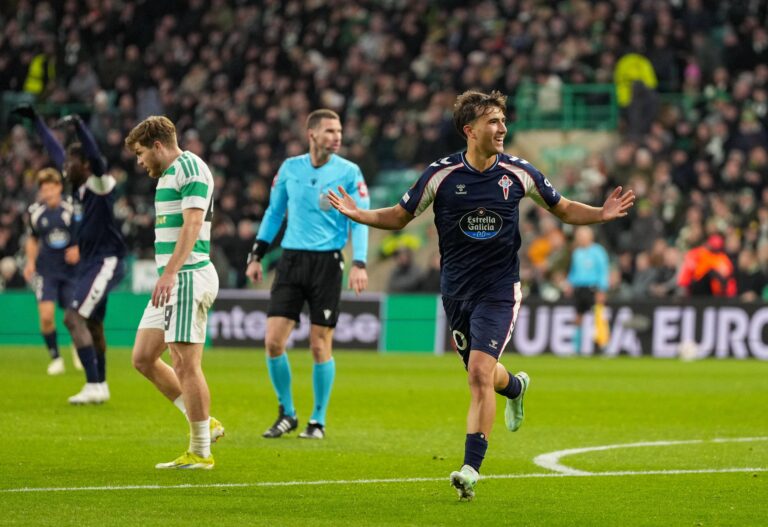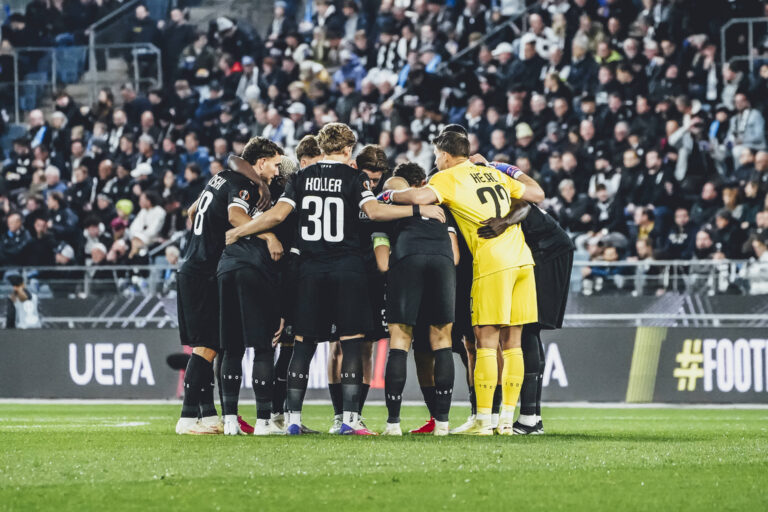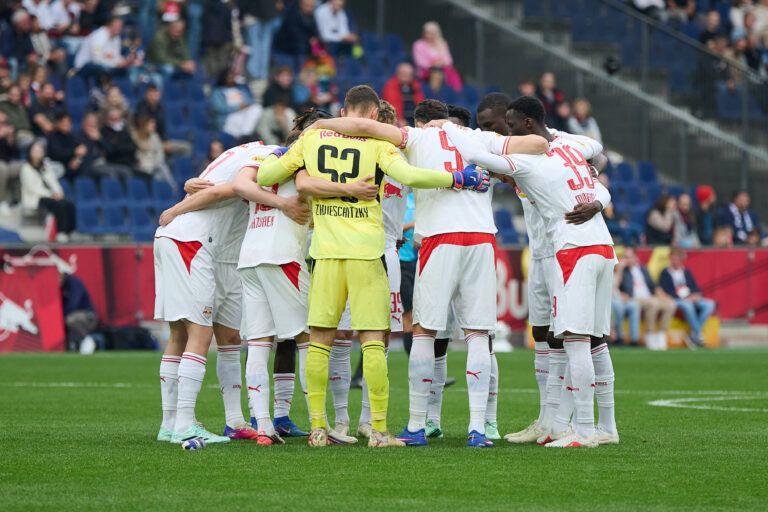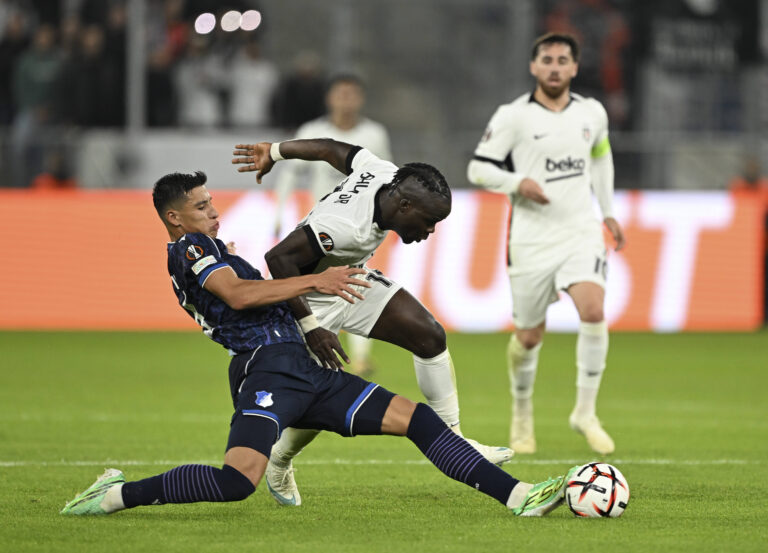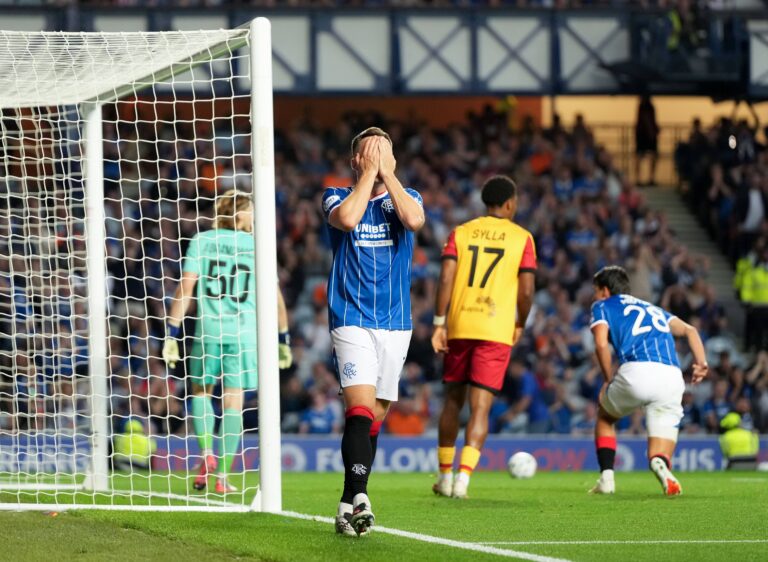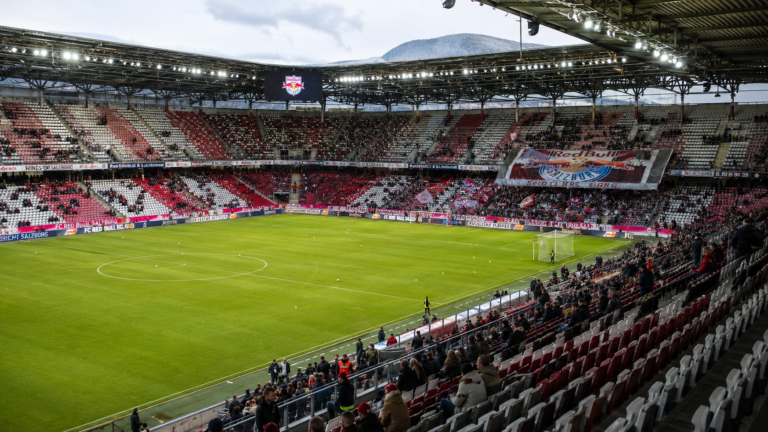
Salzburg endured a disastrous evening defensively and struggled to cope with the Italian side’s individual quality. Sturm, by contrast, put up a determined fight in England and remained competitive for much of the encounter. It was only in the closing stages that Bournemouth finally turned their superiority into a convincing scoreline.
Salzburg vs Milan: Defensive weaknesses ruthlessly exposed
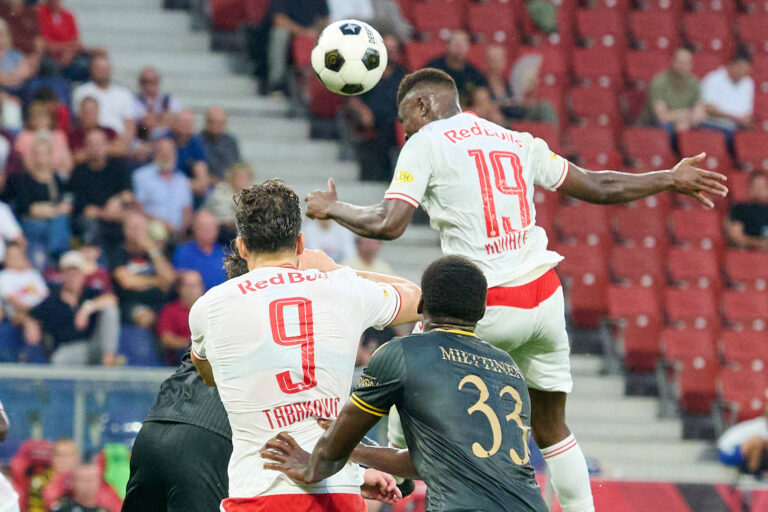
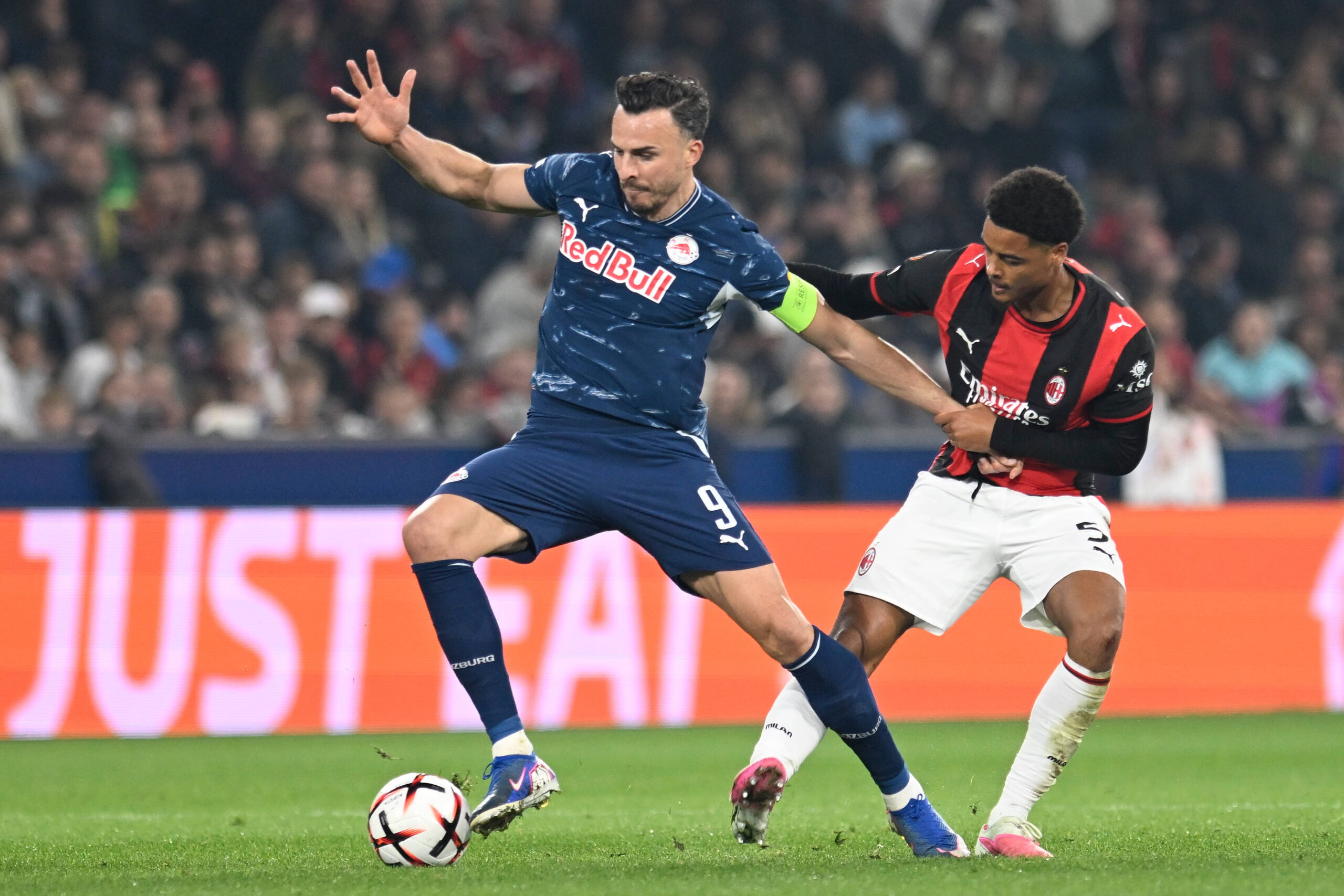
After going 15 competitive matches unbeaten under Danny Röhl, Red Bull Salzburg suffered a painful setback against Milan. The Italians were by no means dominant throughout the entire 90 minutes, but they punished Salzburg’s numerous defensive mistakes with remarkable efficiency.
The visitors took the lead after just 15 minutes through 19-year-old Alphadjo Cissé. Meeting a delivery from Omari Hutchinson, the forward got the better of Leandro Morgalla and headed home to make it 1-0.
The opening goal immediately highlighted one of Salzburg’s main problems: their full-backs and centre-backs were not sufficiently coordinated. Milan repeatedly created dangerous situations out wide, while the Austrian defenders were often slow to react in central areas.
Milan exploit the gaps in Salzburg’s defence
Salzburg certainly attempted to impose themselves through high pressing and quick recoveries of possession. However, Röhl’s side rarely managed to turn those turnovers into genuinely threatening opportunities.
Milan, by contrast, were considerably more precise. Combinations involving Adrien Rabiot, Davide Bartesaghi and Hutchinson caused Salzburg persistent problems.
The second goal, in the 32nd minute, was typical of the evening. Rabiot switched play towards Bartesaghi, who found Cissé. The young forward finished with his left foot to double Milan’s advantage.
The same pattern was repeated immediately after half-time. Rabiot delivered a cross into the penalty area, where Cissé was once again perfectly positioned to complete his hat-trick with a header in the 49th minute.
Salzburg’s defenders lost crucial individual duels or allowed their opponents far too much room in several of the goalscoring situations. Against technically gifted opposition, that lack of defensive conviction proved particularly costly.
The fourth goal also originated from an avoidable error. Ardon Jashari won possession in the 72nd minute, allowing Gonçalo Ramos to make it 4-0. Milan did not even need to construct a prolonged attacking move. By that stage, Salzburg’s resistance had largely collapsed.
The statistics lay bare Salzburg’s defensive problems
Remarkably, Salzburg actually enjoyed slightly more possession and registered 14 attempts, just one fewer than Milan.
The difference lay in the quality of those opportunities. While Salzburg managed only two shots on target, the Italians tested the goalkeeper with ten of their 15 attempts.
The expected goals figures tell an even clearer story: Milan generated 3.77 xG compared with just 0.78 for Salzburg.
Those numbers demonstrate why the result cannot simply be attributed to exceptional finishing by the visitors. Milan consistently created high-quality chances, whereas Salzburg struggled to manufacture dangerous shooting opportunities despite some promising recoveries of possession. The Italians’ four goals were therefore entirely consistent with the quality of the chances they produced.
Milan’s tally of seven big chances further underlines the scale of Salzburg’s defensive difficulties.
After the match, Danny Röhl praised his players’ courage and commitment but acknowledged that Salzburg had offered too little attacking threat. He accepted that the defeat was deserved, although he felt the final margin was somewhat harsh.
Filippo Terracciano’s dismissal in the 83rd minute had no meaningful impact given Milan’s already commanding lead.
Sturm keep Bournemouth at bay for long periods
Sturm Graz experienced a very different evening. Although Fabio Ingolitsch’s side were also clear underdogs against Premier League opposition, they showed considerably greater defensive stability for much of their match at Bournemouth.
The Austrian visitors defended deep and compactly, looking to deny the hosts space through the middle. Bournemouth dominated possession and regularly advanced towards the penalty area, but initially struggled to find a way through Sturm’s well-organised defensive block.
As the first half progressed, however, Bournemouth began finding more opportunities down the flanks. Captain Adam Smith was particularly dangerous with his overlapping runs.
The breakthrough eventually arrived shortly before half-time. Smith delivered a cross into the box, and Evanilson met it with an excellent header to make it 1-0.
It was a frustrating setback for Sturm, who had defended resolutely despite their opponents’ greater attacking quality.
Heil and Hödl come close to an equaliser
Sturm produced their best spell of the match after the interval. The visitors played with greater ambition, escaped Bournemouth’s pressure more frequently and began making an impression in attack.
Simon Seidl was the first to threaten, sending an effort wide, before Jürgen Heil had a golden opportunity to equalise. His shot struck the woodwork.
The danger was not over. Jacob Peter Hödl reacted to the rebound but was denied by an excellent reflex save from Bournemouth goalkeeper Đorđe Petrović.
It was the moment when the match could genuinely have taken a different direction. Instead of drawing level at 1-1, Sturm remained a goal behind.
Bournemouth manager Marco Rose responded with a triple substitution in the 70th minute, introducing Rayan, Justin Kluivert and Ryan Christie among others.
The fresh legs soon made a difference.
Sturm run out of steam in the closing stages
Having expended enormous energy closing down spaces and trying to create opportunities of their own, Sturm began to struggle as the match entered its final stages.
Bournemouth regained a stronger grip on midfield and increasingly managed to turn their attacking moves into shots.
In the 76th minute, substitute Rayan doubled the hosts’ lead. Sturm goalkeeper Daniil Chudjakow did not cover himself in glory, failing to keep out the Brazilian’s effort.
That effectively settled the contest. The Austrian side had invested considerable effort but could no longer maintain the intensity that had kept them competitive.
Deep into stoppage time, Jon Gorenc Stanković conceded a penalty for handball, and Álvaro Rodríguez converted from the spot to complete the 3-0 victory.
The late collapse made the defeat look more one-sided
The statistics clearly favour Bournemouth. The English side registered 24 attempts compared with just six for Sturm, while the expected goals figures stood at 2.68 to 0.36 in the hosts’ favour.
Sturm’s low xG total illustrates how rarely they managed to find genuinely promising shooting positions. Even the major opportunity involving Heil and Hödl does little to change that overall assessment.
Nevertheless, the 3-0 scoreline only tells part of the story. Sturm remained competitive until well into the second half and had a genuine opportunity to draw level.
Their defeat was therefore less about fundamental defensive mistakes than the sustained physical demands of facing individually superior opposition. Bournemouth were able to inject additional quality and pace through their substitutions, while Sturm had limited options because of their extensive injury list.
Indeed, the Premier League side endured considerably more difficult spells against the Austrian runners-up than the eventual scoreline might suggest.
Different problems, the same outcome
The second matchday of the Europa League league phase ultimately brought disappointment for both Austrian clubs.
Salzburg remain on three points following their opening victory over Levski Sofia. Against Milan, however, it became clear that their young defence still has plenty to learn when facing high-quality opponents. In particular, their cover against attacks down the flanks and their reactions after losing possession require significant improvement.
Sturm remain on one point following their opening draw against Rennes. At least the Graz side can take encouragement from demonstrating that they are capable of competing with Premier League opposition for extended periods.
Both teams, however, need to offer considerably more in attack. After a combined 180 minutes of European football this week and seven goals conceded, Austria’s representatives are left with a sobering return: no goals, no points and several lessons that urgently need to be applied in their upcoming matches.