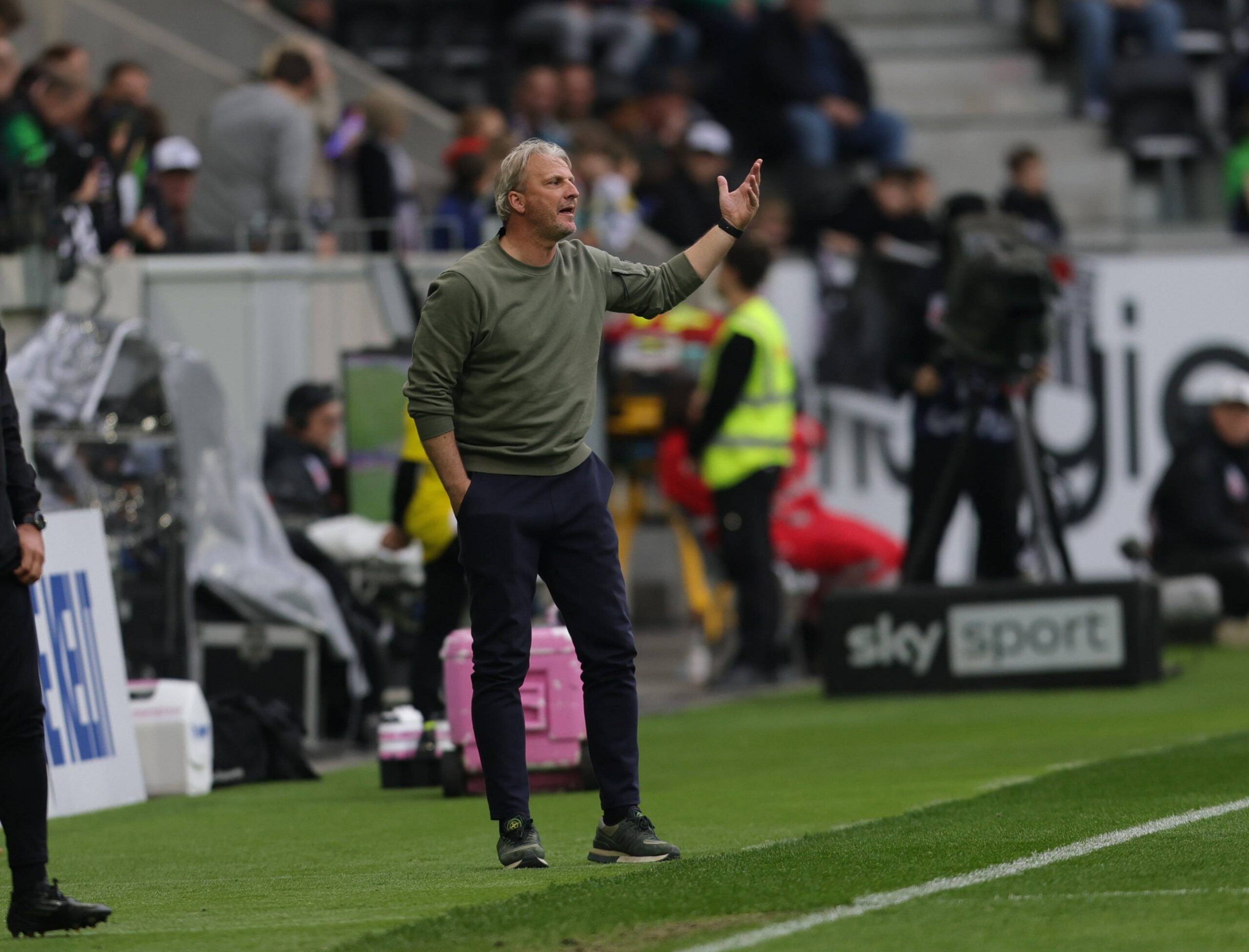
Under normal circumstances, Markus Schopp would have had every reason to celebrate Hartberg’s biggest victory of the season. Instead, the 52-year-old was left furious following the Styrian derby against GAK. His anger stemmed from an incident in the opening minute, when GAK striker Alexander Hofleitner caught Hartberg captain Paul Komposch on the foot while attempting to win the ball.
The centre-back required several minutes of treatment before being replaced by Lukas Spendlhofer in the seventh minute. The initial diagnosis was a broken foot. It represents a particularly cruel setback for Komposch, who had only recently fought his way back from a cruciate ligament injury.
Schopp launches fierce criticism of referee
It was referee Isa Simsek’s handling of the incident that particularly infuriated Schopp. Hofleitner was not even booked for the challenge, while the Hartberg manager himself received a yellow card for his protests.
“That’s the result of a challenge I simply cannot accept,” Schopp declared after the match. He criticised the officials for what he considered a failure to anticipate GAK’s aggressive approach.
Schopp also referred to the Graz derby two weeks earlier, when Sturm goalkeeper Daniil Khudyakov suffered a serious injury in a collision with GAK player Jacob Italiano. The goalkeeper sustained fractures to both his tibia and fibula.
For Schopp, the two incidents bore striking similarities. Although he stopped short of accusing GAK’s players of deliberately injuring their opponents, he questioned why another such serious incident had occurred within such a short period.
The Hartberg manager was particularly incensed by what he claimed was an admission from Simsek at half-time that, on reflection, the referee would have assessed the challenge differently.
VAR also comes under fire
Schopp also questioned why the video assistant referee had not intervened. However, an important distinction must be made between a potential red card and a yellow card: VAR can generally recommend an on-field review of a foul only when a direct red card is a possibility. An overlooked yellow-card offence alone does not justify intervention.
Schopp’s criticism therefore centred primarily on the referee’s original interpretation of the challenge. In his view, a more decisive punishment early in the match would have sent a clear message about what was acceptable for the remainder of the contest.
For the Hartberg manager, however, losing his captain is far more significant than the debate surrounding a single refereeing decision. Komposch could face another absence lasting several weeks or even months following his latest serious injury.
Scheiblehner rejects comparisons with Graz derby incident
GAK manager Gerald Scheiblehner expressed sympathy for his opposite number’s emotional reaction but rejected the criticism directed at his team.
“It certainly wasn’t intentional, nor was it something we instructed our players to do,” Scheiblehner explained at his post-match press conference. His tactical approach demands aggressive pressing, he said, but specifically without committing fouls. After all, a foul interrupts the press and hands possession back to the opposition.
The 48-year-old also rejected comparisons with the incident involving Khudyakov, arguing that the earlier collision had occurred under different circumstances and was particularly unfortunate.
Scheiblehner pointed to GAK’s own Ludwig Vraa, who had suffered a cruciate ligament injury in a challenge just days earlier and will also be sidelined for several months.
“I understand Markus Schopp being angry and emotional when one of his players is involved,” Scheiblehner said. However, he insisted that suggesting any deliberate intent to cause injury would be a serious mistake.
Hartberg’s record victory takes a back seat
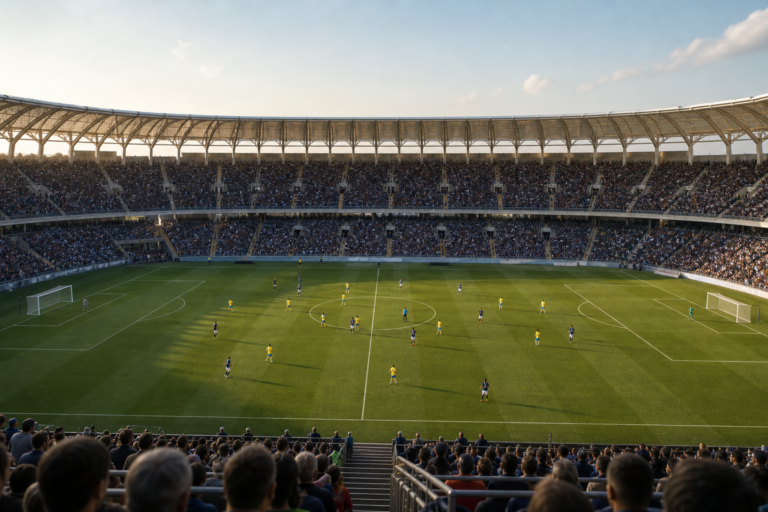
On the pitch, Hartberg delivered an impressive performance in their 4-0 victory in Graz. Marco Hoffmann scored twice, Nikolaus Feldhofer made it 3-0, and an own goal from Donovan Pines completed the scoring.
Hartberg also set a new club record for this stage of a Bundesliga season, reaching 17 points after eleven matches.
Yet the result was relegated to a secondary concern after the final whistle. For Schopp, losing Komposch again represents a major blow and raises broader questions about how referees assess dangerous challenges and the consequences they can have for players.