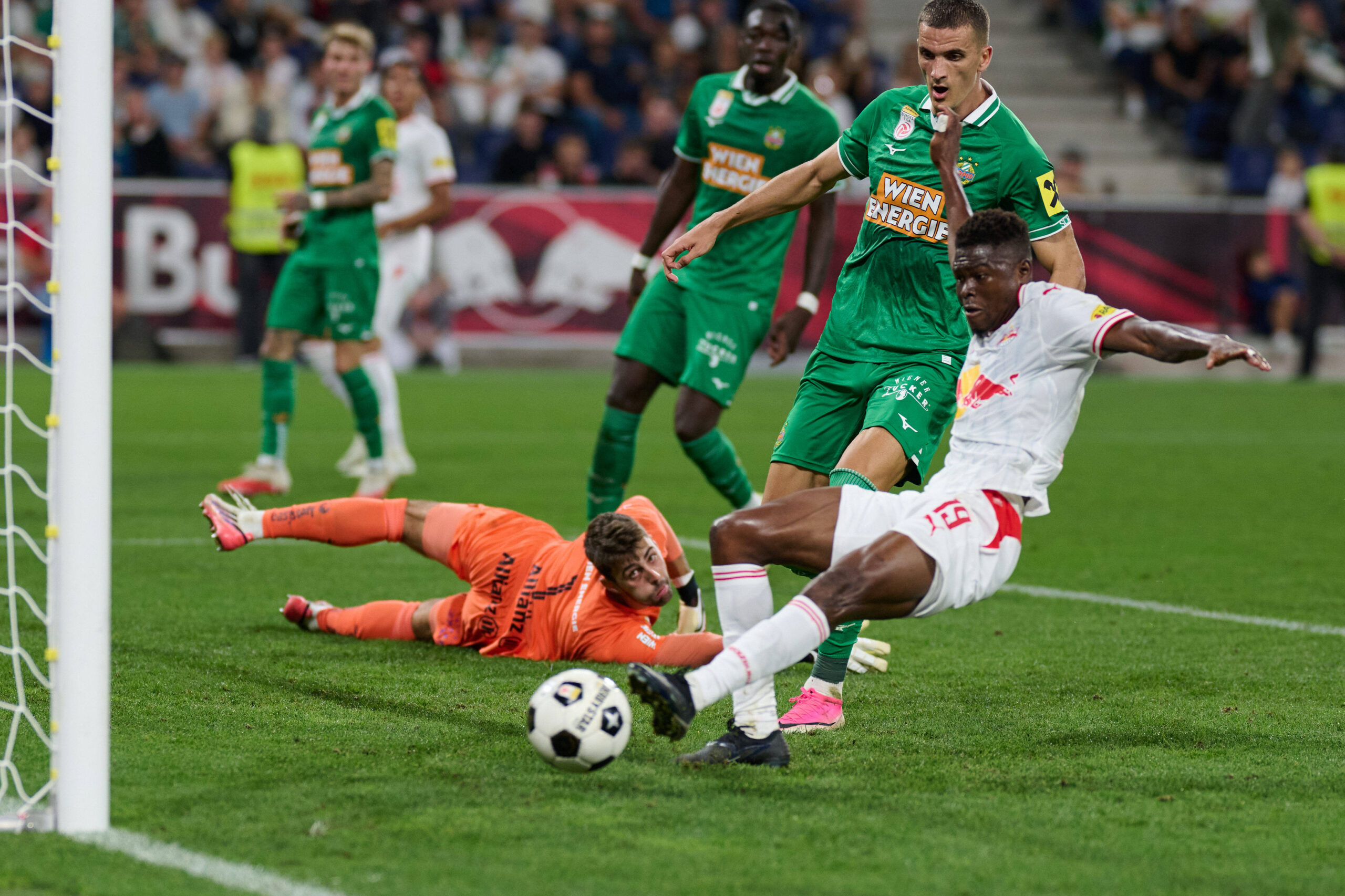
The scoreline was somewhat harsh given the overall balance of play. The manner in which Rapid conceded, however, left little room for excuses. Salzburg did not need to play their way through the visitors with elaborate combinations during the decisive opening spell because Rapid contributed heavily to their own downfall with positional mistakes, lost second balls and far too little pressure on the man in possession.
First game without Amane – Demir pushed back out wide
This was Rapid’s first match following Romeo Amane’s departure, with his move to RSC Anderlecht having been confirmed only a few hours earlier. Across his 69 competitive appearances for Rapid, the Ivorian had become important because of his dynamism, security in possession under pressure and ability to turn immediately after winning the ball and carry it into space.
Nicolas Bajlicz was the expected choice to replace him in the double pivot alongside captain Matthias Seidl. The attacking line-up was more surprising. Ercan Kara started as the lone striker, Tonni Adamsen moved into the No. 10 role and Yusuf Demir returned to the wing.
That was particularly notable because Demir had produced an outstanding performance through the middle only three days earlier in the 3-1 win over Sturm Graz. The positions were not completely rigid this time either. Demir regularly moved inside, while Adamsen occasionally dropped very deep to offer an additional connection during the build-up.
Even so, starting from the flank took some of the freedom away from the in-form Demir that had made him so dangerous against Sturm. In central areas, the technically outstanding left-footer has a wider field of vision and more directions in which to play, whereas the touchline naturally limits his options.
Rapid’s collapse cannot be explained by that selection decision, however. Their problems elsewhere were far too serious.
Three goals, three avoidable chains of mistakes
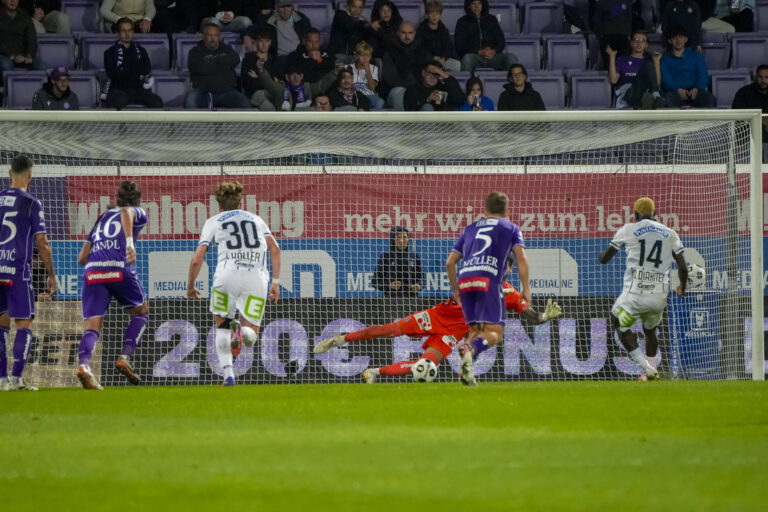
Rapid’s defensive structure was breached for the first time after only four minutes. Sota Kitano found Tabakovic, who was given far too much space, shifted the ball away from his marker and finished for 1-0. Rapid put no pressure on the passer and were also poorly positioned in the last line. Giving Tabakovic that much room usually comes at a price.
The second goal after 15 minutes was even more frustrating. Rapid had several opportunities to clear their lines during the move but failed to deal decisively with the situation. The ball eventually reached Veratschnig, who scored Salzburg’s second.
For the 3-0, Rapid had no defensive access at all. Mazurek found Tabakovic, who was allowed to shoot from outside the box with virtually no pressure and placed the ball precisely into the net. After 21 minutes, a match Rapid had entered on the back of four consecutive league wins was effectively close to over. Shortly afterwards, the visitors were fortunate that another Tabakovic goal was ruled out for a marginal offside. Hedl then prevented Kitano from making it 4-0 before the break.
The common theme was not so much Salzburg’s individual quality as Rapid’s inability to apply pressure. Danny Röhl’s team certainly exploited the spaces they were given with ruthless efficiency, but the visitors made life unusually easy for them and repeatedly allowed the hosts time and freedom on the ball.
Rapid cannot make their pressing work
Rapid’s defensive work was almost unrecognisable from the performance against Sturm. In that match they had impressed with aggression, quick reactions after losing possession and consistent counter-pressing. Very little of that was evident in Salzburg.
The first pressing line rarely managed to put the ball carrier under meaningful pressure. Salzburg’s players therefore repeatedly had enough time to lift their heads, identify the next option and bypass Rapid’s lines with relatively simple passes. Even when one of the hosts was put under pressure, Rapid often lacked the second wave needed to immediately attack the receiver.
The hunger for regaining possession that had defined Rapid’s best performances of the season was missing. Salzburg appeared sharper and more decisive in many situations, while the Vienna side were too often reacting rather than dictating, particularly in the first and middle thirds.
Rapid were not completely without opportunities. Space repeatedly opened up behind Salzburg’s first pressing line, and the visitors managed on several occasions to carry the ball forward at speed or create promising transition situations. Almost every time, however, the final decision was wrong: a pass arrived too late, the wrong run was made, or a promising attack ended with a weak shot or inadequate occupation of the box following a low cross from wide.
The 4-0 arrives at the worst possible moment
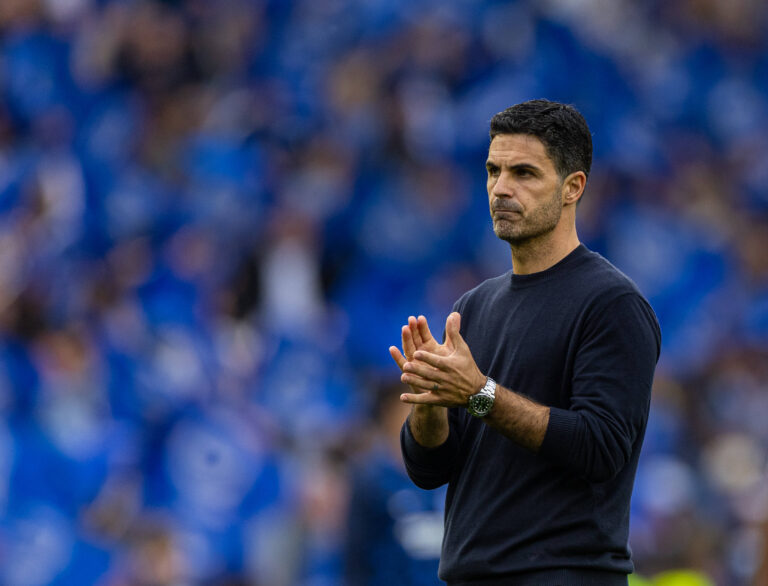
Johannes Hoff Thorup reacted at half-time by introducing Petter Nosa Dahl for Ercan Kara and Eaden Roka for Jannes Horn. Before any tactical adjustment could have an effect, however, the match was definitively over.
Less than a minute after the restart, Salzburg again played through Rapid’s defence far too easily. Mazurek found Baidoo, who finished across Hedl to make it 4-0. Psychologically, the timing could hardly have been worse. After a half-time interval in which Rapid had the chance to regroup, any hope of an extraordinary comeback disappeared within roughly 50 seconds.
Rapid at least showed some character afterwards. In the 51st minute, Seidl took aim from around 25 metres and scored a superb long-range goal to make it 4-1. The Rapid captain later came close to adding a second, while Kitano hit the crossbar at the other end.
Salzburg largely managed their sizeable advantage without losing control. Shortly before the final whistle, however, Rapid were once again opened up with alarming ease. Hedl could not push Enrique Aguilar’s cross far enough away from danger, Konaté reacted quickest and completed the 5-1 scoreline. Hedl’s small error was fitting on an evening when individual mistakes ran through almost every part of Rapid’s team.
Five goals from 2.74 xG
The numbers underline just how unusual this 5-1 was. Salzburg finished with 2.74 expected goals, compared with Rapid’s 0.95. Even more strikingly, Rapid actually led the shot count 17-16. Both teams also recorded exactly 29 touches in the opposition penalty area and finished with 50 per cent possession.
This was therefore not a classic 5-1 in which one team overwhelms the other with one clear-cut chance after another for 90 minutes. Salzburg were simply far more clinical in the decisive areas. Rapid, meanwhile, produced a number of serious defensive mistakes that a team of Salzburg’s quality was always likely to punish.
That is also why it would be too simplistic to explain the result purely through Salzburg’s exceptional finishing. The winning margin was too large, but Rapid’s poor defensive performance played a major role in allowing the match to turn into a rout.
Salzburg captain Veratschnig summed up his team’s start perfectly: “You really couldn’t start a match any better.” Before kick-off, Röhl had already said his side had something to make up for after three consecutive 1-0 defeats against Rapid, even though he deliberately described Salzburg as the “underdogs”. Thorup, meanwhile, had said he was “100 per cent” convinced Rapid would have a good chance if they reproduced their recent football. On this night, they managed that only in brief spells.
Salzburg become LASK’s closest challengers
The result also has an immediate impact on the table. LASK remain perfect with 15 points from five matches. Salzburg are still unbeaten and sit second on 13 points, while Rapid drop to third with twelve after their first Bundesliga defeat of the season.
Neither side has much time to dwell on the result. The second round of the ÖFB Cup takes place this weekend. Rapid travel to Austria Klagenfurt on Saturday at 20:30, while Salzburg visit SKN St. Pölten on Sunday at 17:00. For Rapid, the next match will also be about quickly proving that the 5-1 defeat was nothing more than a one-off collapse – and not the beginning of another difficult spell after a strong start to the season, something Hütteldorf has become all too familiar with in recent years.