Following their 2-1 victory in the first leg, a draw would have been enough for Austria to progress. However, there was little sign of the hosts calmly managing their advantage at the Generali Arena. Beitar dictated the rhythm for long spells with an unusually patient build-up and dragged Austria into an uncomfortable contest that increasingly developed into a war of attrition.
Beitar turn the tie around
The Israeli side frequently circulated the ball very slowly through defence and midfield before suddenly bypassing Austria’s first line of pressure with longer passes. That forced Stephan Helm’s team into constant shifting and positional adjustments. Austria repeatedly had to step forward to press before dropping several metres again only seconds later.
They also struggled to gain any real control over Beitar’s build-up because the visitors’ full-backs moved a long way infield, consistently creating additional short passing options.
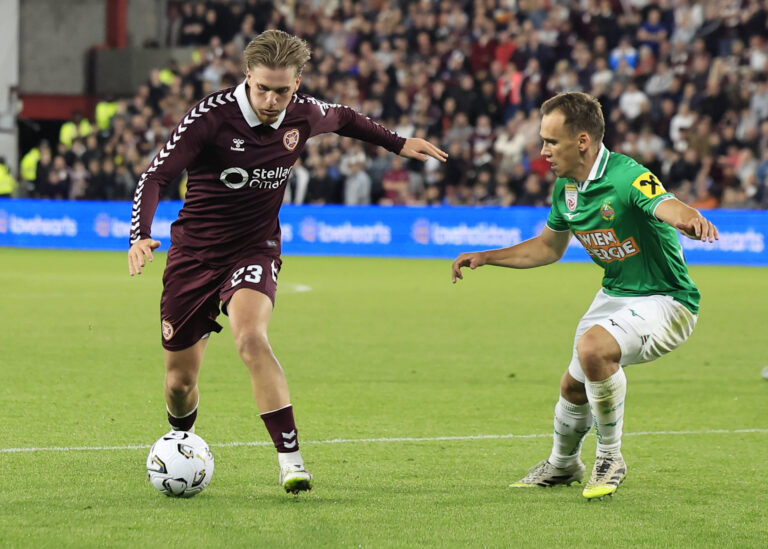
Julian Hettwer had Austria’s first good opportunity after around 15 minutes, but Beitar gradually became the more dangerous side. Omer Atzili gave the visitors a 1-0 lead in the 33rd minute with a precise finish. Shortly after half-time, Johnbosco Kalu converted a rebound to make it 2-0 and briefly put Beitar ahead on aggregate.
Austria responded only two minutes later. Hettwer won possession following a mistake in Beitar’s build-up, Miguel Silva saved the initial effort, but Kelvin Boateng reacted quickest to score and make it 2-1.
A disjointed game full of interruptions
From then on, the match became extremely scrappy. Both teams made numerous technical errors and many attacks broke down before they had properly developed. Beitar were by no means excessively aggressive or cynical, but there were countless minor fouls from both sides, repeatedly disrupting the flow of the game.
Referee Łukasz Kuźma showed eight yellow cards in total, four to each team. As the contest wore on, it became increasingly draining mentally as well as physically. Tackles, free-kicks and brief stoppages for treatment followed one another, while sustained periods of high-quality football were rare. There were, however, plenty of mistakes on both sides, including several unforced ones.
Austria rarely found attacking solutions that allowed them to take control themselves. Beitar’s slow build-up did little to increase the tempo of the match, but it forced the Viennese side into constant off-the-ball running before the Israelis repeatedly looked to exploit space with longer passes. That made the 120 minutes even more exhausting for the hosts.
The numbers favour Beitar
The statistics also underline that Austria’s progression was anything but comfortable. Across the entire match, including extra time, Austria had only 34 per cent possession compared with Beitar’s 66 per cent. The visitors registered 20 shots, while Austria managed just eight. Beitar also led 35-17 in touches inside the opposition penalty area.
The expected-goals figures were more balanced. Beitar recorded 1.71 xG compared with Austria’s 1.38. The Israelis therefore had considerably more possession and attempts and also created the slightly better chances overall. At the same time, the relatively small difference in xG shows that many of Beitar’s efforts came from less threatening positions.
Şahin-Radlinger rescues Austria
Samuel Şahin-Radlinger became increasingly important for the Violets towards the end of normal time and especially in extra time. The Austria goalkeeper was called into action several times immediately after the additional 30 minutes began.
In the 104th minute, Yarden Shua had Beitar’s huge chance to settle the tie. The forward found himself free in a central position inside the penalty area but sent his effort wide. Only a short time later, he was denied again by Şahin-Radlinger.
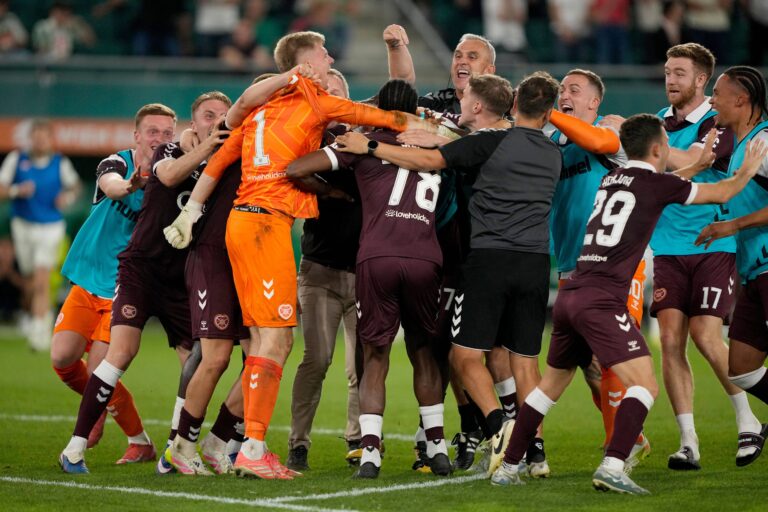
Beitar’s failure to convert those opportunities came back to haunt them in the shootout. Manfred Fischer, Tae-Seok Lee and Reinhold Ranftl converted Austria’s first three penalties. Brayan Carabalí and Tomer Yosefi scored for Beitar before Eugène Ansah hit the crossbar.
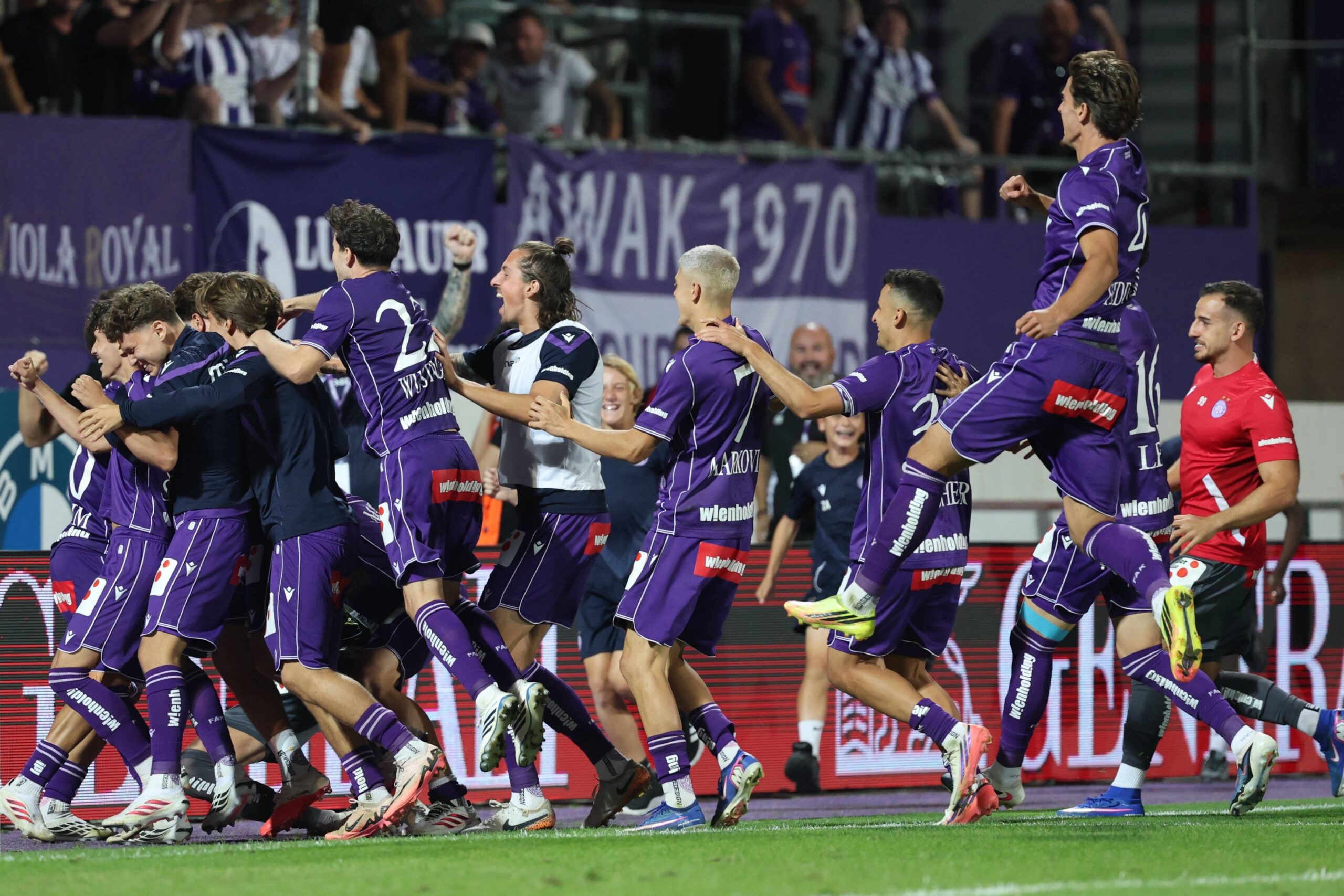
Vasilije Marković then had the chance to put Austria in a commanding position, but his penalty struck the post. Şahin-Radlinger immediately made up for his team-mate’s miss by saving from Timothy Muzie. Sanel Šaljić kept his composure with the next attempt and sealed a 4-2 shootout victory to send Austria into the play-off.
Braga await in the play-off
The level will rise again in the next round. FK Austria Wien face Portuguese side SC Braga, with the first leg taking place in Portugal on August 20. The return fixture in Vienna follows one week later, when a place in the Conference League league phase will be decided.
Before that, however, Austria face another difficult assignment on Sunday. After an exhausting 120 minutes, Helm’s side travel to TSV Hartberg for a 5pm Bundesliga kick-off. The personnel situation is far from ideal: Aleksandar Dragović is suspended following his red card against LASK, while Johannes Eggestein missed the Beitar match with recent muscular problems and remains doubtful for Hartberg. There is also pressure from Austria’s poor domestic start, with defeats against Wolfsberger AC and LASK leaving them without a point after two rounds. Progress in Europe provides some relief, but there is very little time for the players to recover.