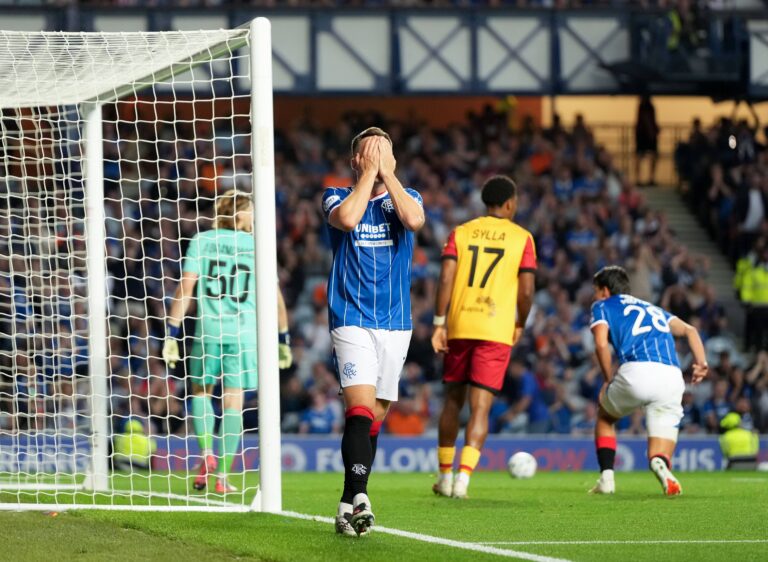
Everything had been set for another memorable European night in western Vienna. Following the 2-2 draw in Edinburgh, Rapid needed a home win to reach the Conference League league phase for a third consecutive season. Johannes Hoff Thorup named the same starting XI for the third match in a row.
The Green-Whites made a decent start. Yusuf Demir tested Hearts goalkeeper Beau Reus early on with a free-kick, before Tonni Adamsen was denied from a tight angle. Rapid enjoyed more possession and spent most of the opening stages in the visitors’ half, but initially struggled to turn that territorial advantage into genuine danger.
Kara puts Rapid on course
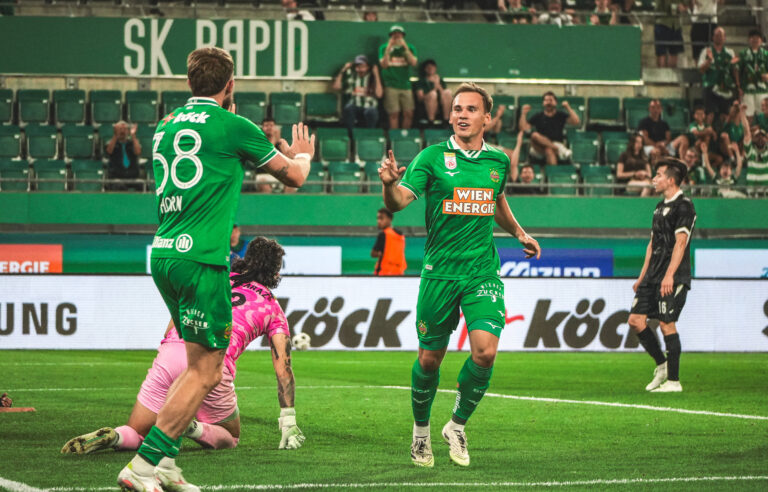
The breakthrough nevertheless arrived shortly after the half-hour mark. Demir helped create the move before Ercan Kara finished inside the penalty area to make it 1-0 in the 34th minute. Hearts had offered very little until that point and had already been forced into an early change when the injured Tom Renaud was replaced by Tomas Magnusson after around 15 minutes.
Rapid were not outstanding in the first half and lacked incision in the final third, but they largely controlled proceedings. That made what happened after the break all the more difficult to explain.
The hosts suddenly handed the initiative to an opponent who had barely known what to do with the ball during the opening 45 minutes. Instead of continuing to press Hearts high and dictate the contest, Rapid became more passive. The Scots gradually grew in confidence, enjoyed longer spells of possession and pushed the home side further back.
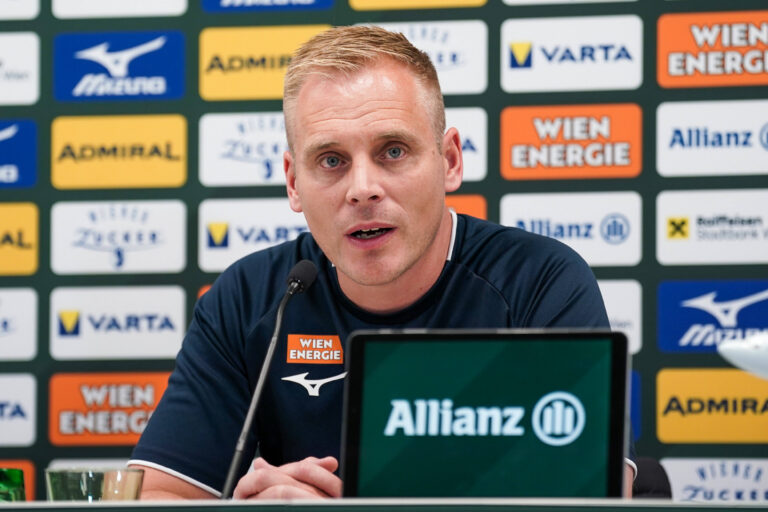
Hearts coach Wouter Vrancken acknowledged as much afterwards. He said his team had played a “really poor first half” but had become braver after the break and “taken the game into their own hands”. In that spell, he felt Hearts had even been the dominant side.
Equaliser despite Rapid’s numerical advantage
The match then took an almost absurd turn. Magnusson was shown a second yellow card in the 76th minute following another foul. Rapid were 1-0 up at that point, playing at home against ten men.
Three minutes later, it was 1-1.
Blair Spittal delivered a corner and substitute Pierre Landry Kaboré finished at the near post to equalise. Rapid had somehow squandered what appeared to be the most comfortable situation of the entire evening within a matter of minutes.
The fact that Hearts could become so dangerous despite being a man down was symptomatic of Rapid’s problems. Even with the extra player, the hosts could no longer give their attacks any real structure. There was a lack of tempo, runs in behind and, above all, a willingness to take risks in dangerous areas.
The overall statistics underline that contradiction. Rapid had around two-thirds of the possession, attempted 23 shots and registered 29 touches inside the opposition penalty area. Hearts managed only nine efforts and 16 touches in Rapid’s box. Yet the Scots put four shots on target, compared with only three for the hosts. Even Rapid’s 10-6 advantage in corners failed to produce a decisive edge.
The numbers summed up the problem perfectly: Rapid had plenty of the game but did far too little with it.
Bizarre extra time at the Allianz Stadion
The situation became even more remarkable in extra time. Rapid had an extra man, were playing at home in front of almost 24,000 supporters and needed only one goal to reach the league phase. Yet for long stretches, the ball merely moved sideways across the pitch.
There were hardly any changes of pace, too few courageous vertical passes and virtually no sustained attempts to overload the spaces that a team playing with ten men inevitably leaves open. Hearts were repeatedly allowed to regain their shape – and even created danger themselves.
In the 100th minute, the visitors actually took the lead. It did not even come from a classic counter-attack. Rogers Mato delivered from the flank, Calvin Miller arrived at the far post and finished to make it 2-1, stunning the Allianz Stadion.
Only in the closing stages did Rapid finally show the urgency that should have appeared much earlier. Moulaye Haïdara sent the ball into the box in the 119th minute and Nenad Cvetković rescued the Green-Whites with the 2-2 equaliser, sending the tie to penalties.
Reus becomes the Hearts hero
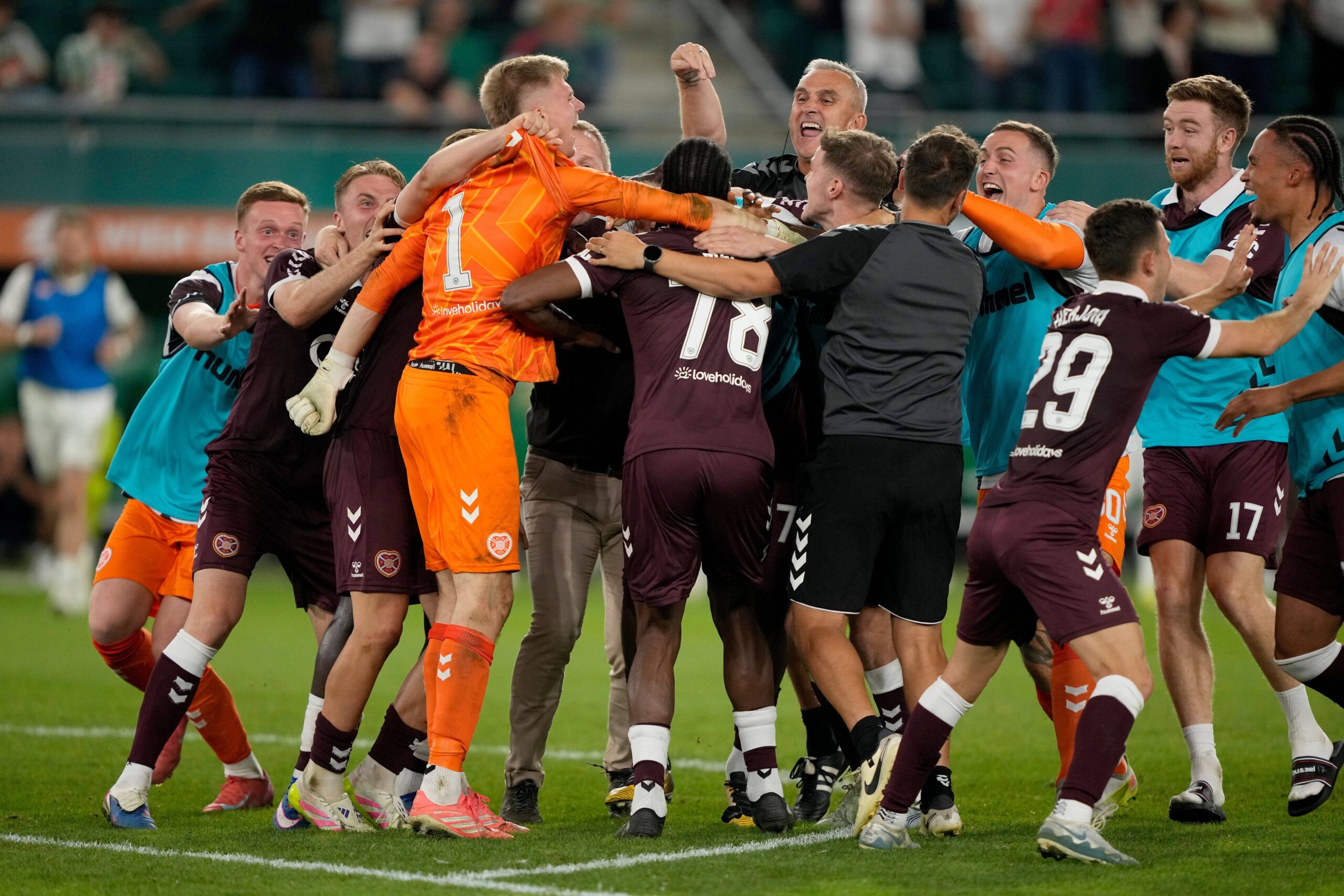
That was where Beau Reus ultimately became the match-winner. The Hearts goalkeeper saved the penalties of Haïdara and Marco Tilio, while the Scots converted four of their attempts. After 240 minutes of football and two 2-2 draws, Heart of Midlothian prevailed 4-3 in the shoot-out.
For the first time in their history, Hearts had successfully negotiated a European play-off tie.
Thorup afterwards described it as a “terrible evening”. Rapid, he said, had started strongly and initially had the match exactly where they wanted it. As in the first leg, however, his team failed to begin the second half well enough. Particularly painful was the fact that the second Hearts goal had originated from a situation that began with a Rapid corner.
Vrancken, meanwhile, felt his team had once again demonstrated its mentality. Despite a poor first half, falling behind and later going down to ten men, Hearts repeatedly found a way back into the contest. The Belgian was particularly proud of his team’s development and togetherness.
Rapid are left with an elimination that will be exceptionally difficult to digest. Not because Hearts were the better team over 120 minutes, but because Rapid allowed an opponent they had largely controlled in the first half back into the game for no obvious reason. Even a lead and a numerical advantage were not enough. On an evening when the circumstances appeared to become increasingly favourable, Rapid lost precisely the directness and conviction they needed to extend their European campaign.