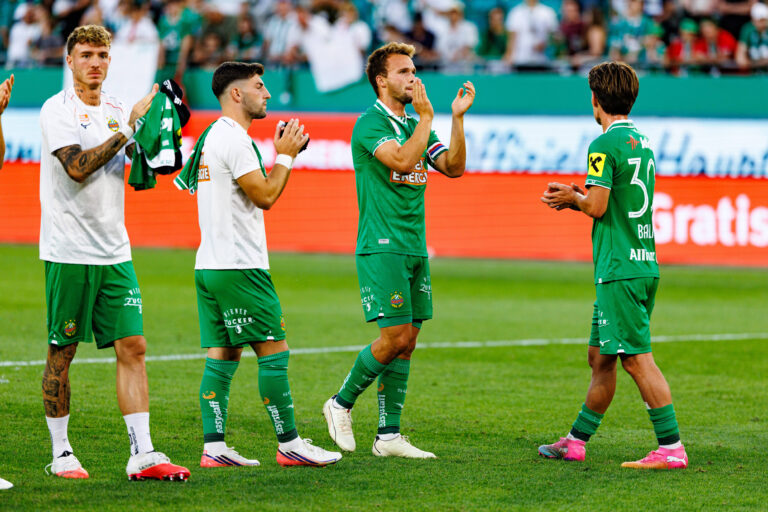
The Estonian underdogs are built around an unusual club model that combines strong regional roots, experienced internationals and a targeted connection with Gambia.
From provincial club to European regulars
Paide is located in the geographical centre of Estonia and has a population of only around 8,000. Organised football has been played there since the early 1990s, although the story of the present-day club began in 2004 under the name Paide FC Flora. Four consecutive promotions followed. The team has played continuously in Estonia’s top flight since 2009 and has developed into the strongest and most consistent club outside Tallinn.
Paide have established themselves among the country’s leading teams in recent years. They finished as runners-up in 2020, won the Estonian Cup for the first time in 2022 and lifted the Super Cup one year later. The club has never won the league, but regularly holds its own as Estonia’s fourth force behind the stronger Tallinn sides Flora, FCI Levadia and Nõmme Kalju.
Paide’s regular home ground holds only around 500 to 600 spectators and does not meet UEFA requirements. European matches therefore have to be moved elsewhere. Rapid will play today at the A. Le Coq Arena in Tallinn, Estonia’s national stadium. Around 5,000 spectators are expected, including approximately 300 Rapid supporters.
The club’s distinctive business model
Paide’s development has not been driven by major investment, but by a clearly defined niche. The club combines experienced Estonian players with young talents who still have considerable development potential. Its cooperation with Gambian club Real de Banjul is particularly important. Young West African players can quickly gain regular playing time in Estonia, adapt to European football and later be sold at a profit.
The model has already produced several successful transfers. Alassana Jatta moved to Denmark, Muhammed Sanneh joined a Czech club and Abdoulie Ceesay signed for FC St. Pauli for around €450,000. Ceesay became the first player to move directly from the Estonian league to one of Europe’s top five leagues. Transfers of this kind help finance the club and strengthen its reputation as a stepping stone for African talent.
Paide’s biggest European nights
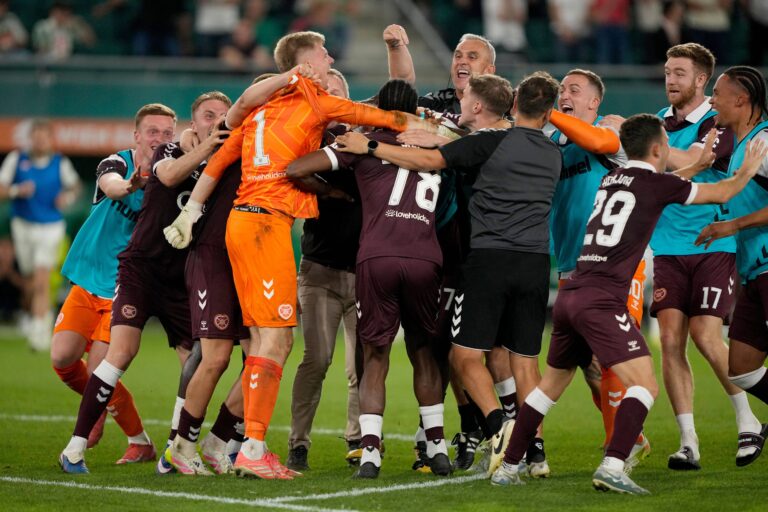
Paide made their European debut against Žalgiris Vilnius in 2020. Their best campaign so far followed in 2022/23. The club first defeated Dinamo Tbilisi in a penalty shootout. Paide then failed to score in either match against Ararat-Armenia, but progressed after another shootout. RSC Anderlecht finally proved far too strong in the third qualifying round, winning 5-0 on aggregate.
Paide have continued to show that they can be awkward opponents in qualifying ties. In 2024, they eliminated Bala Town and Stjarnan before BK Häcken exposed their limitations. Last season, progress against Bruno’s Magpies was followed by an 8-0 aggregate defeat against AIK. Heavy losses against stronger opposition are therefore as much a part of Paide’s European history as unexpected victories.
The team has looked more stable this season. Paide defeated Lithuanian club Hegelmann 4-1 on aggregate before recording a surprise 2-1 win over Zira from Azerbaijan. They therefore conceded only two goals across their first four European matches. However, the Estonians defended extremely deep against Zira and also needed plenty of luck in the second leg, in which the Azerbaijani side accumulated an expected-goals value of 3.56.
Experience meets Gambian talent
Experienced Estonian players form the backbone of the current squad. Centre-back Nikita Baranov, midfielder Martin Miller and striker Henri Anier all have international and overseas experience. Anier is the most prominent name and scored the decisive goal against Zira.
In goal, Paide have Gambian international Ebrima Jarju, whose main strengths include his reflexes.
Coach Tarmo Kink also relies on several young Gambian attacking players. Pa Modou Sohna, Pa Abdou Cham and the 1.96-metre Abdourahman Badamosi offer pace and runs in behind, although their performances can still be inconsistent and somewhat raw. The squad is completed by Brazilian players and young Estonians who did not immediately break through at the larger clubs from the capital.
What Rapid can expect today
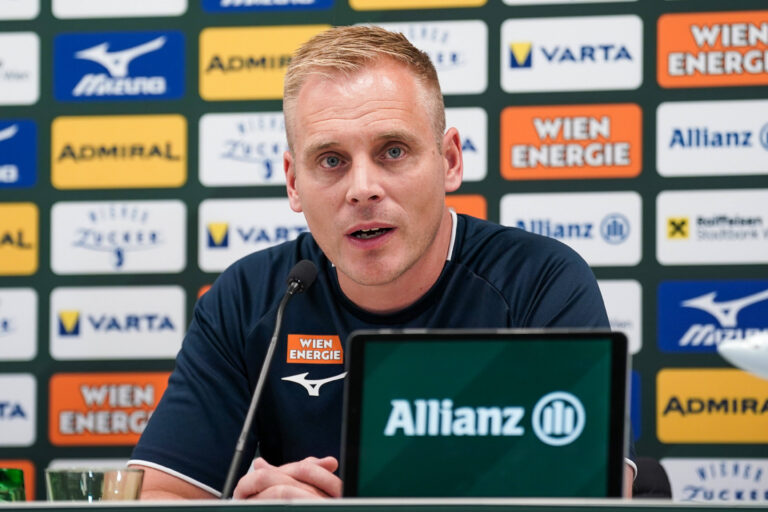
Rapid travel to Tallinn with four wins from their opening four competitive matches and a goal difference of 13-3. Paide are likely to defend significantly deeper than FC Santa Coloma did in the previous round. Coach Johannes Hoff Thorup expects an opponent that may at times form a six-man defensive line before quickly attacking the space behind Rapid’s defence after regaining possession.
Rapid have no major personnel problems. A 23-man squad travelled to Estonia, although Romeo Amane was not included despite being close to a comeback. As Thorup described Paide as a more difficult challenge than Santa Coloma, Rapid are more likely to field a tried-and-tested starting line-up than make extensive changes.
Rapid will dominate possession and must break down the deep defensive block through quick switches of play, movement between the lines and patience. At the same time, their defensive cover cannot become careless against Anier and Paide’s quick Gambian attackers.
Anything other than an away win would be a disappointment. Ideally, Rapid will establish a comfortable position today ahead of the second leg in Hütteldorf on Wednesday, 12 August, at 6 p.m.