Inter had more of the ball for long spells and also registered more shots, but failed to make enough of their territorial advantage. Kylian Mbappé and Federico Valverde gave Madrid an early 2-0 lead before Carlos Augusto pulled one back for the Italians in the 77th minute.
Real punish two costly mistakes in possession
Inter started confidently and initially moved the ball well in their own half. Madrid, however, looked to disrupt the visitors’ build-up from the outset. They did not press high continuously, but increased the intensity whenever a promising trigger presented itself.
That approach led directly to the opening goal in the 14th minute. Curtis Jones played an inaccurate pass towards Yann Bisseck, who was then unable to find a clean solution under pressure from Mbappé. Brahim Díaz reacted quickest and immediately slipped the ball through to the Frenchman, who kept his composure against Josep Martínez to put Madrid ahead.
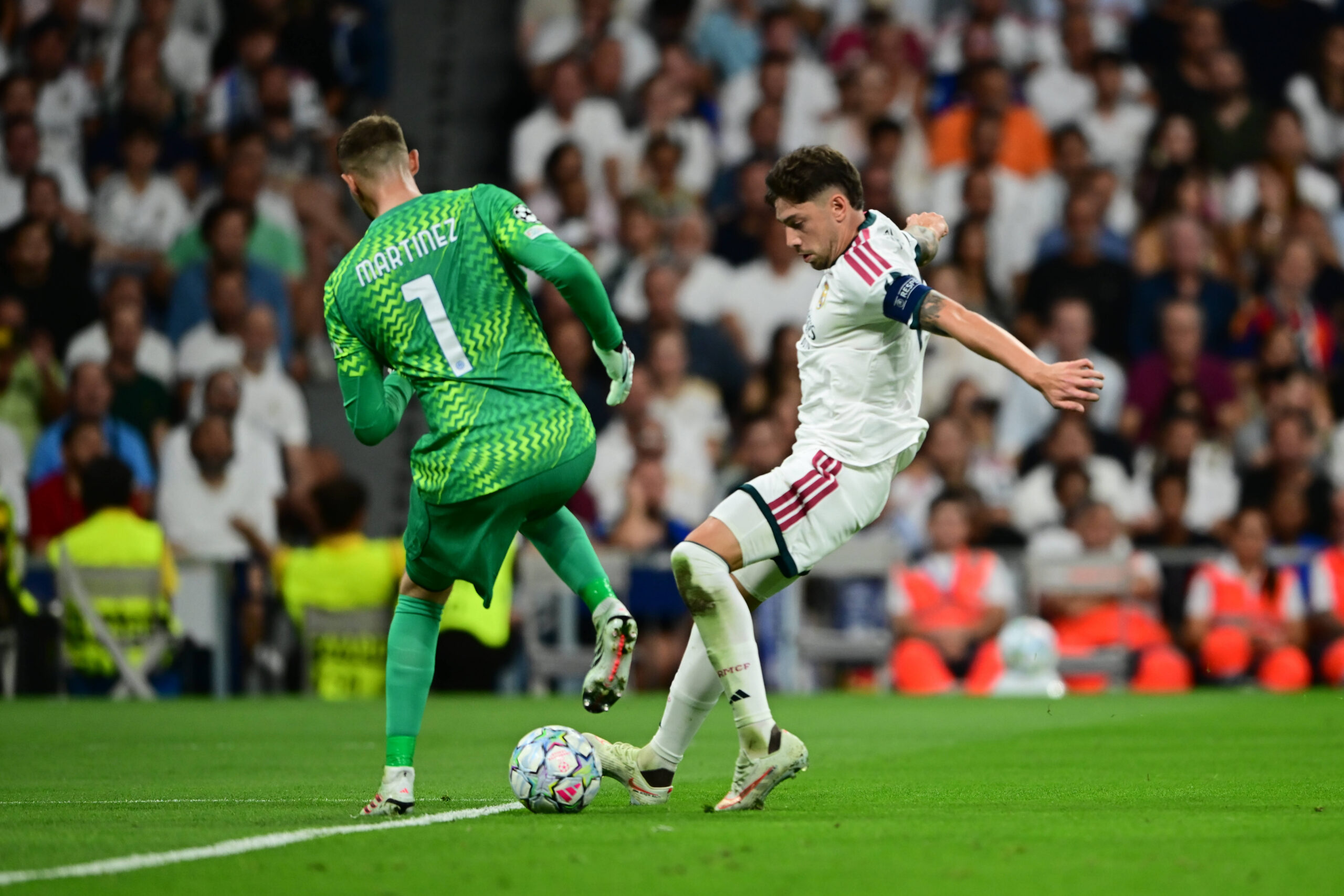
Only nine minutes later, the same pattern produced another goal. Inter again attempted to play out from the back, but this time goalkeeper Martínez made the decisive mistake. Valverde sprinted forward aggressively and dispossessed the goalkeeper as he tried to play his way out of trouble.
Both goals therefore stemmed from major individual errors. At the same time, they highlighted how effective Madrid’s pressing can be when the front line moves together and forces opponents into hurried decisions.
Inter dominate possession, Madrid create the better chances
Away from those two mistakes, Inter produced a respectable performance. Cristian Chivu’s side enjoyed 64 per cent possession and repeatedly pushed Madrid deep with their wide structure. The flanks were occupied consistently, while the central midfielders and outside centre-backs regularly stepped forward to support attacks.
Madrid, fielding an unfamiliar midfield combination, struggled at times to sustain longer spells of possession. Trent Alexander-Arnold operated in a deeper role alongside Valverde, with Bellingham positioned further forward. Whenever Inter managed to play through the first line of pressure, the hosts occasionally lacked control in central areas.
The statistics reflected an unusual pattern. Inter attempted 21 shots compared with Madrid’s 16, yet the expected-goals figures strongly favoured the hosts at 2.91 to 1.78. Madrid also led 8-4 in big chances. Inter therefore produced more attacks overall, but the higher-quality opportunities came more frequently at the other end.
Mbappé could have effectively settled the contest shortly before half-time. After carrying the ball forward from inside his own half, he beat several opponents before eventually being denied by an excellent save from Martínez.
Real Madrid create chances on the counter
Madrid became more dangerous after the break. Mourinho’s team found more opportunities to attack in transition and exploited the spaces Inter began to leave behind their first pressing line as they committed more players forward.
Bellingham had the clearest opportunity to make it 3-0 and put the game beyond doubt. Madrid also wasted several other promising counter-attacks, lacking the final touch needed to kill the contest off.
Martínez, meanwhile, partly atoned for his error before the second goal with a series of strong saves. Madrid registered eight shots on target, with the Inter goalkeeper repeatedly preventing the hosts from extending their lead.
Carlos Augusto gives Inter late hope
Instead, Inter found a way back into the game in the 77th minute. Lautaro Martínez laid the ball off inside the penalty area and Carlos Augusto finished to make it 2-1.
The visitors were unable to create another clear-cut opportunity for an equaliser, however. Madrid defended well, became more compact in the closing stages and could also rely on Thibaut Courtois, who made seven saves over the course of the match.
There is still plenty for Mourinho to work on. Madrid’s high pressing was highly effective in the decisive moments, as was their ability to break quickly after regaining possession. At the same time, they struggled to control the game through longer spells on the ball and allowed Inter to spend too much time in their half. Against strong opposition, however, two forced mistakes and the superior quality of their chances were enough to secure the first three points of the league phase.