When Germany host the Netherlands at Berlin’s Olympiastadion on Monday at 7:45 pm GMT, much more than the rivalry between two neighbouring nations will be at stake. The situation in League A Group 2 promises a dramatic conclusion: the Netherlands lead the standings with eleven points, followed by Germany and Greece on eight each. Greece host Serbia, who have yet to pick up a point, in the other group fixture.
Victory would guarantee Germany a quarter-final spot
A win would secure Germany’s place in the knockout stage regardless of the result elsewhere. Finishing top of the group is also still possible, but Germany would need to beat the Netherlands and hope Greece drop points against Serbia. Should Greece also win, Klopp’s team would have to prevail by at least five goals to claim first place. A draw would only be enough to progress if Greece lose, while defeat would end Germany’s quarter-final hopes.
Germany put themselves in this position with Friday’s 3-1 victory in Belgrade. An early own goal from Srđan Babić and a strike from Florian Wirtz gave the visitors a 2-0 lead inside just 14 minutes. Brajan Gruda added a third after the break with a superb solo effort before Babić pulled one back for Serbia. The hosts finished with nine men following two red cards. Germany were particularly impressive in the opening 45 minutes, playing at a high tempo and creating numerous attacking opportunities.
Netherlands head to Berlin full of confidence after 7-0 win
The Netherlands travel to Berlin fresh from a resounding 7-0 victory over Greece. Tijjani Reijnders completed a hat-trick before half-time, while Jurriën Timber scored twice. Crysencio Summerville and Donyell Malen added the remaining goals. Under Xavi Hernández, the Dutch favour an expansive passing game, intricate combinations through midfield and quick runs behind opposing defences.
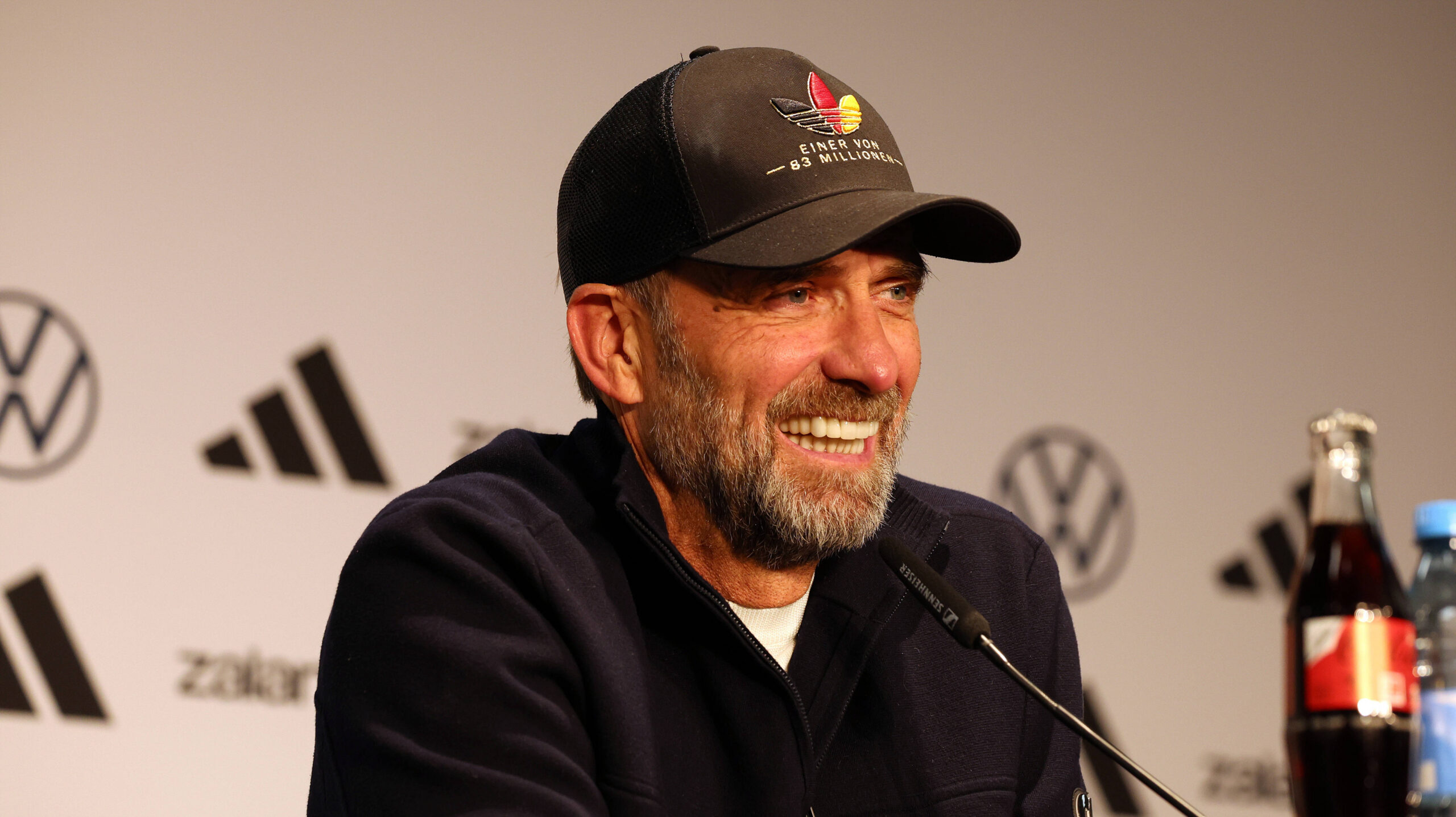
At his pre-match press conference, Klopp praised the Netherlands for their vibrant attacking football. He pointed out that Greece had enjoyed some promising spells but had defended poorly for most of the goals they conceded. Germany had also created chances against the Greeks, he noted, but unlike the Dutch, had failed to convert them. Klopp sees the Netherlands as an established group of players, while Germany are still undergoing a transition in terms of personnel and playing style. He is nevertheless looking forward to the challenge of facing an attack-minded opponent and imposing his own team’s game.
Xavi also has several significant absences to contend with. Captain Virgil van Dijk and striker Brian Brobbey were already unavailable against Greece. Frenkie de Jong will now also miss the trip to Berlin after suffering back problems. The midfielder was substituted at half-time against Greece, with Teun Koopmeiners among the possible replacements in the centre of the pitch.
Gruda or Karl? Klopp keeps his decision under wraps
Germany’s starting line-up also remains uncertain. After an impressive performance and a goal against Serbia, Gruda could retain his place, although Lennart Karl and Saïd El Mala provide Klopp with further young attacking options. The coach confirmed that he had already decided on his starting XI but refused to reveal any details. Strong performances naturally improve a player’s chances of starting again, he explained, but do not automatically guarantee another place in the team just a few days later.
For Klopp, maintaining a high tempo throughout the match matters more than which players are on the pitch at kick-off. Those coming off the bench are therefore almost as important as those who start. He is similarly reluctant to establish a fixed hierarchy in central defence. Nico Schlotterbeck, Jonathan Tah and Malick Thiaw are all available options, while Waldemar Anton remains sidelined through injury.
Havertz and Reijnders in the spotlight
Kai Havertz is expected to play another important role in Germany’s attack. Klopp was full of praise for the Arsenal forward despite the chances he missed against Serbia. The coach is particularly interested in how much more he and Havertz can achieve together. Havertz himself acknowledged that he still has more to offer at international level and wants to improve his finishing.
Tactically, much will depend on Germany’s ability to disrupt the Dutch build-up without leaving too much space behind their own pressing lines. Reijnders is particularly dangerous when making runs into those gaps from midfield. Further forward, Summerville and Cody Gakpo pose a threat with their dribbling on the wings, while Malen’s runs in behind can force Germany’s central defenders deeper.
Germany will look to Wirtz, who was already on target in Belgrade, for inspiration. Without De Jong, the Dutch midfield could be more vulnerable, and the Liverpool playmaker will look to exploit those spaces between the lines. Germany’s wide players will be expected to provide pace and runs in behind.
Klopp has no intention of dwelling on negative scenarios ahead of the match. He stressed that the team’s long-term development remains his overriding priority, without diminishing the importance of immediate results. Following their convincing performance in Serbia, Germany now have the opportunity to take another step forward and secure a quarter-final place in front of their home supporters.