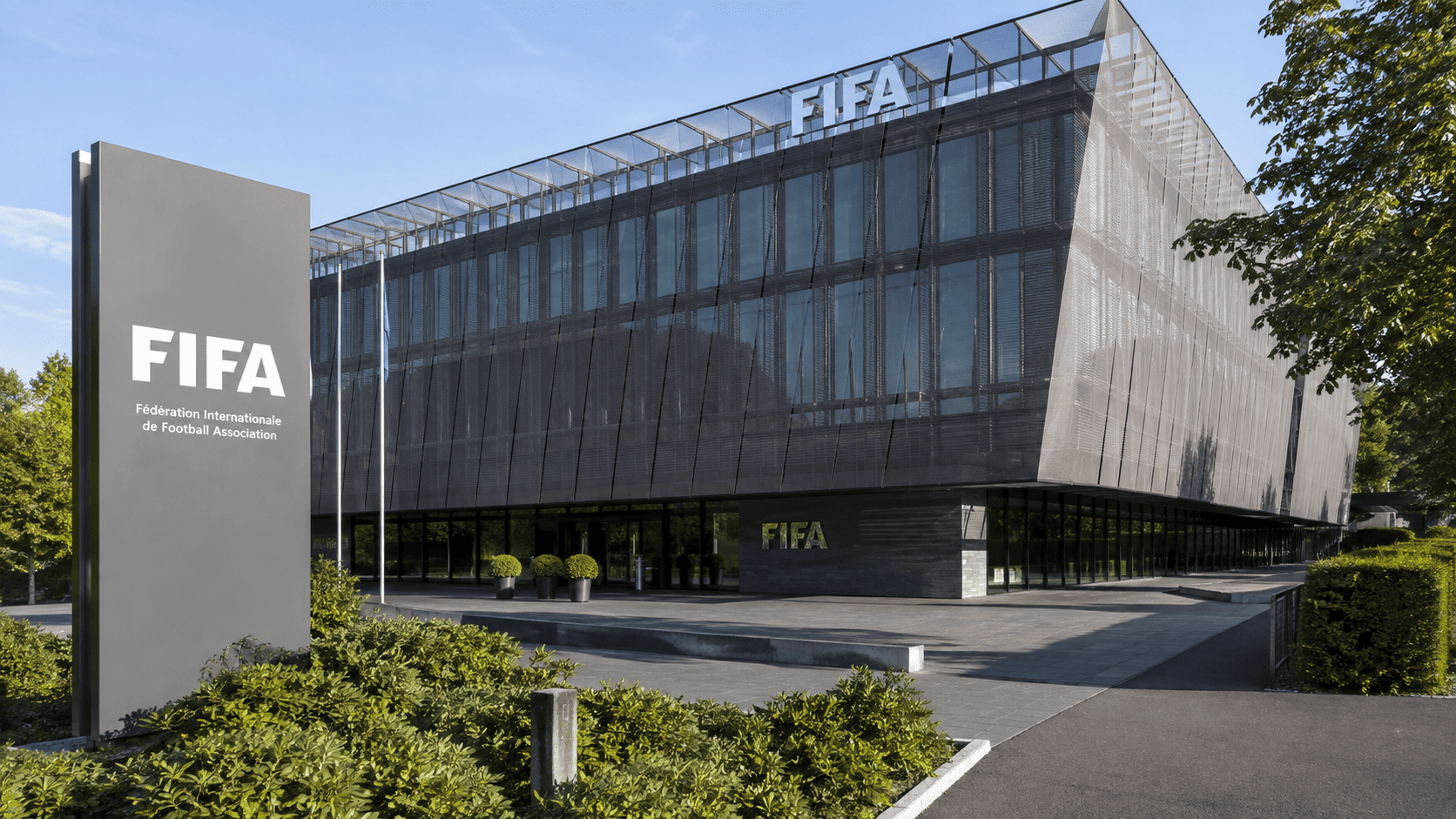
What initially looked like another controversial power move by the FIFA president has long since become a fundamental question. It is about money, control, proximity to politics, governance and ultimately the question of who the World Cup belongs to. Infantino has now withdrawn his plan, but the damage has been done. The coming months could determine whether he can continue to lead FIFA until 2031 – or whether the uprising actually turns into a change of power.
What this is really about
The trigger for the crisis was the “FIFA Forward Enterprise” project. FIFA wanted to create a new commercial subsidiary that would bundle, among other things, the marketing of the World Cup and other FIFA competitions. This entity was valued at around 20 billion US dollars, with up to 20 percent to be sold to external investors. According to Reuters, FIFA could have raised up to 4.2 billion dollars through the deal.
Officially, Infantino argued that the money would be reinvested in football and would primarily strengthen smaller associations. Critics, however, saw it as a historic crossing of a line: for the first time, the World Cup would not only have been commercially exploited, but partly turned into an investment product. Particularly explosive: the leading investor was supposed to be Thrive Eternal, a fund linked to Joshua Kushner, the brother of Jared Kushner, who is the son-in-law of US President Donald Trump.
UEFA threatens boycott
The strongest reaction came from Europe. UEFA and its 55 national associations published an unusually harsh statement and announced that they would not take part in FIFA competitions as long as such plans remained on the table. The central message: the World Cup is “not for sale”.
UEFA criticised not only the content of the project, but above all the process. A proposal of this magnitude had been prepared in secret and brought close to a decision without genuine consultation. For the Europeans, this is the key point: it is not only about whether private investors should be allowed to put money into FIFA products, but whether Infantino can bypass the major associations, leagues, clubs, players and fans when shaping the future of world football.
Support is crumbling
For a long time, Infantino was seen as almost untouchable. His power base was mainly outside Europe: among smaller and financially weaker associations that depend heavily on FIFA payments. That is precisely where his project was reportedly sold with the promise of additional distributions. According to Reuters, there was talk of 20 to 40 million dollars per association if the model was supported.
But that logic is no longer working as smoothly. Several European associations have withdrawn their support for Infantino’s re-election or publicly declared that they no longer intend to support him. England, Wales, Finland, Serbia, Sweden, Germany and the Netherlands are among the most visible critics. At the same time, discontent is also growing in the CONCACAF region. According to the Guardian, several associations from North and Central America and the Caribbean are considering whether to withdraw their support.
Infantino, however, is by no means completely lost. Qatar, Morocco, Kuwait, Lebanon and Sri Lanka have publicly backed him. There have also been individual expressions of support from Africa, while the continental federation CAF has not yet taken a clear position. That is exactly why the situation remains open: Infantino has lost support, but not necessarily his majority.
Fault lines inside FIFA
What is particularly dangerous for Infantino is that figures from within the FIFA environment are also distancing themselves. According to Reuters, Secretary General Mattias Grafström wrote in an internal message to staff about a “sad and reproachable” sequence of events, without naming Infantino directly. Arsène Wenger publicly stated that he had not been involved in the project and had only learned about it through the media. The decision to withdraw the project, he said, had been “absolutely necessary”.
Added to this is the accusation from Ali bin Hussein, president of the Jordanian association. He publicly spoke of “blackmail” and claimed that FIFA assistance had been linked to support for Infantino. FIFA was asked for comment, but the allegation shows how toxic the atmosphere has become.
Trump factor adds further tension
Another strand concerns Infantino’s closeness to Donald Trump. Reports by the New York Post and The Times suggested that Infantino had tried to seek support from Trump’s circle after the failure of his plan. FIFA strongly denied this and called the reports entirely fabricated. The US State Department also stated that there was no planned phone call with Secretary of State Marco Rubio.
Nevertheless, the political context remains problematic. Infantino maintained a close relationship with Trump during the 2026 World Cup, and there had already been criticism around the overturned suspension of US player Folarin Balogun. For many critics, this reinforces the impression that FIFA decisions are too heavily influenced by political relationships and personal networks.
Who could oppose him?
The key players at the moment are UEFA president Aleksander Čeferin, CONCACAF chief Victor Montagliani, AFC president Sheikh Salman, several European national associations and possible reform figures such as Nasser Al-Khelaïfi or Lise Klaveness. Montagliani is considered a particularly interesting name because he comes from CONCACAF and would therefore not be seen as a purely European challenger. That would be important if Infantino is really to be replaced.
A purely European revolt is unlikely to be enough. FIFA has 211 member associations and the vote is global. Anyone who wants to defeat Infantino needs a coalition made up of Europe, parts of Asia, North and Central America, Oceania and at least a relevant bloc from Africa.
How can the crisis end?
There are several scenarios. The mildest would be a complete withdrawal of the investor model, written guarantees against similar structures and a credible governance reform. Infantino could then remain in office, albeit damaged.
The second scenario would be a politically organised replacement at the FIFA election in March 2027. New candidates have to be nominated by November. If the opposition manages to build a unified figure, Infantino’s re-election will become seriously uncertain for the first time.
The third scenario would be escalation: legal steps by UEFA, more associations withdrawing their support and, in the extreme case, boycott threats against FIFA competitions or alternative tournament models. That would be risky for all sides, but it is no longer entirely unthinkable.
The most important point: Infantino has withdrawn the plan, but that has not automatically restored trust. The question now is no longer only whether “FIFA Forward Enterprise” is dead. The question is whether Gianni Infantino remains politically strong enough to continue as president after this crisis.