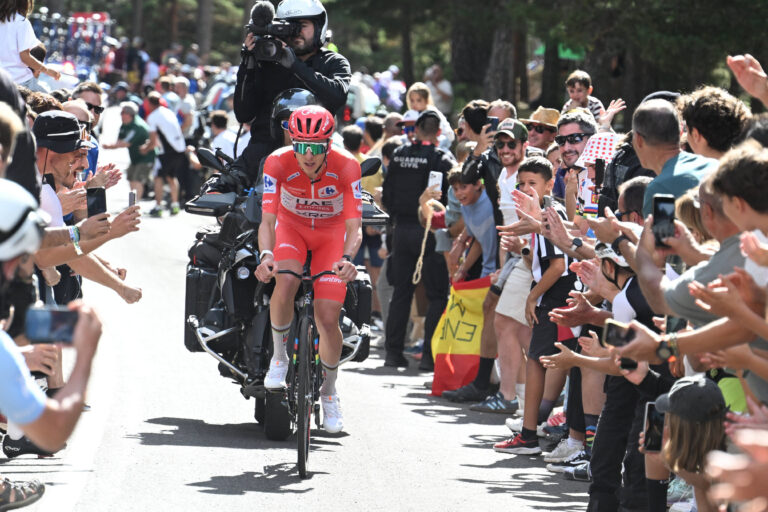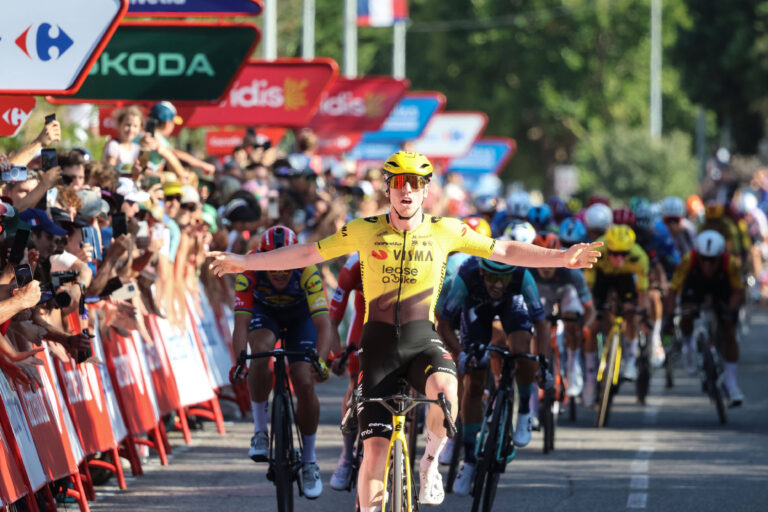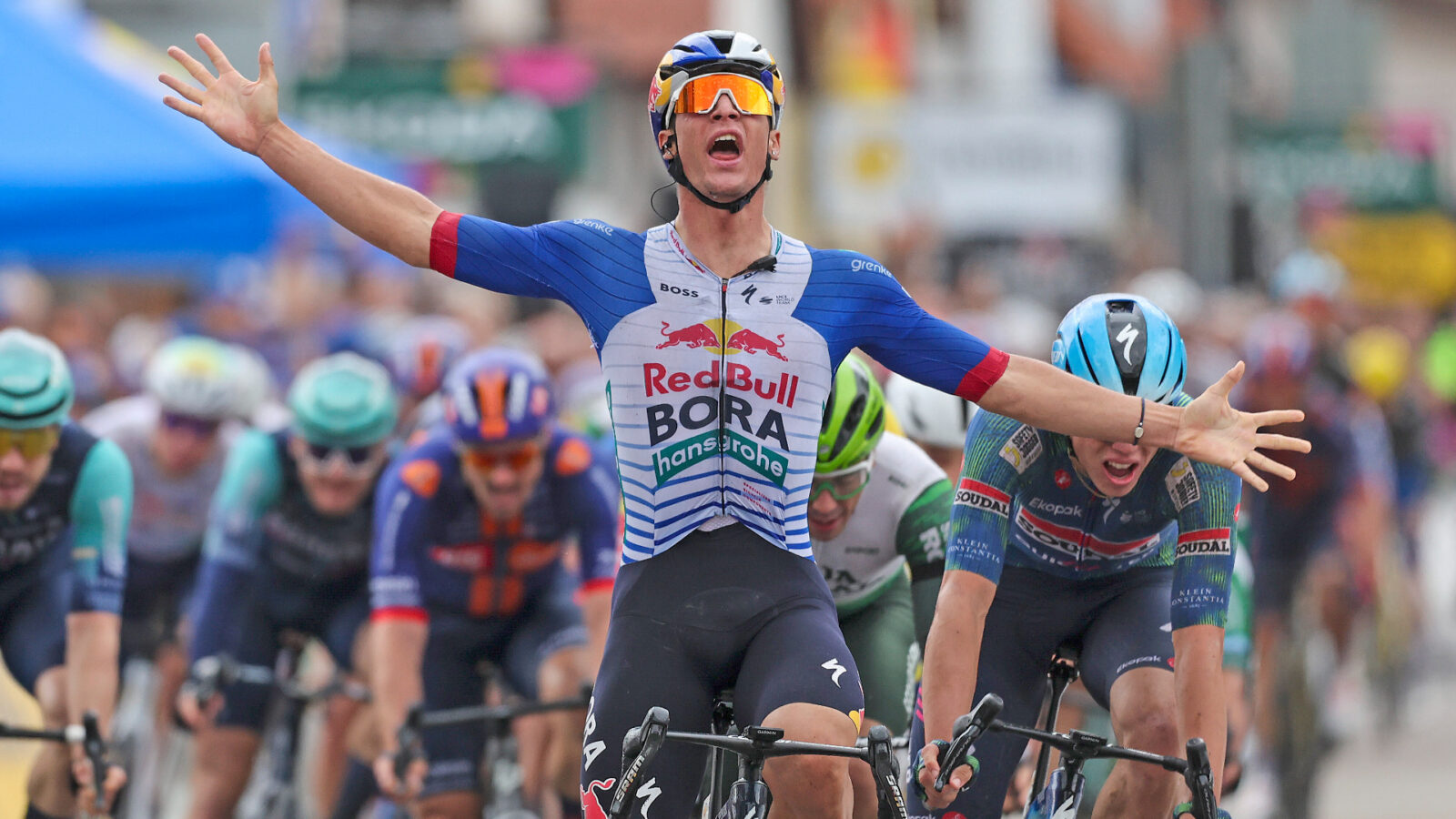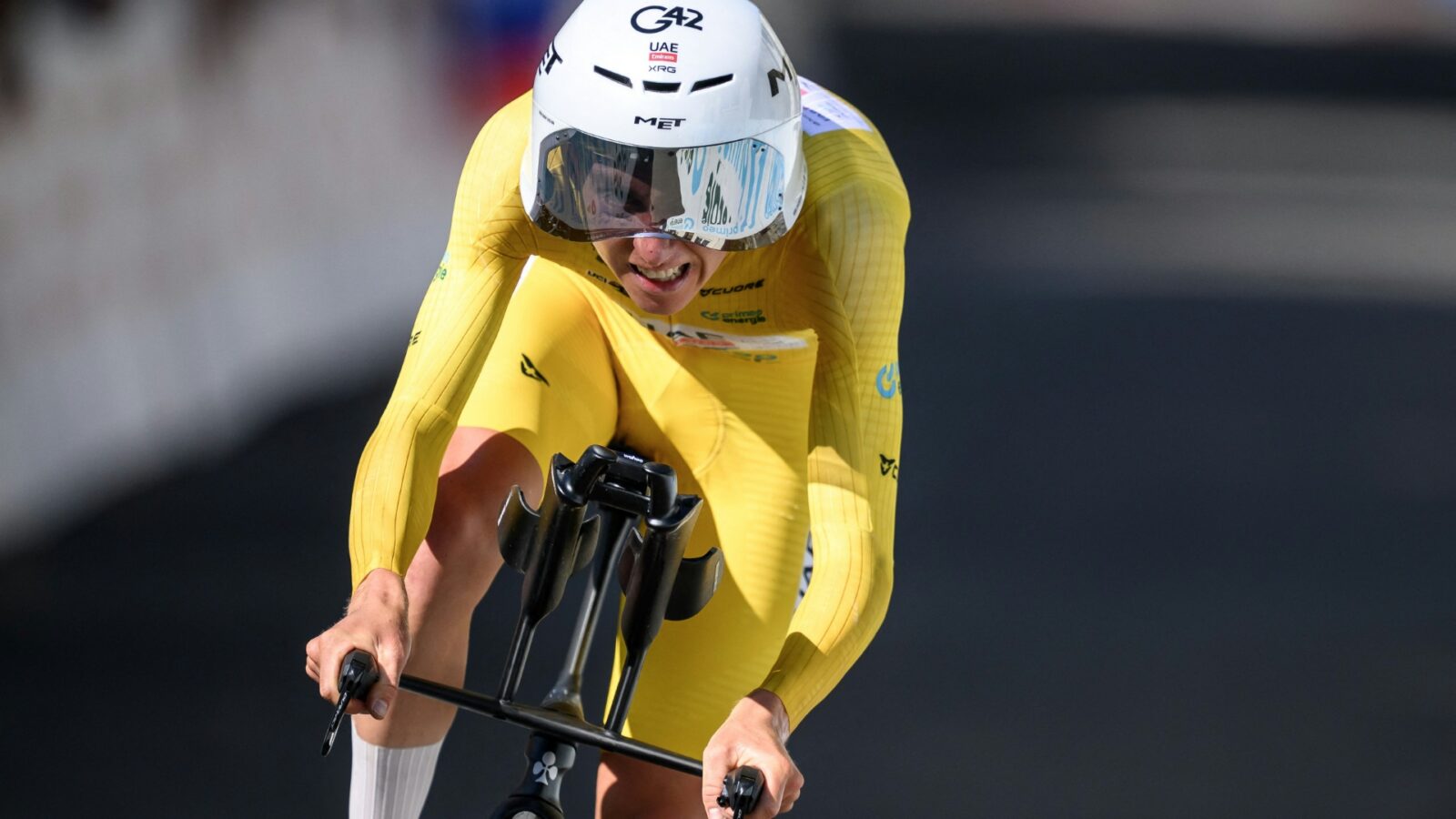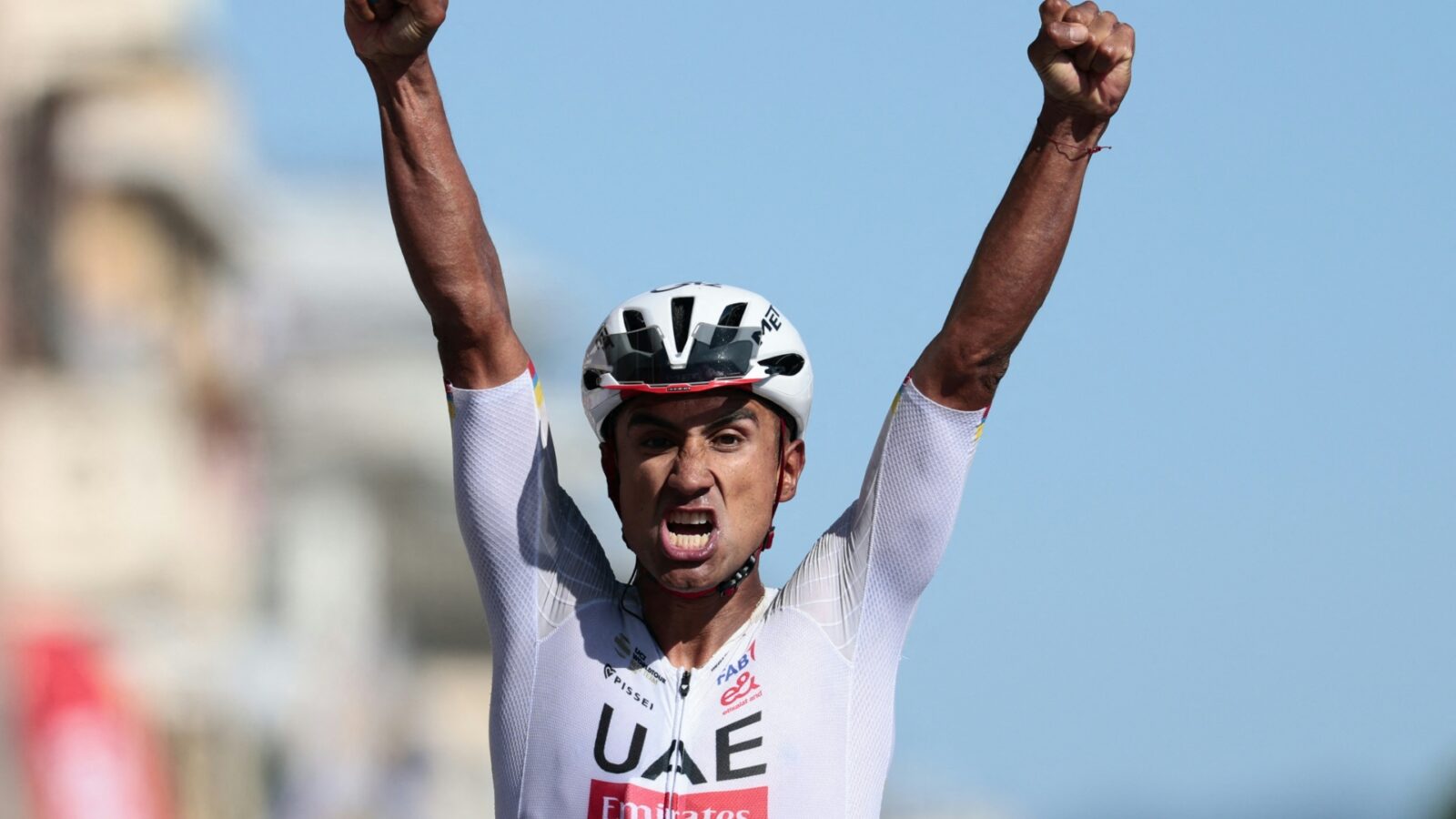
After the weather-enforced cancellation of stage three, the Vuelta faced its first major high-mountain test in Andorra. On a short but extremely demanding route, Pogačar seized the opportunity to make an early statement and left his rivals trailing with an impressively assured performance.
Three major climbs and more than 3,000 metres of elevation
Stage four covered just 104.8 kilometres around Andorra la Vella, but featured a demanding 3,024 metres of climbing. The Port d’Envalira, Collada de Beixalís and Coll d’Ordino were all classified as category-one climbs, while the category-three Alto de la Comella provided one final ascent shortly before the finish.
The racing was aggressive from the outset. UAE Team Emirates-XRG initially kept the early breakaway attempts on a short leash before Felix Gall’s Decathlon CMA CGM Team took over much of the work at the front of the peloton and began reducing the advantage of a sizeable breakaway group.
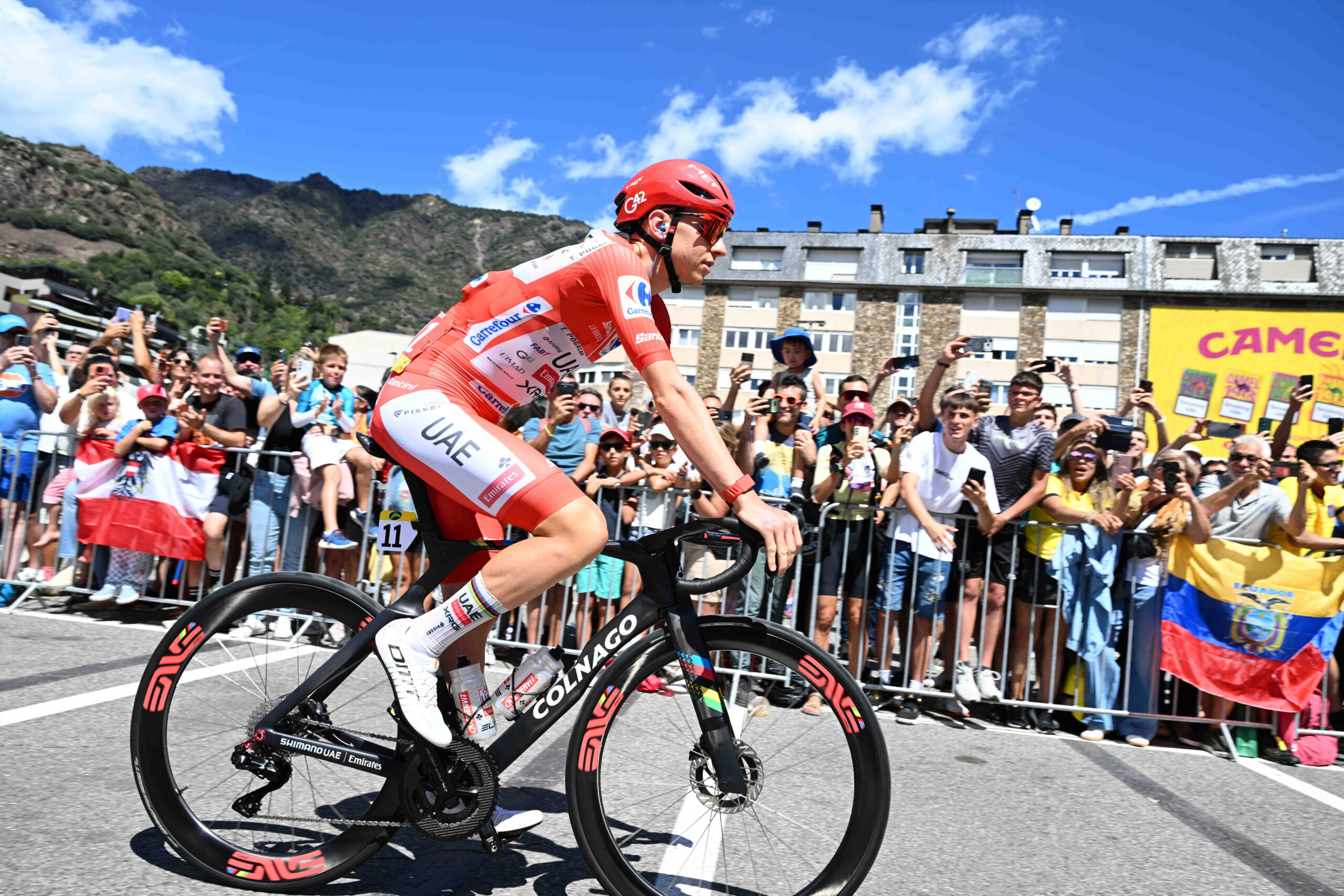
The decisive moment came on the Collada de Beixalís. Around 50 kilometres from the finish, Pogačar launched his attack and quickly made it clear that his rivals were in serious trouble. Gall was initially the only rider able to respond and briefly held the world champion’s wheel, but the Austrian soon had to let Pogačar go.
Pogačar leaves his rivals behind
From that point onwards, stage four turned into a one-man show. Pogačar steadily increased his advantage and already held a lead of around a minute and a half by the top of the Collada de Beixalís. By the Coll d’Ordino, the gap had grown to more than two minutes. His stage victory was never seriously threatened on the final climb of the Alto de la Comella.
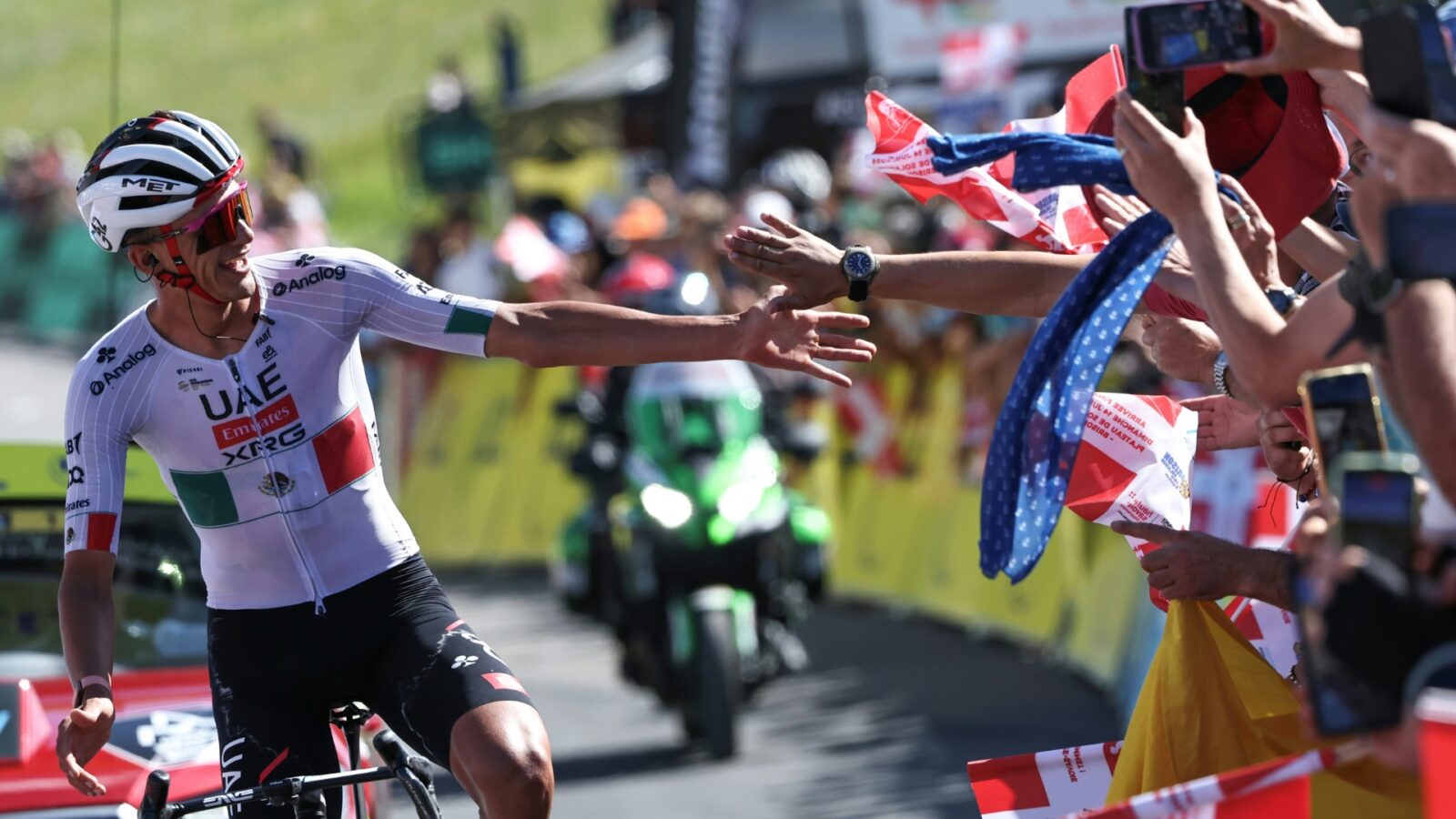
Pogačar’s superiority was reflected not only on the clock. During his solo ride, the Slovenian even had time to exchange a fist bump with a fan at the roadside. Immediately after crossing the finish line, the 27-year-old also looked remarkably relaxed and showed few outward signs of having just completed a roughly 50-kilometre solo effort through the high mountains.
The first chasers reached the finish more than two and a half minutes later. In the sprint for second place, 20-year-old Belgian Jarno Widar came out on top, with Gall finishing directly behind him in third. For Pogačar, it was his fifth career stage victory at the Vuelta, following his three wins in 2019 and victory in the opening time trial of this year’s race.
Stage three wiped out by hailstorm
Just 24 hours earlier, the weather had been the main talking point. The third stage, a 174-kilometre route from Gruissan to Font-Romeu, had to be stopped around 15 kilometres from the finish after a severe hailstorm hit the French Pyrenees. Conditions became so extreme that riders sought shelter in a nearby hotel. Pogačar, who was near the front of the peloton, also indicated that racing could not continue safely.
Race organisers subsequently decided to remove the stage entirely from the standings. There was no stage winner, while all sprint and mountain points already awarded, as well as any time gaps, were annulled. The general classification therefore remained unchanged from the end of stage two.
One day later, Pogačar left little doubt about his current form. His long solo victory in Andorra emphatically reinforced his status as the clear favourite for the overall title.