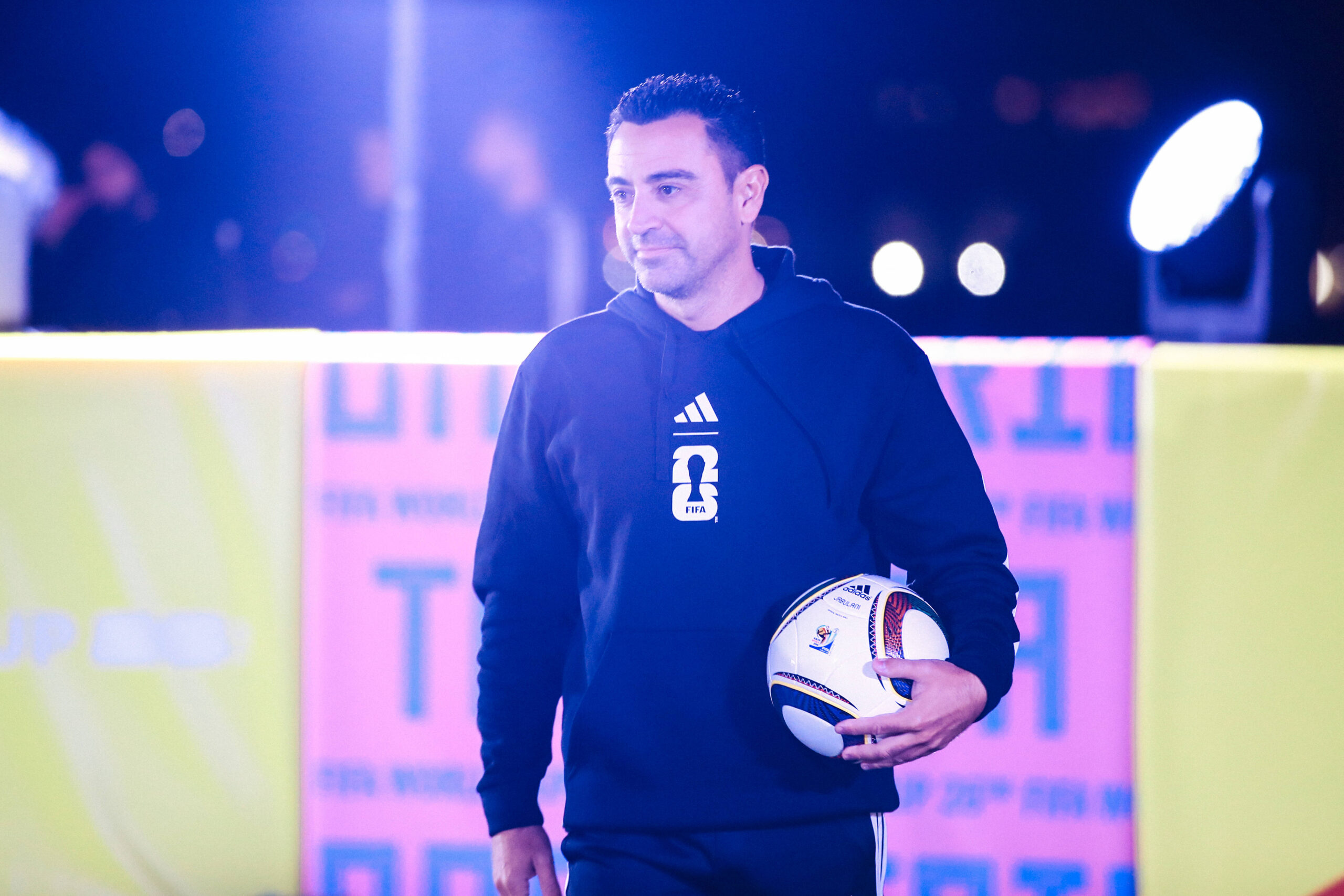
The Netherlands have found a high-profile successor to Ronald Koeman. Xavi Hernández takes over the national team after agreeing a deal with the KNVB through to the 2030 World Cup. It is the 46-year-old Spaniard’s first job in international management and also marks his return to the dugout after more than two years away. Xavi is also the first foreign head coach of the Netherlands since Austrian Ernst Happel, who led Oranje to the 1978 World Cup final.
There is another notable parallel. Xavi already succeeded Koeman at FC Barcelona in November 2021. He now takes over another of Koeman’s teams, albeit in very different circumstances.
Koeman’s World Cup ended with a tactical change of direction
Koeman’s second spell in charge was by no means unsuccessful. The Netherlands reached the semi-finals of Euro 2024 and expectations were correspondingly high at the 2026 World Cup. Their group-stage performances initially suggested they were capable of a strong tournament. A 2-2 draw against Japan was followed by a 5-1 win over Sweden and a 3-1 victory against Tunisia. Oranje topped the group with ten goals scored.
Yet in the first knockout match against Morocco, Koeman made a significant tactical change. Instead of his usual back four, he started with five defenders. It was the first time since March 2024 that the Netherlands had lined up with a back five – in the 31 matches in between, they had always started with a back four.
The more cautious approach offered greater protection but significantly reduced Oranje’s attacking threat. Over 120 minutes, the Netherlands managed only six attempts and an Expected Goals figure of 0.23. Morocco produced eleven shots, 1.4 xG and five big chances. Cody Gakpo still managed to put the Dutch ahead before Issa Diop equalised in stoppage time. Morocco eventually won the penalty shootout 3-2.
Koeman defended his tactical decision afterwards and said he would make the same choice again. One day after the elimination, however, he announced that he would not extend his expiring contract as national coach.
Xavi calls himself a “son of Dutch football”
In appointing Xavi, the KNVB has deliberately chosen a coach whose footballing ideas are closely connected to the Dutch school. Johan Cruyff and Rinus Michels had a lasting influence on Barcelona’s philosophy, while Xavi himself played under Louis van Gaal and Frank Rijkaard. Van Gaal was also the coach who handed him his first-team debut for Barcelona in 1998.
“It is a great honour to become head coach of the Netherlands national team. As someone who was developed at the FC Barcelona academy, with strong influences from, among others, Johan Cruyff and Rinus Michels, I feel a special connection to Dutch football. You could say I am, in a way, a son of Dutch football,” Xavi said following his appointment.
The Spaniard was also clear about how he wants Oranje to play in the future. “The Netherlands has a rich football culture and a clear vision that strongly appeals to me: attacking football, based on possession, with creativity, passion and conviction.” Winning remains the main objective, he added, but he wants to do so in a way “that people can enjoy watching.”
What Xavi brings as a coach
Xavi began his coaching career at Al-Sadd in 2019. He won seven trophies in Qatar and also guided the club to the semi-finals of the AFC Champions League. In the autumn of 2021, FC Barcelona brought him back as Koeman’s successor.
His biggest success came in the 2022/23 season. Barcelona won LaLiga for the first time since 2019 and also lifted the Spanish Super Cup. What stood out was that the team was not only defined by possession and positional play, but was also exceptionally solid defensively. Goalkeeper Marc-André ter Stegen kept 26 clean sheets in the league.
The following season proved much more difficult. Barcelona finished without a trophy, ended the campaign ten points behind Real Madrid in second place and were eliminated by Paris Saint-Germain in the Champions League quarter-finals. Xavi’s tenure ended in May 2024 after 142 competitive matches, with 90 wins, 23 draws and 29 defeats.
Possession, overloads and aggressive pressing
Tactically, Xavi generally favours a 4-3-3 but has shown a willingness to adapt. At Barcelona, for example, he often asked Frenkie de Jong to drop alongside Sergio Busquets in the build-up, effectively creating a double pivot from a midfield that nominally started with a single holding player. The aim was to create overloads in central areas, draw the opposition press and then find free players between the lines or out wide.
His teams are also characterised by a high defensive line and an aggressive attempt to regain possession quickly after losing the ball. At Al-Sadd, Xavi already switched between a 4-3-3 and a 4-2-3-1 depending on the opposition’s pressing structure. His principles are clear, but the exact shape is not rigid.
Frenkie de Jong could play a key role in that approach. Xavi knows the midfielder very well from their time together at Barcelona and used him there to help organise the build-up and create numerical superiority in central areas.
First major test against Germany
The Dutch federation sees precisely this blend of a clear footballing identity and tactical flexibility in Xavi. Director of Elite Football Nigel de Jong said the desired approach was to “take the initiative, play dominant and attractive football” while retaining the flexibility required at the highest level.
One challenge will be the limited amount of training time available in international football. Xavi will have to communicate his complex positional-play ideas far more quickly than he would at club level. At the same time, he inherits a technically gifted squad whose World Cup campaign suggested that the main problems were less about individual quality and more about coordination and the overall structure of the team.
The coaching staff has yet to be completed. Xavi has said he wants Dutch input to be part of the setup in order to bring specific knowledge of the players, the football culture and the wider environment.
There will be little time to settle in. Xavi’s first match as Netherlands coach comes on 24 September against Germany in the Nations League. Longer term, Euro 2028 and ultimately the 2030 World Cup will be the major targets.