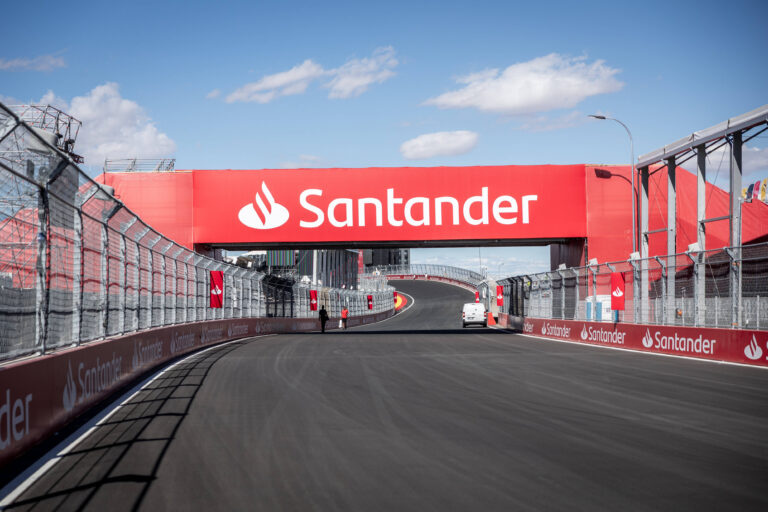
Formula 1 took a decisive step towards confirming its final three races of the season on Tuesday. Following the Las Vegas Grand Prix on 21 November, the races in Qatar on 29 November and Abu Dhabi on 6 December are expected to go ahead as scheduled. Officials at Imola, who had been preparing for a possible last-minute appearance on the calendar, have been informed that their services will not be needed. Nevertheless, uncertainty surrounding the conflict in the Middle East has not entirely disappeared.
Qatar and Abu Dhabi get the green light – for now
The war involving Iran had already disrupted the Formula 1 calendar earlier this year. The Saudi Arabian Grand Prix was cancelled, while the race originally scheduled for Bahrain was subsequently held in Malaysia. With the possibility of further disruption to the season finale in the Gulf region, Formula 1 had kept Imola on standby as an alternative venue.
Those contingency plans have now been shelved. According to media reports, organisers in Italy and all eleven teams have been informed of the decision. The FIA, motorsport’s governing body, is continuing its preparations for both race weekends. FIA president Mohammed Ben Sulayem declared: “We are ready for Qatar and Abu Dhabi.” Officials are working alongside their partners to ensure the necessary conditions are in place for drivers, teams and spectators.
The recent MotoGP weekend at Lusail, which passed without major incidents, offered further encouragement. However, both Yamaha teams withdrew from the event over security concerns. Formula 1’s decision is therefore not an unconditional guarantee that the races will take place. Should the situation deteriorate, safety will take precedence.
Las Vegas could become the final race of the season
With Imola no longer an option, Formula 1 currently has no equivalent backup plan if both Middle Eastern races are cancelled at short notice. In that scenario, the Las Vegas Grand Prix could bring the season to a premature close, leaving just 21 races completed instead of the scheduled 23.
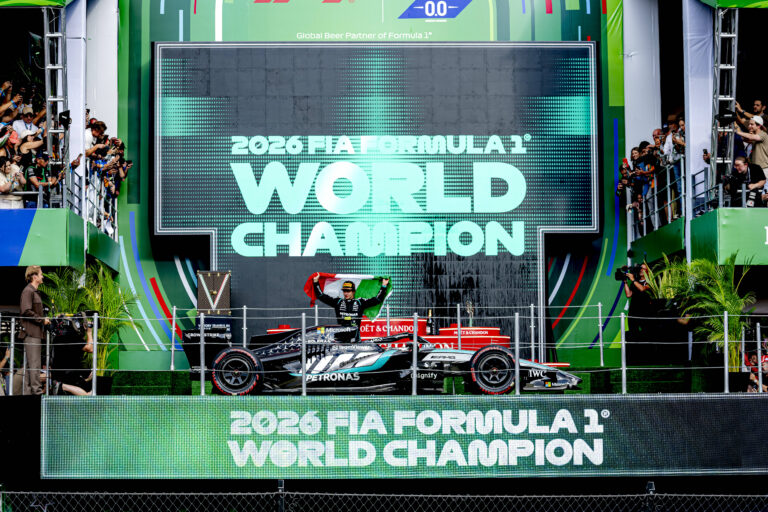
Such an outcome would have no direct impact on the destination of either world championship. Kimi Antonelli has already secured the drivers’ title, while Mercedes clinched the constructors’ championship ahead of schedule in São Paulo. However, the remaining championship positions and the prize money attached to them would still be affected. Two further cancellations would also carry financial consequences for teams and race organisers.
Haas face an unusual driver rule dilemma
The final races have presented Haas with an unexpected personnel problem. Article B1.7.1 of the FIA Sporting Regulations limits teams to a maximum of four different race drivers over the course of a season. Haas have already reached that limit.
Alongside Oliver Bearman and Esteban Ocon, the American outfit have fielded Ryo Hirakawa in Mexico and Rafael Câmara in São Paulo during 2026. Ocon’s return has been ruled out, leaving Hirakawa and Câmara as the only drivers ordinarily eligible to occupy the second seat alongside Bearman.
Câmara also leads the Formula 2 championship, holding a seven-point advantage over Nikola Tsolov. With the junior series racing in both Qatar and Abu Dhabi, Haas must decide whether to allow the Brazilian to pursue the title or keep him in Formula 1. Ahead of Câmara’s debut in Brazil, team principal Ayao Komatsu stressed that he did not want to place unnecessary pressure on the young driver by making a premature decision.
Bringing in another replacement would not be straightforward. The FIA can consider additional driver changes in cases of force majeure, such as exceptional circumstances preventing a driver from competing. However, a scheduling conflict between Formula 1 and Formula 2 does not automatically qualify for such an exemption.
Honda still searching for answers after Stroll’s battery failures
At Aston Martin, reliability remains a major concern. Lance Stroll retired from the São Paulo Grand Prix after 30 laps because of a battery problem. It was his 13th retirement of the season, excluding the Australian Grand Prix, where he was not classified.
The Canadian had already encountered difficulties with the energy system on Saturday. Honda’s trackside chief engineer Shintaro Orihara explained that the available data suggested a possible connection between the two incidents, but the underlying cause remained unknown. A thorough examination of the battery could take several weeks.
Earlier in the season, engine vibrations had repeatedly damaged the batteries. Whether the latest failure stems from the same issue has yet to be established. After a more reliable spell around the middle of the campaign, technical failures have become increasingly frequent again. Honda must therefore address both the immediate reliability concerns and the need for longer-term solutions ahead of 2027.
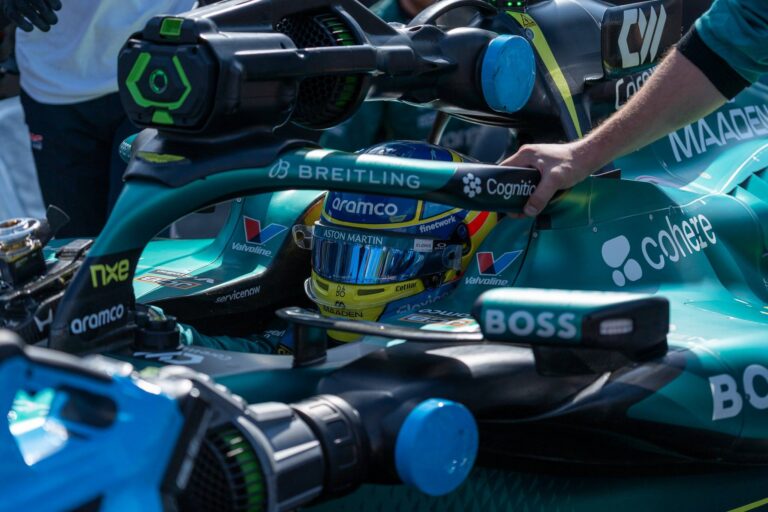
Fernando Alonso at least managed to qualify eighth in Brazil, although he could do no better than 12th in the race. According to Orihara, the changeable conditions partly masked the power unit’s shortcomings in engine performance and energy deployment. With Las Vegas approaching, Aston Martin face not only a reliability investigation but also the continuing challenge of extracting more performance from their power unit.