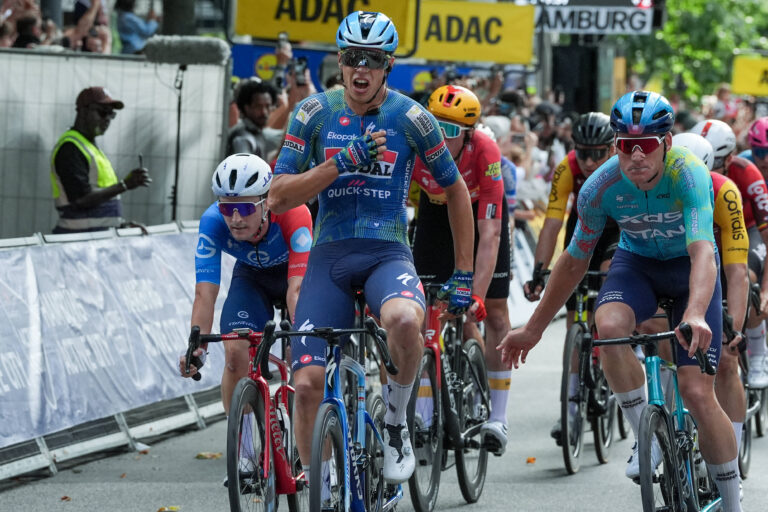
The 2026 ADAC Cyclassics will be held for the 29th time and form part of the UCI WorldTour, the highest category in international road cycling. All 18 WorldTeams and four ProTeams are entered. The professional race starts in Buxtehude at 12:00, with the town once again hosting the start after making its debut in that role last year. The riders are expected to reach the finish on Hamburg’s Mönckebergstraße at around 16:30.
Five ascents of the Waseberg
The course generally favours the sprinters. Large sections through the districts of Stade and Harburg as well as Hamburg itself are flat, while the route also crosses the Köhlbrand Bridge and, for the first time, the Neue Elbbrücke, which will be crossed twice. In the more exposed sections, crosswinds could also split the peloton and add another tactical element.
The decisive obstacle comes in the west of Hamburg. The Waseberg in Blankenese is around 700 metres long and features gradients of up to 16 per cent. The professionals must tackle the short but steep climb five times in total. The final two ascents come inside the last 30 kilometres, with around 15.5 kilometres remaining from the top of the final climb to the finish. Sprinters who lose contact therefore have some time to fight their way back, while stronger classics riders will see the climb as an ideal launchpad for attacks.
Milan, Girmay and Kooij among the favourites
From a sporting perspective, the race looks set to revolve around the leading sprinters. Jonathan Milan, Biniam Girmay and Olav Kooij are among the main favourites, while Cyclassics sporting director Fabian Wegmann also rates the trio particularly highly. Arnaud De Lie and Paul Magnier, who finished second and third respectively last year, are also expected to line up.
Isaac del Toro is another intriguing name. The 22-year-old Mexican finished third overall at the Tour de France at the end of July, behind Tadej Pogačar and Remco Evenepoel. Del Toro does not possess the same sprinting strength as the pure specialists, but he could try to make the race hard and attack on the Waseberg.
German hopes are centred mainly on Phil Bauhaus. For the 32-year-old to challenge for victory, however, he will need to negotiate the repeated climbs without losing too much ground. With Milan, Girmay, Kooij, De Lie and Magnier in the field, the competition in a potential sprint finish will be fierce.
Townsend stunned the sprinters last year
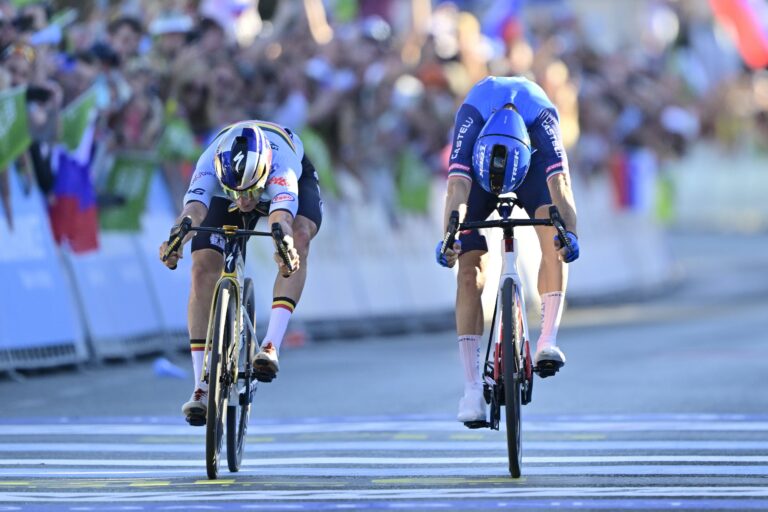
The 2025 edition showed just how dangerous it can be to assume that the sprinters will decide the race among themselves. Rory Townsend was part of an early breakaway and managed to preserve the narrowest of advantages all the way to Mönckebergstraße. The Irish champion beat De Lie and Magnier to claim the biggest victory of his career, with around 150,000 spectators watching along the route.
The race’s list of previous winners includes several major names from the sprinting world. Elia Viviani won three consecutive editions between 2017 and 2019, while André Greipel, John Degenkolb, Alexander Kristoff and Óscar Freire are among the other former champions. Kooij took victory in 2024.
Austria also has a special place in Cyclassics history. Marco Haller caused a major upset in 2022 when he won the sprint from a five-man leading group, beating pre-race favourite Wout van Aert. Patrick Konrad played an important supporting role in Haller’s victory and finished fifth himself, meaning two Austrians were part of the decisive group that day.
Alongside the WorldTour race, the 2026 event will once again include two races for amateur cyclists. “The Challenge”, covering around 110 kilometres, and “The Experience”, over roughly 60 kilometres, both finish on Mönckebergstraße before the professionals battle for victory later in the afternoon.