The match developed into two very different halves. Ireland were the more aggressive side early on, won a high number of second balls and caused Austria major problems with their direct approach. Three half-time substitutions changed the balance of the game, however, and Austria gradually took control before finishing the stronger side.
Rangnick makes six changes to his starting XI
Rangnick changed six positions from the 3-1 win over Kosovo. Florian Wiegele started in goal, with Stefan Posch, David Affengruber, Philipp Lienhart and Phillipp Mwene forming the back four. Xaver Schlager and Nicolas Seiwald played in central midfield, while Patrick Wimmer, Carney Chukwuemeka and Romano Schmid supported Saša Kalajdžić. Chukwuemeka made his first start for Austria, while Konrad Laimer and Michael Gregoritsch began on the bench.
Ireland lined up in a 3-4-2-1 that remained compact out of possession and transitioned forward quickly after turnovers. Adam Idah frequently moved alongside Parrott, with Jack Moylan pushing up behind them. The hosts pressed high and were particularly well prepared to compete for second balls.
Ireland put Austria under early pressure
Austria looked to build in a controlled manner through Schlager and Seiwald and use Kalajdžić as a target man. Against Ireland’s aggressive pressing, however, that approach only worked intermittently. Rangnick’s side lost too many duels and struggled to gain control of second balls following the hosts’ direct passes.
The opening goal in the 12th minute highlighted those problems. Caoimhín Kelleher sent a long ball forward, Idah flicked it on towards Parrott and the striker got the better of Lienhart and Affengruber before sliding his finish through Wiegele’s legs.
Austria gradually settled after that. Kalajdžić was found more regularly as a link player and laid the ball off for Seiwald, whose effort went narrowly over. Shortly before half-time, Wimmer was denied by Kelleher.
Ireland nevertheless remained the more direct and dangerous team, with Idah and Parrott repeatedly stretching Austria’s back line through their movement.
Defensive errors lead to Ireland’s second goal
Shortly before the interval, Ireland punished another untidy spell of Austrian defending. After a Ryan Manning delivery, the visitors failed to clear the ball cleanly. Mwene sliced his attempted clearance and Seiwald arrived too late in the subsequent scramble, prompting referee Allard Lindhout to award a penalty.
Parrott converted confidently for 2-0. Austria therefore went into the break two goals down despite beginning to enjoy more possession. The main issue was not a lack of the ball, but insufficient control after turnovers and in the individual duels.
Three changes transform Austria’s approach
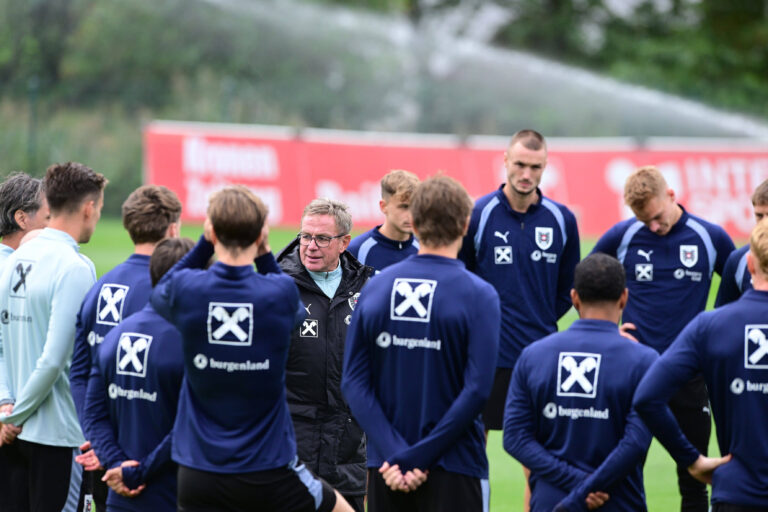
Rangnick reacted at half-time with three substitutions. Wöber replaced Affengruber, Laimer came on for Seiwald and Gregoritsch replaced Chukwuemeka. The changes were designed to add greater stability, intensity and presence in the final third.
The comeback did not begin immediately. Ireland continued to defend compactly, but the fresh legs gradually had an effect. Laimer raised the intensity of Austria’s counter-pressing, while Gregoritsch occupied the spaces around Kalajdžić and gave the attack another physical presence.
In the 67th minute, Rangnick added further dynamism by introducing Prass. Four minutes later, the substitution paid off.
Prass launches Austria’s comeback
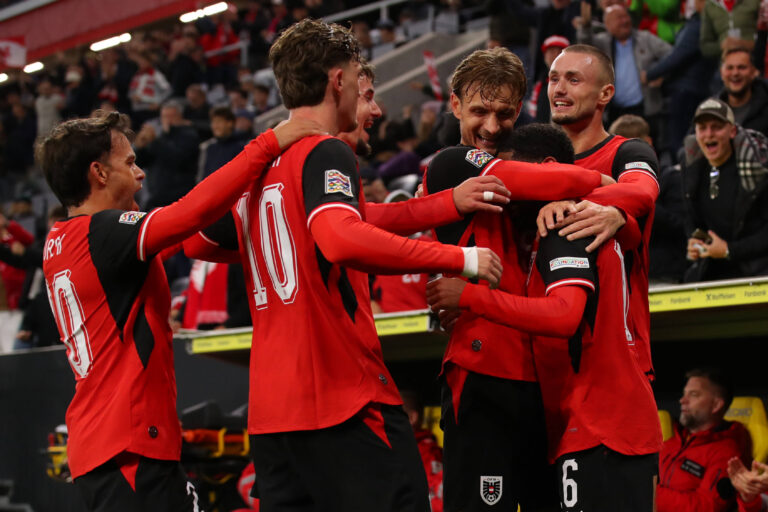
Wimmer pressed the newly introduced Liam Kitching near the penalty area and won the ball. His first cross was cut out, but the ball came back to him via Jayson Molumby. Wimmer then laid it off to Prass, who drove a powerful finish under the crossbar.
The goal was initially ruled out for offside. Replays showed, however, that the decisive touch back towards Wimmer had come from Molumby. After a VAR check, the goal was awarded and Austria were back in the match.
The momentum now shifted completely. Ireland dropped deeper, Austria won more second balls and began to keep the hosts pinned inside their own half. Six minutes later, the equaliser arrived.
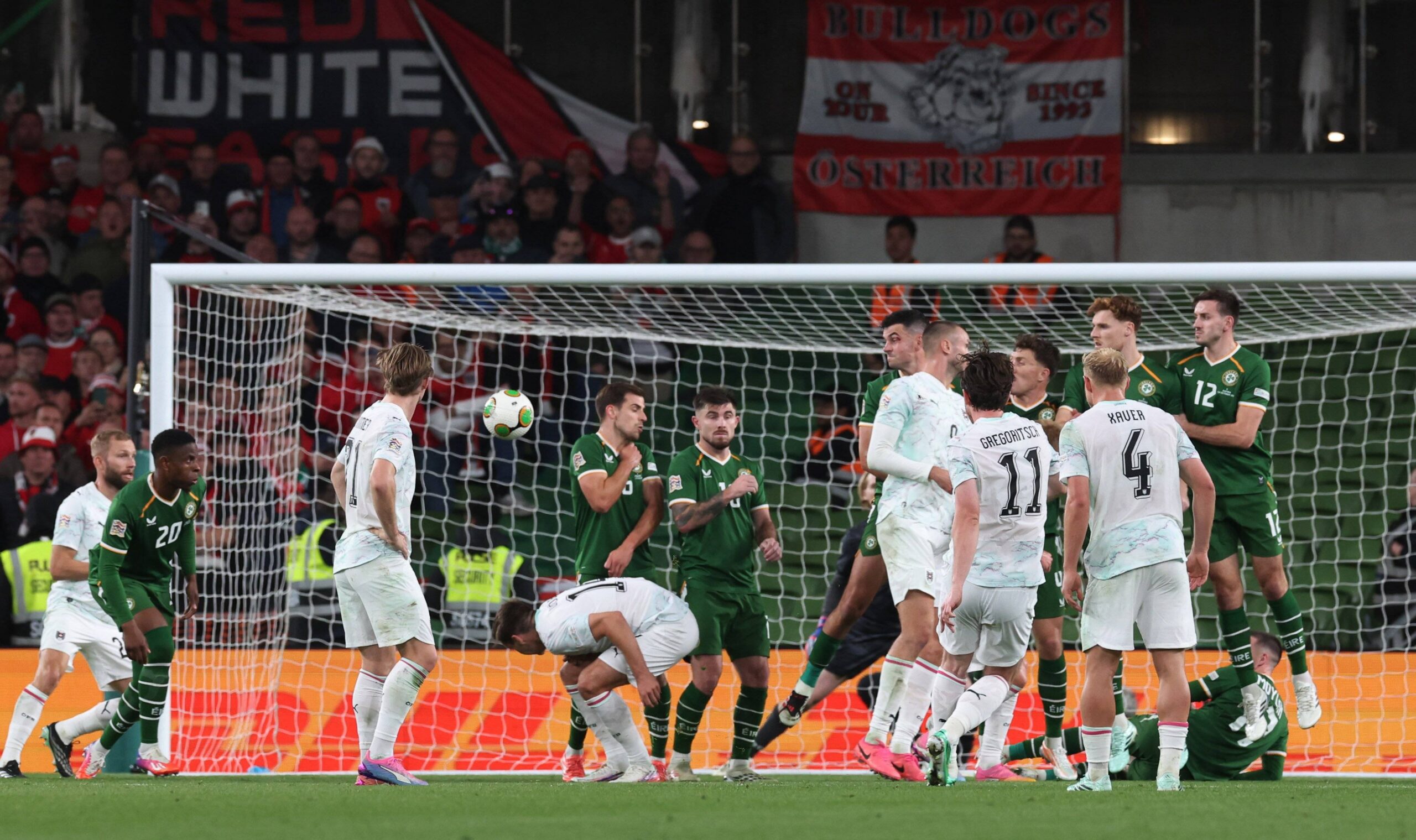
John Egan conceded a free-kick just outside the penalty area in a dangerous position. Gregoritsch took responsibility and read Kelleher’s positioning well. The Irish goalkeeper moved early towards the side protected by the wall, and Gregoritsch reacted by curling the ball precisely into the vacated goalkeeper’s corner. Kelleher could not recover in time – 2-2.
The goal summed up Austria’s second-half improvement. Gregoritsch had been introduced at the break, added another presence around the box and rewarded the visitors’ far more assertive display with the equaliser.
Austria go closest to a winner late on
Both sides still had chances in the closing stages. Wiegele prevented Dara O’Shea from putting Ireland back in front, while Gregoritsch fired over from close range at the other end. In the 89th minute, Prass was even presented with the chance to complete the turnaround after a Kalajdžić lay-off, but his shot went wide.
The overall numbers reflect an even contest with very different strengths. Austria had 58 per cent possession and led 16-9 in shots, although Ireland held a slight xG advantage of 1.56 to 1.36, helped significantly by the penalty. Austria also edged the touches inside the opposition penalty area 30-28.
Parrott was the standout figure of the first half with his brace. For Austria, Wimmer’s activity and involvement in the first goal became increasingly important, while Prass and Gregoritsch made the decisive impact from the bench.
Strong response after a difficult first half
Austria will be frustrated by how poorly they dealt with Ireland’s intensity and direct play before the break. The defending was untidy for both goals and too many second balls were lost. The reaction after half-time, however, was considerably better: Rangnick’s substitutions worked, the counter-pressing improved and Austria generated sustained pressure late on.
With seven points, Austria remain top of Group B3. Their next match comes on Sunday away to Kosovo.