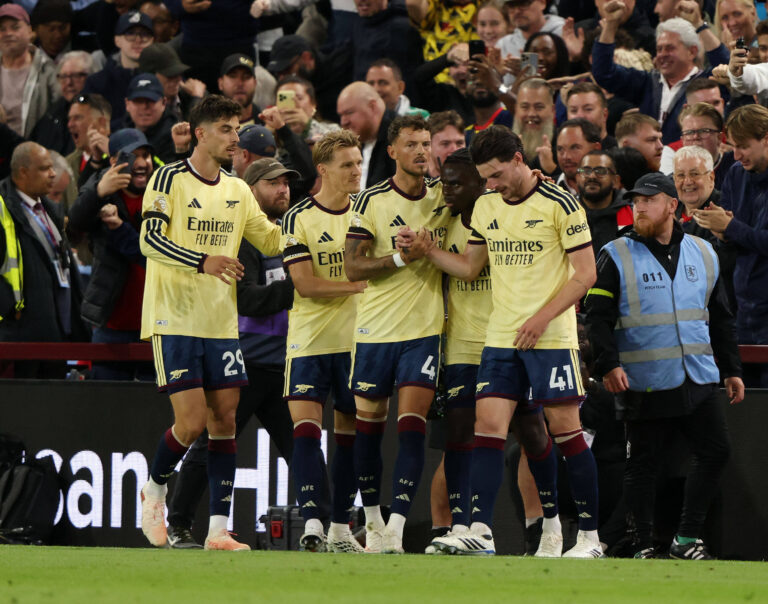
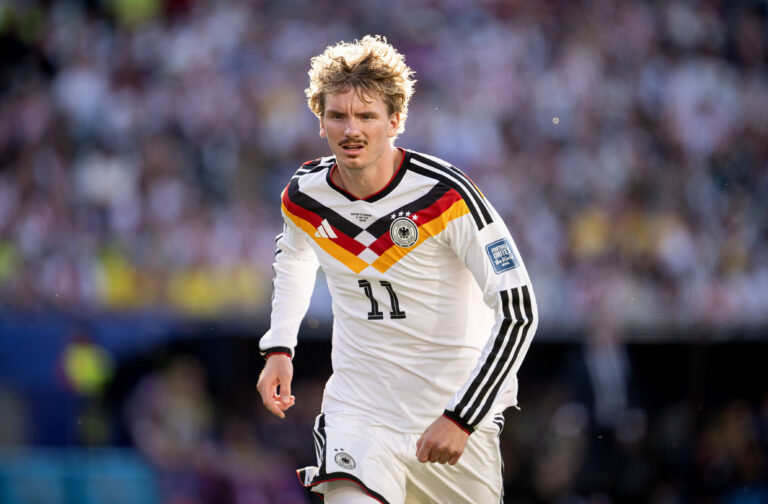
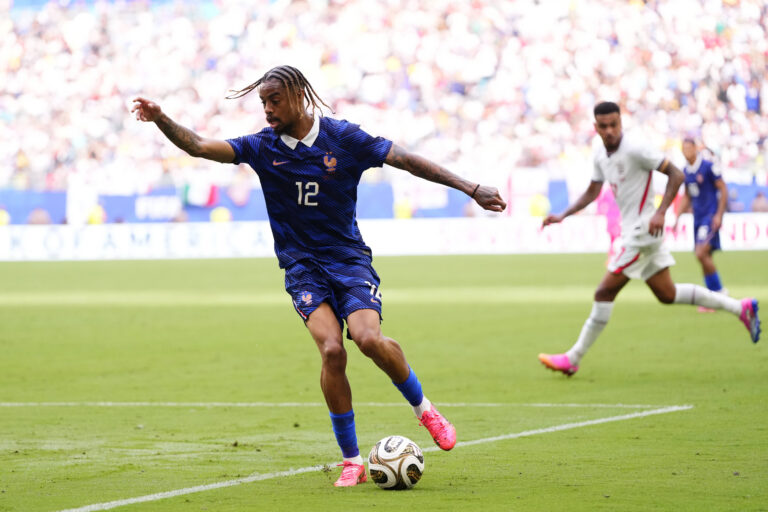
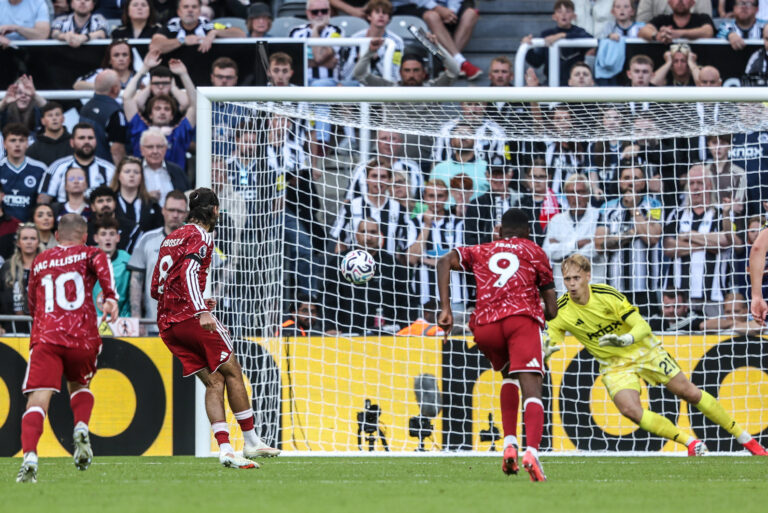
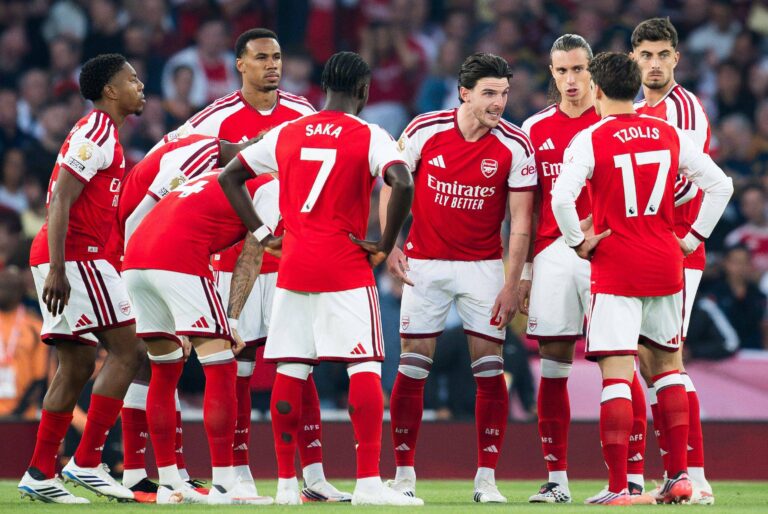
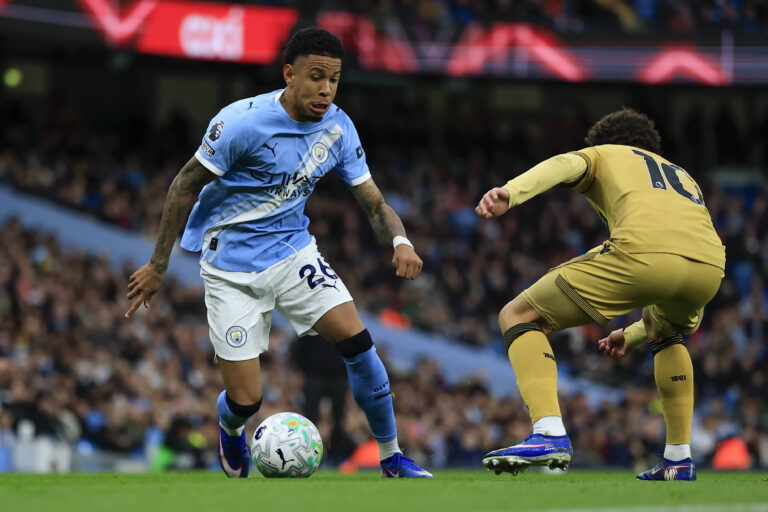
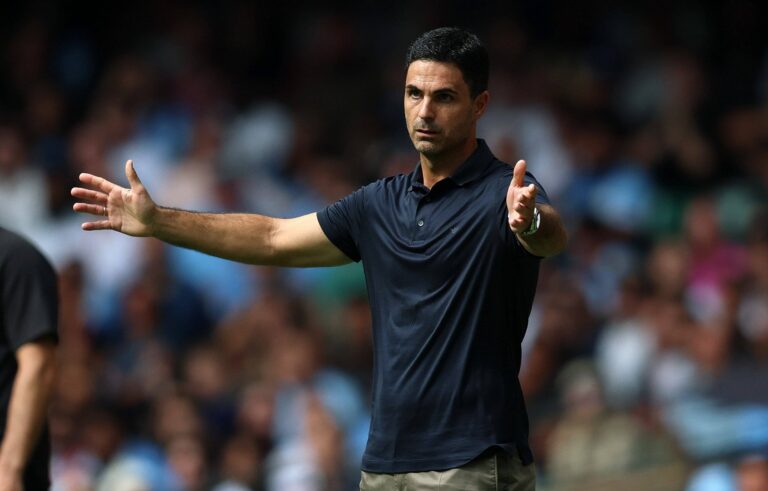
For Arsenal, it was a remarkable collapse after a perfect start to the campaign. Mikel Arteta’s team had conceded just once across their opening four Premier League matches, only to ship three goals inside 57 minutes against Brighton. Just three days after their dramatic comeback victory over Manchester United in the EFL Cup, the Seagulls delivered another major statement.
Arteta sticks largely with his strongest side
Arsenal were far from fielding a weakened team. Arteta made only two changes from the 2-0 win at Sunderland. Jurriën Timber replaced Ben White at right-back, while Bruno Guimarães came in for Myles Lewis-Skelly alongside Declan Rice. Bukayo Saka, Martin Ødegaard, Christos Tzolis and Kai Havertz formed the attacking unit.
Brighton, meanwhile, were without captain Lewis Dunk, who missed out with a neck problem. Pascal Struijk stepped into central defence, while new signing Chema Andrés was handed his first Premier League start after appearing as a substitute in the 5-0 win over Coventry. Pascal Groß wore the captain’s armband and 19-year-old Charalampos Kostoulas again led the line.
Brighton’s pressing knocks Arsenal out of their rhythm
From the opening stages, Hürzeler’s plan was clear. Brighton pressed Arsenal’s build-up aggressively, with Kostoulas working tirelessly against the centre-backs and repeatedly forcing the visitors into areas where their next passing options were limited.
Arsenal had more of the ball but struggled to turn possession into genuine control. Even David Raya came under pressure and played one pass straight to Yasin Ayari before Rice recovered with an important intervention. Moments earlier, Raya had already been forced to save from Kostoulas.
Brighton did not need long spells of possession themselves. Instead, they focused on attacking vertically after regaining the ball and targeting the space in front of Arsenal’s back line. Both first-half goals emerged from exactly those situations.
In the 31st minute, Kostoulas dropped deep, turned and found Groß. Arsenal failed to close him down decisively, giving the German enough room around 20 metres from goal. His shot flew in off the underside of the crossbar.
Kostoulas punishes Arsenal’s passive defending
Shortly before half-time, Arsenal were punished again for allowing too much space in front of their defence. Diego Gómez found Kostoulas, who was not closed down quickly enough by either Rice or Gabriel. The Greek striker took aim from distance and finished precisely for 2-0.
The fact that both goals came from outside the box is important when assessing the game. Brighton had put Arsenal under serious pressure with their pressing and movement, but neither finish came from an especially high-value shooting position. The hosts’ efficiency therefore turned a tactical advantage into a commanding half-time lead.
Kostoulas was the key figure. In addition to scoring, he created the opener, constantly put Arsenal’s build-up under pressure and moved intelligently between centre-forward and attacking midfield positions. He had already found the net in Brighton’s 3-2 cup win over Manchester United and once again showed how important he is not only as a finisher, but also within Hürzeler’s pressing structure.
Set-piece goal completes Arsenal’s nightmare start
Anyone expecting a strong response from the champions after the break was quickly disappointed. Arsenal still struggled to pin Brighton back for sustained periods, and instead conceded a third goal in the 57th minute.
Groß delivered a deep corner into the box, where Chema Andrés rose above Gabriel and Ødegaard to head home on his first Premier League start. Raya stayed on his line and had little chance to intervene.
The goal summed up Arsenal’s poor defensive performance. Gabriel had already been too passive before the second goal and now lost the decisive aerial duel. Bruno Guimarães struggled to find solutions against Brighton’s pressure in midfield and was substituted after an hour. Arteta introduced Martín Zubimendi, Mikel Merino, Viktor Gyökeres and Eberechi Eze among others, but the underlying problems remained.
Arsenal fail to take their best chances
The xG numbers initially appear surprising. Arsenal finished on 1.58 xG, compared with Brighton’s 1.33. The champions therefore created enough situations to have scored at least once, but Brighton attacked with far greater conviction and were much quicker to reapply pressure after losing possession.
Arsenal’s higher xG total was also concentrated in only a handful of good chances. Havertz in particular had an opportunity to bring his team back into the match but failed to convert. In general, the Gunners lacked sharpness inside the box. Saka and Ødegaard rarely found room between Brighton’s compact lines, while Tzolis had little influence on proceedings.
The 3-0 scoreline was therefore harsher than the overall chance quality might suggest. At the same time, Brighton could even have added more. Struijk headed narrowly wide, Georginio Rutter missed from a promising position and Malick Yalcouyé struck the post late on.
Brighton follow United comeback with another statement win
Within the space of a few days, Brighton have produced two major performances against high-profile opposition. At Manchester United, they recovered from an early deficit to turn the game around. Against Arsenal, it was Hürzeler’s tactical approach that stood out: aggressive pressing, quick vertical attacks and relentless support around the ball repeatedly disrupted the champions’ usual structure.
For Arsenal, the perfect start to the season is over. Arteta’s side enjoyed longer spells of possession and had chances of their own, but looked unusually vulnerable when pressed in build-up. Opponents were picked up too late in front of the back line, the defending around all three goals lacked aggression and, at the other end, Arsenal rarely found clear solutions against Brighton’s compact shape. After four highly controlled performances, the Gunners showed significant weaknesses both with and without the ball for the first time this season.