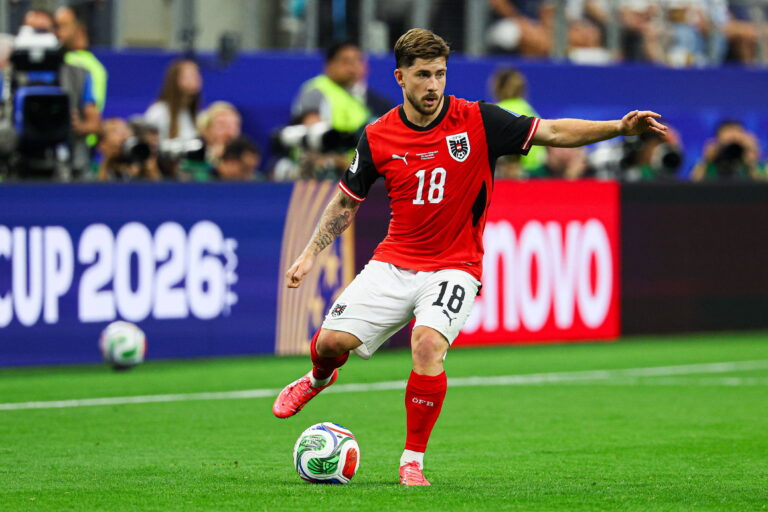
Over the course of the 90 minutes, the hosts created the better chances. The Netherlands finished with 22 attempts and 3.12 xG, while Germany managed ten shots and 1.50 xG. The balance of the game shifted particularly strongly after the interval. That Jürgen Klopp’s side still came so close to taking all three points was largely down to an outstanding performance from Marc-André ter Stegen.
New coaches, first signs of their ideas
For both Xavi Hernández and Jürgen Klopp, this was a first competitive match in charge of their respective national teams. Both started in a 4-2-3-1. Xavi selected, among others, Ryan Gravenberch, Tijjani Reijnders, Cody Gakpo and Brian Brobbey. Frenkie de Jong and Xavi Simons were unavailable, while all-time leading scorer Memphis Depay had not been called up for Xavi’s first squad.
Klopp was forced into a late change shortly before kick-off. Jamal Musiala suffered a thigh problem during the warm-up, so Nadiem Amiri was drafted into the starting XI. Philipp Treu made his debut at right-back, while Marc-André ter Stegen returned in goal.
There were already some early signs of what both coaches wanted from their teams. Xavi’s side tried to take the initiative, press high and immediately apply pressure again after regaining possession. Germany also looked for intensity without the ball under Klopp, but attacked far more directly after turnovers. In particular, the pace of Karim Adeyemi and Kevin Schade was meant to exploit spaces behind the Dutch back line.
Nmecha capitalises on Germany’s best spell
The first major moment still belonged to the Netherlands. Tijjani Reijnders delivered a corner in the 13th minute and Virgil van Dijk headed the ball into the net. After a VAR review, however, the goal was disallowed because Brobbey had impeded ter Stegen inside the six-yard box.
Germany gradually gained a better grip on the match after that. Joshua Kimmich dictated the play from central midfield and completed 51 of his 53 passes. At the same time, Germany’s quick transitions through the wide areas initially worked well. Klopp then suffered a setback after half an hour when Kai Havertz was forced off with a thigh problem and replaced by debutant Younes Ebnoutalib. The substitute almost immediately tested Bart Verbruggen with one of his first touches.
Two minutes later, Germany took the lead. Brobbey was left on the ground after a challenge and the Dutch players appeared to expect play to be stopped, but Germany continued. Kimmich and Amiri kept the move alive before the ball was worked into the box from the left. Adeyemi got his shot away, the danger remained and Nmecha reacted quickest to convert the loose ball from close range. The Netherlands protested strongly afterwards, but the goal stood.
Germany then had a major chance to double their lead before half-time. Adeyemi was played through after a quick combination but fired over from a promising position. It summed up his evening: he was heavily involved with four shots, but failed to make the most of his best opportunity.
Netherlands turn up the pressure after the break
The game changed significantly after half-time. Germany dropped deeper and deeper, while the Netherlands shifted almost the entire contest into the visitors’ half. The DFB side did not register a single shot on target after the interval.
Oranje increasingly looked to stretch the pitch. Dumfries pushed high on the right, while Reijnders repeatedly switched play into wide areas and helped create crossing situations from there. The tactical idea was clear: Germany’s compact block had to be stretched horizontally in order to open up spaces between the full-backs and centre-backs.
Xavi later introduced Joey Veerman, another midfielder who reinforced that approach. In just 33 minutes, he completed five crosses and created four chances. Reijnders also delivered four accurate crosses and made three key passes. The 12-1 corner count further illustrated just how far Germany had been forced back in the second half.
Ter Stegen keeps Germany ahead
Ter Stegen now became Germany’s key player. He made nine saves, seven of them from shots inside the penalty area, and repeatedly denied what looked like an inevitable equaliser. One of his best stops came against Dumfries after Mexx Meerdink had released the wing-back with a clever backheel.
Germany’s centre-backs were also under sustained pressure. Nico Schlotterbeck made eight clearances and blocked three shots. At the other end, Jan Paul van Hecke impressed not only defensively. He won six aerial duels, blocked three efforts and completed 67 of his 72 passes. That allowed the Netherlands to quickly recover second balls and launch wave after wave of attacks.
Oranje, however, remained wasteful. Meerdink hit the post and sent another dangerous effort wide. By this stage, Germany were defending almost exclusively around their own penalty area and offered very little threat on the break.
Gakpo rewards Oranje in stoppage time
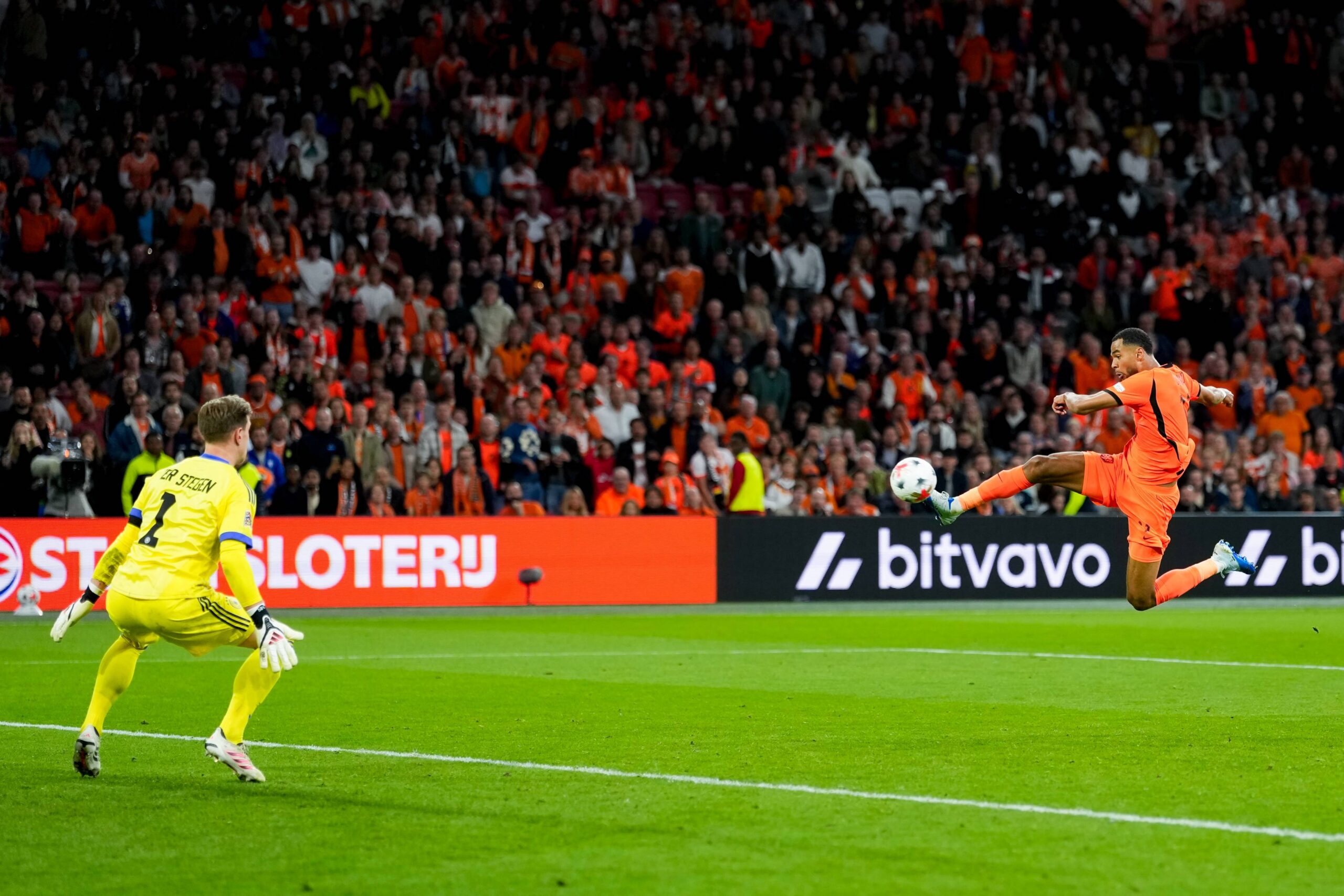
The equaliser finally arrived in the second minute of stoppage time. Substitute Ruben van Bommel curled an outside-of-the-foot delivery in from the right, Gakpo peeled away from his marker and met it with a technically difficult first-time finish to make it 1-1.
The goal was the logical result of sustained Dutch pressure. Oranje recorded 43 touches in the German penalty area and forced the visitors into 29 clearances. Germany had been only minutes away from an away win, but had spent almost the entire second half protecting their lead.
Contrasting halves in the coaches’ debuts
For Klopp, the first half already contained several elements he will want Germany to build on. His side pressed aggressively in spells, attacked quickly after winning the ball and created a number of promising situations. After the break, however, there was almost no relief. The distances between the lines grew, the first pressing line became increasingly ineffective and Germany were forced deeper and deeper.
Xavi’s team, meanwhile, needed time to make their advantages count. In the second half, their width, their consistent support around the box and their ability to quickly regain cleared balls all improved. Given the clear advantage in chances, however, the Netherlands may still feel they should have taken more than a late equaliser.
Both teams are back in action on Sunday. Germany host Greece, while the Netherlands travel to Serbia. Klopp will also have to assess the injury concerns surrounding Musiala and Havertz.