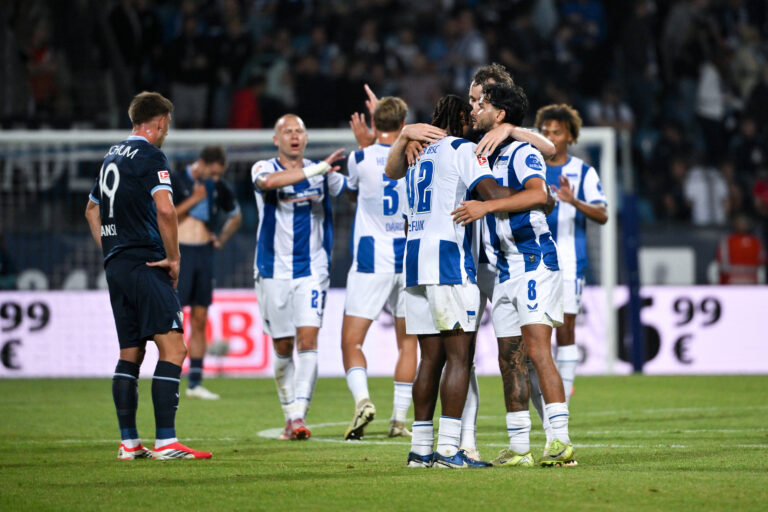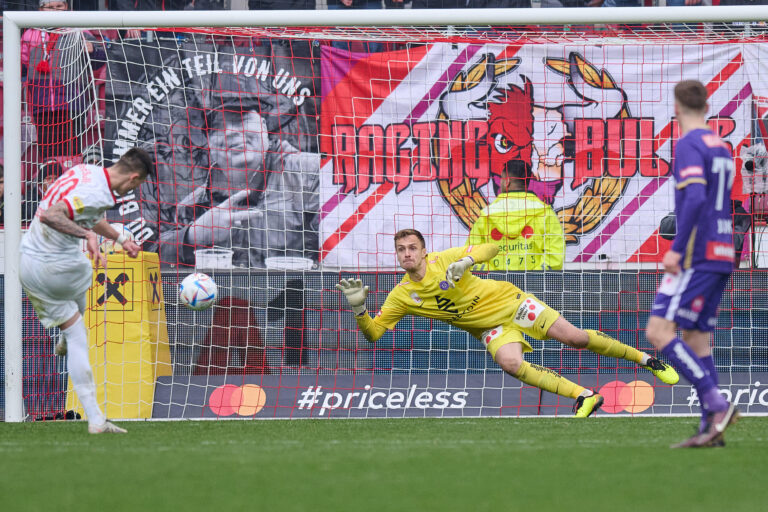
The final scoreline only tells part of the story. Belgium were clearly superior before half-time, but Italy increased the pressure significantly after the interval and eventually finished with 21 attempts. That the Azzurri still failed to score was down not only to poor finishing, but also to Senne Lammens, who denied several promising opportunities in the Belgian goal.
New beginnings on both benches
Much of the pre-match focus was already on the two coaches. Roberto Mancini returned to the Italy bench three years after his surprising resignation as national team manager. Following another failure to qualify for the World Cup, he began a significant rebuild and handed first senior call-ups to nine players for this international window. Alessandro Romano was immediately included in the starting XI against Belgium.
Belgium also began a new era under Mark van Bommel. For his first competitive match in charge, he selected a nominal 4-3-3 with Kevin De Bruyne, Youri Tielemans and Nicolas Raskin in midfield. Mika Godts and Diego Moreira operated either side of Charles De Ketelaere. Jeremy Doku and Leandro Trossard were unavailable through injury, while Thibaut Courtois was not part of the squad.
Italy also lined up in a 4-3-3. Riccardo Calafiori started at left-back, with Romano making his debut in midfield alongside Nicolò Barella and Sandro Tonali. Moise Kean, Francesco Pio Esposito and Nicolò Cambiaghi formed the front three. Alessandro Bastoni was suspended, while Federico Dimarco and Bryan Cristante were ruled out through injury.
Godts punishes Italy’s mistake in possession
Both teams created early shooting opportunities. Donnarumma was called into action against De Ketelaere, while at the other end Kean tested Lammens from distance. After around 20 minutes, however, Belgium began to take clear control.
The opening goal came from an Italian mistake. Romano misplaced a pass in the build-up and Belgium immediately attacked the space. De Bruyne spotted Godts’ run towards the penalty area and released him quickly. The 21-year-old cut inside, beat Gianluca Mancini and Diego Coppola, and finished low to make it 1-0.
Italy then struggled badly with Belgium’s transitions. Van Bommel’s side defended compactly and broke forward at speed whenever they regained possession. De Bruyne repeatedly found space behind the Italian midfield and created five shooting opportunities in total.
Belgium could have been further ahead before the break. Donnarumma first denied De Ketelaere and then saved Raskin’s follow-up. Soon afterwards, the Italian captain also reacted sharply to keep out a Godts header. The numbers reflected the balance of the half: Belgium led 14-5 in shots and 2.48-0.30 in xG before the interval.
Italy raise the tempo after the break
The game changed after half-time. Italy pushed higher up the pitch, moved the ball more quickly through the wide areas and committed more players into the Belgian penalty box. Just two minutes after the restart, Kean met a Cambiaghi cross from close range, but Lammens saved with his leg.
Pio Esposito also began to find opportunities. The Inter striker first headed straight at the Belgian goalkeeper and then got another clear sight of goal following a cut-back from Cambiaghi. Belgium came under considerably more pressure, but survived the spell without conceding.
Mancini reacted after 65 minutes with a triple substitution, introducing Davide Frattesi, Daniel Maldini and Giorgio Scalvini. Italy increased the tempo again and forced Belgium deeper. The hosts had 62 per cent possession after the break and produced 16 shots to Belgium’s five.
Barella was the main organiser. He completed 62 of his 67 passes and created two shooting opportunities. Cambiaghi was particularly dangerous from the left, producing four key passes and creating two big chances.
Lukebakio strikes on the break
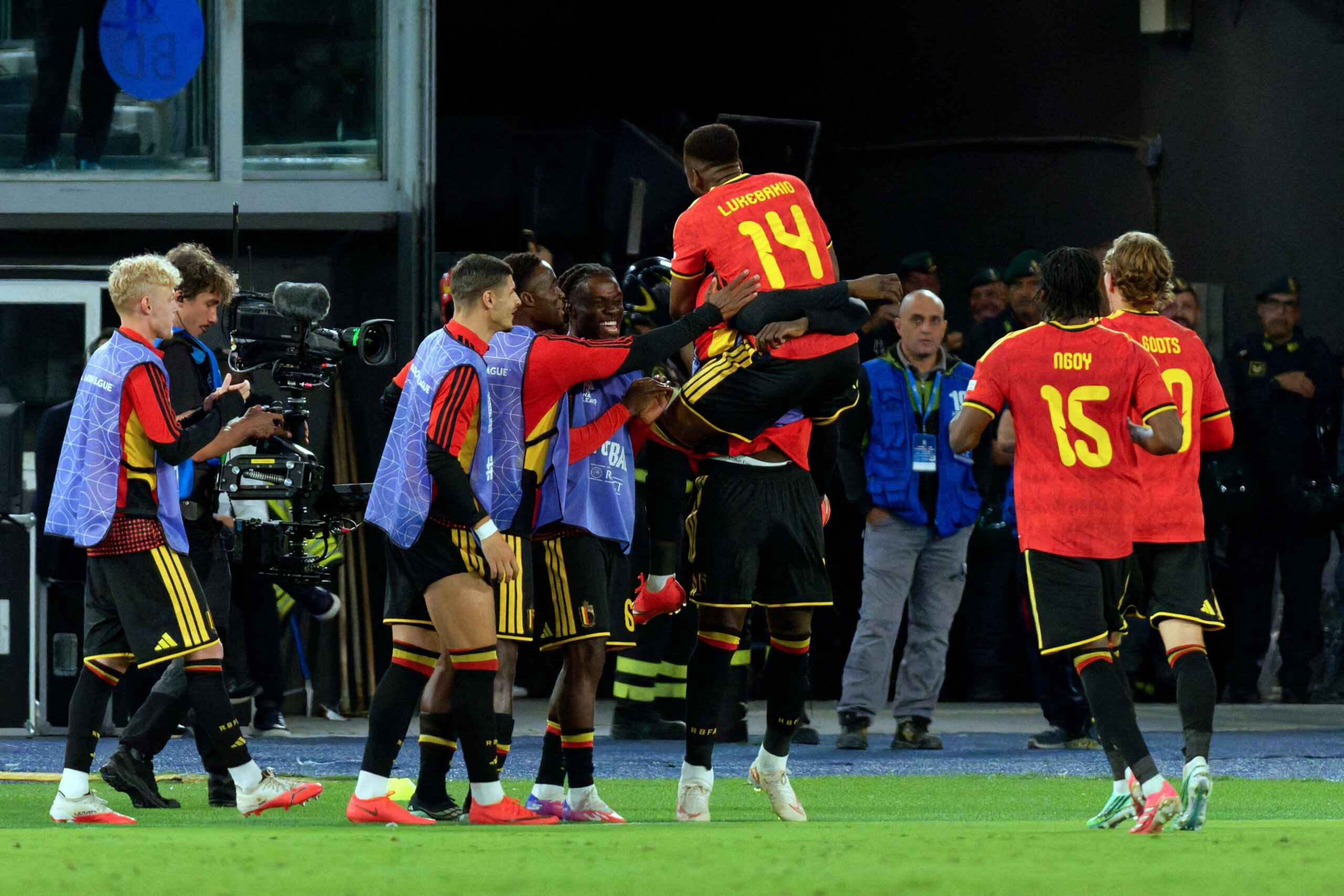
It was precisely during Italy’s strongest spell that Belgium made it 2-0. Lukebakio had only been on the pitch for eleven minutes when the visitors intercepted another Italian attack.
The winger carried the ball forward from his own half, moved inside past Tonali and Maldini and curled a precise effort into the far corner from distance. The goal summed up Belgium’s approach perfectly: they did not need long periods of possession, but exploited the spaces left after Italian turnovers far more effectively. Both Belgian goals came from quick transitions.
Italy continued to push. Calafiori sent an effort narrowly wide, while Scalvini struck the underside of the crossbar from close range late on. The hosts, however, could not find a way back into the match.
Belgium survive Italy’s best spell
The overall statistics therefore paint a more nuanced picture. Italy had 56 per cent possession and led 21-19 in total shots, but Belgium placed eight attempts on target compared to Italy’s six. The difference was clearer in terms of chance quality: Belgium finished with 2.70 xG, while Italy produced 1.52.
The distribution of those numbers is particularly revealing. Of Italy’s 1.52 xG, 1.22 came after half-time. Given their much stronger second-half performance, a 2-0 defeat was somewhat harsh on the hosts, although Belgium’s victory itself was not undeserved. The visitors had created by far the better chances before the break.
Lammens finished with six saves, four of them from shots inside the penalty area. His most important spell came immediately after half-time, when Italy threatened the equaliser on several occasions. At the other end, Donnarumma also made six saves and was especially important in preventing an even larger deficit during the first half.
Godts impressed not only with his goal, but also with his direct running and five attempted dribbles. Romano, by contrast, endured a difficult debut. His misplaced pass led to the opening goal, while Italy’s young midfield struggled to deal with Belgium’s transitions for much of the first half.
Strong start for Belgium as Italy look for a response in Turkey
Van Bommel can take plenty of positives from his first competitive match. Belgium defended compactly for long periods, broke quickly after turnovers and were more efficient in the decisive moments. De Bruyne gave the team structure before his substitution, while Godts and later Lukebakio made excellent use of the available space.
Mancini, meanwhile, will likely take encouragement from Italy’s response after the interval. The Azzurri created enough chances to score at least once, but their first-half build-up and their protection after losing possession both require improvement.
Both teams return to action on Monday. Belgium host France, who opened with a 1-0 victory in Turkey. Italy travel to Turkey, where they will have an immediate opportunity to respond to a disappointing start.