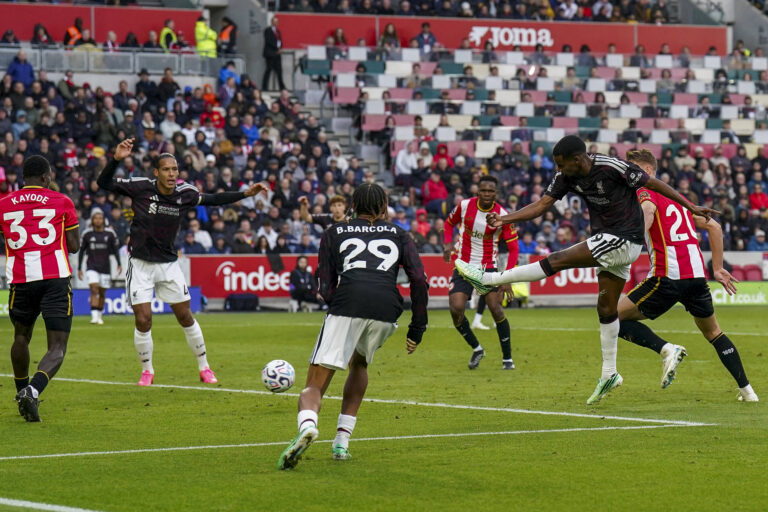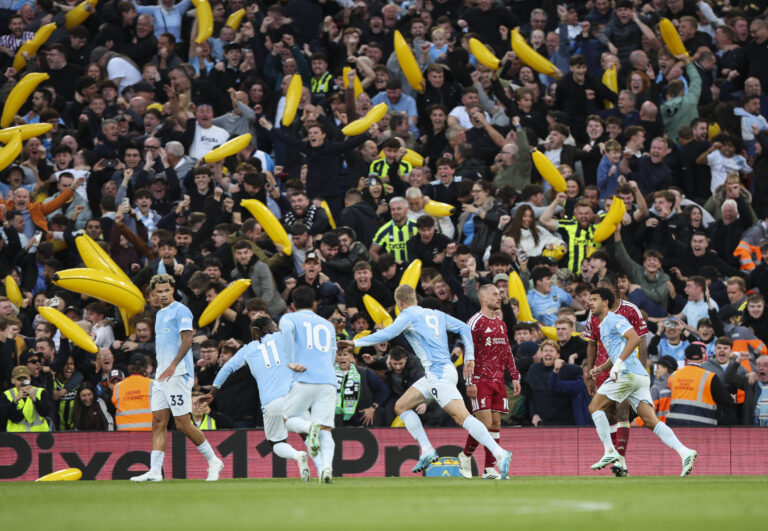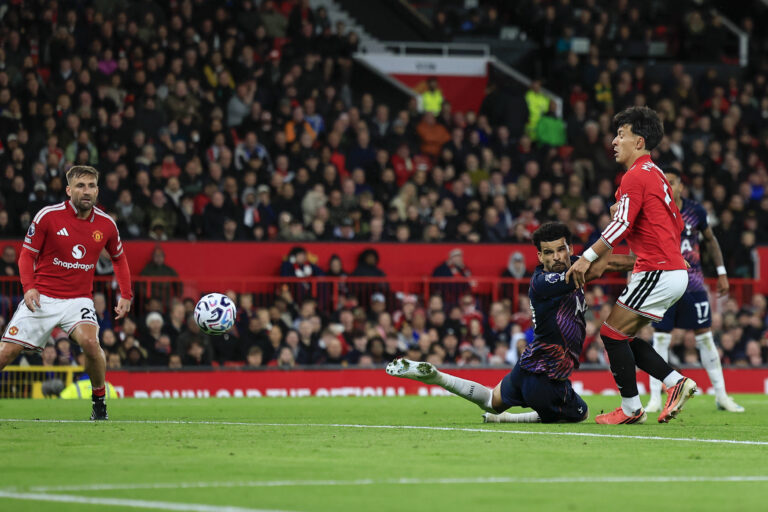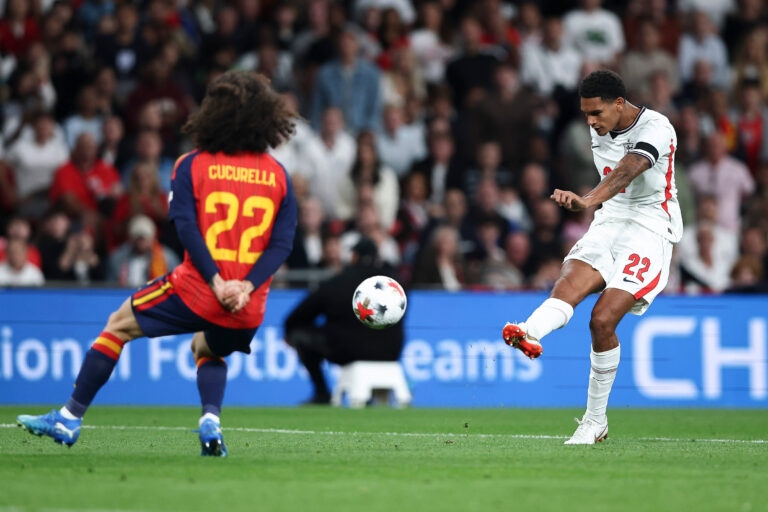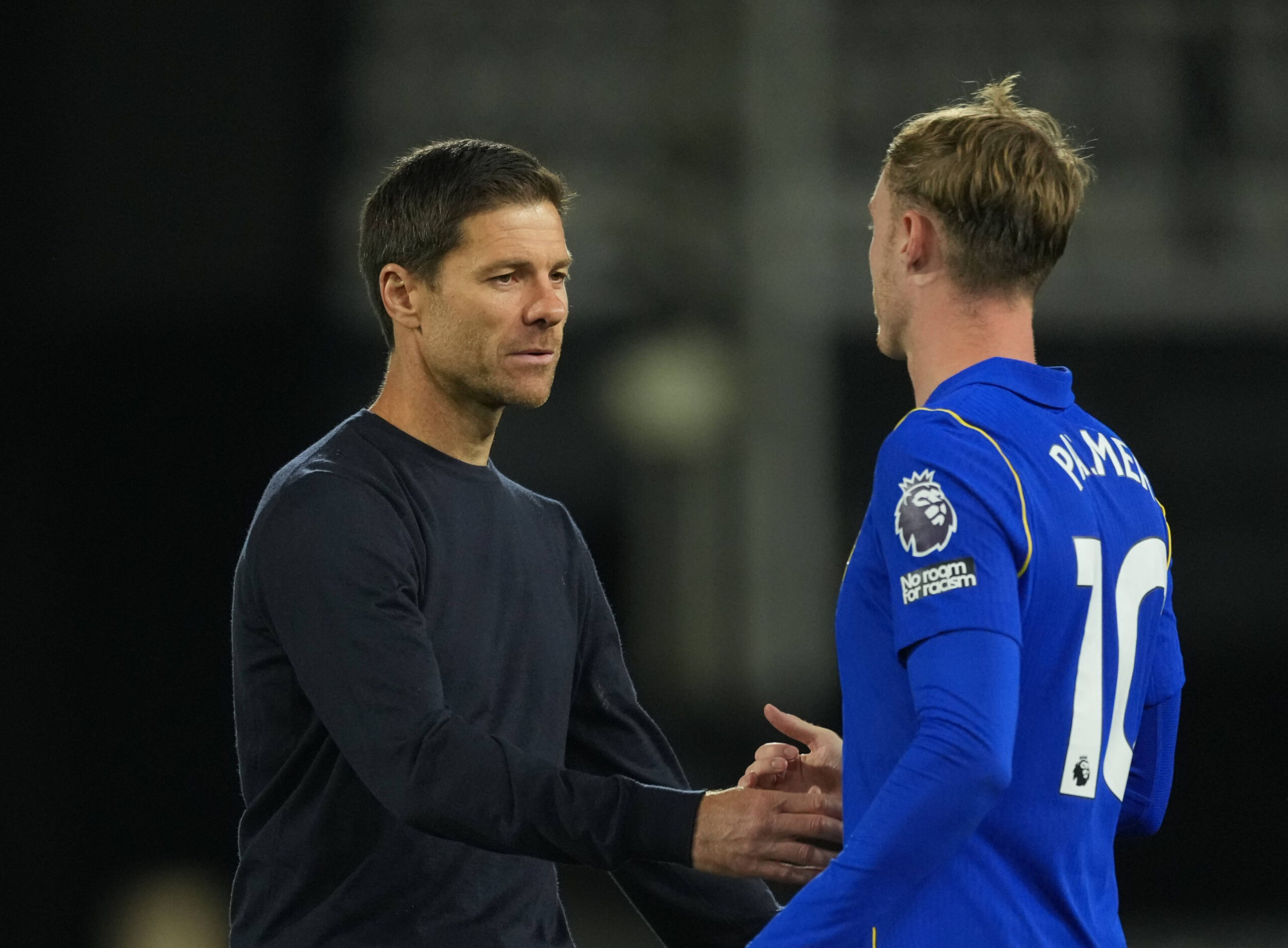
Chelsea operated with a flexible back three, used frequent positional rotations and gave their attacking players plenty of freedom to move. The roles of Cole Palmer and Morgan Rogers were particularly striking, as were the aggressive forward runs from the defensive line. The win over Fulham therefore provided some intriguing early clues as to how Alonso could reshape the Blues tactically.
Chelsea’s new front three clicks immediately
Chelsea made a dream start to the west London derby. After just 31 seconds, Cole Palmer released João Pedro with an excellent through ball and the Brazilian beat Bernd Leno to make it 1-0. Josh King equalised for Fulham before summer signing Morgan Rogers restored Chelsea’s lead before half-time.
Shortly after the restart, Palmer made it 3-1 following an assist from João Pedro. Gonzalo García pulled one back for Fulham, but Chelsea held on to their narrow advantage until the final whistle.
João Pedro, Rogers and Palmer — the three attacking players in Alonso’s 3-4-3 — all found the net. It was a fitting reflection of a performance in which Chelsea’s new attacking ideas were already clearly visible.
Alonso’s back three is only the starting point
After experimenting with a back four and hybrid structures during the opening stages of pre-season, Alonso increasingly turned to the shape that brought him major success at Bayer Leverkusen. Against Fulham, Josh Acheampong, Maxence Lacroix and Levi Colwill formed the back three, with Malo Gusto and Jorrel Hato operating out wide. Reece James partnered Romeo Lavia in central midfield.
Anyone expecting the back three to signal a cautious approach was quickly proven wrong. Chelsea’s 3-4-3 was highly fluid in possession: players repeatedly moved away from their nominal positions, while team-mates occupied the spaces they vacated. As a result, the shape constantly evolved.
One of the most striking features was how aggressively Chelsea’s centre-backs joined attacks. Lacroix was not restricted to organising the build-up from the middle. For the 2-1 goal, the Frenchman drove all the way into the Fulham penalty area, beat his opponent and cut the ball back from the byline for Rogers.
Acheampong also pushed high on the right on several occasions. This allowed Chelsea to commit additional players to advanced areas without completely sacrificing their underlying structure.
Palmer thrives with greater freedom
Perhaps Alonso’s most important tactical decision concerned Cole Palmer. The England international nominally started alongside Rogers behind João Pedro, but he was rarely tied to a fixed position.
Palmer dropped deep into midfield, appeared in the right half-space and also moved into central areas between the lines. Crucially, his team-mates responded to those movements. Whenever Palmer vacated his starting position, another player would move into the space he left behind.
The role gave the 24-year-old exactly the kind of freedom that allows his biggest strengths to flourish. Palmer could receive on the half-turn facing goal, take on defenders or release a team-mate with his first touch. His assist for the opener was the perfect example: before the ball had even reached him, Palmer had already spotted João Pedro’s run and immediately sent the striker in behind.
Palmer also played an important part in the second goal, carrying the ball forward before Lacroix made his attacking run. He then got on the scoresheet himself for Chelsea’s third.
Rogers brings pace and penetration
Morgan Rogers interpreted his role differently on the opposite side. The new signing is less of a traditional playmaker between the lines and more of a dynamic attacker who can start from a wider position before driving inside and attacking the defence at speed.
Alonso sought to make use of exactly those qualities against Fulham. Rogers frequently began in a wide position on the left before moving into central areas. That, in turn, created space for Hato to advance on the outside.
With Palmer on one side and Rogers on the other, Chelsea therefore developed contrasting movement patterns. The Blues did not occupy spaces symmetrically, instead adapting individual roles to the strengths of their players.
Their work without the ball was also notable. Rogers joined Palmer and João Pedro in Chelsea’s high press, with the front three attempting to disrupt Fulham’s build-up early and force turnovers as close to goal as possible.
Reece James provides the balance
Reece James played a key role in holding this fluid system together. Usually deployed at right-back, he operated centrally alongside Lavia and repeatedly adjusted his position according to the movements of his team-mates.
When centre-backs or wide players pushed forward, James dropped deeper and covered the spaces behind them. That helped Chelsea retain enough protection behind the ball despite the number of attacking rotations.
That balance is crucial to Alonso’s approach. His team are expected to attack with numbers and create overloads, but they cannot afford to become completely exposed after losing possession. Tactically intelligent and versatile players such as James are therefore particularly valuable in this system.
Chelsea also remained varied in their build-up, combining short passing sequences with more direct routes forward. João Pedro was frequently targeted with longer balls, dropping towards the play to hold them up or flick them on, allowing Palmer and Rogers to compete for the second ball.
Alonso’s pressing blueprint still needs work
Alonso’s influence was also visible out of possession. Chelsea pressed Fulham’s build-up high at times and tried to exploit the large distances between the home side’s players. The Blues applied particularly intense pressure at the start of both halves, making Alonso’s defensive plan easy to recognise.
The system was not flawless, however. Fulham managed to play through Chelsea’s press on several occasions and found opportunities to attack the high defensive line. Chelsea also lost some control after going 3-1 ahead and allowed Fulham back into the contest.
Individual mistakes added to the problems. Goalkeeper Robert Sánchez should have done better for the first goal and then pushed another effort back into a dangerous area in the build-up to Fulham’s second. Gusto and Hato also left room for improvement in the wing-back positions.
The 3-2 win was therefore far from a completely controlled performance. More important for Alonso, however, was how clearly his influence could already be seen in his first competitive match. Chelsea used a back three without becoming defensive, constantly rotated positions and tried to maximise the individual qualities of their key attacking players. Palmer, in particular, appears well suited to the additional freedom.
It will take time before every aspect of Alonso’s Chelsea is fully in place. At Bayer Leverkusen, however, the Spaniard already showed how effectively he can refine a complex system down to the smallest detail. If he can do the same in London, Chelsea could not only improve on recent seasons but also become a far more attractive and entertaining side to watch.